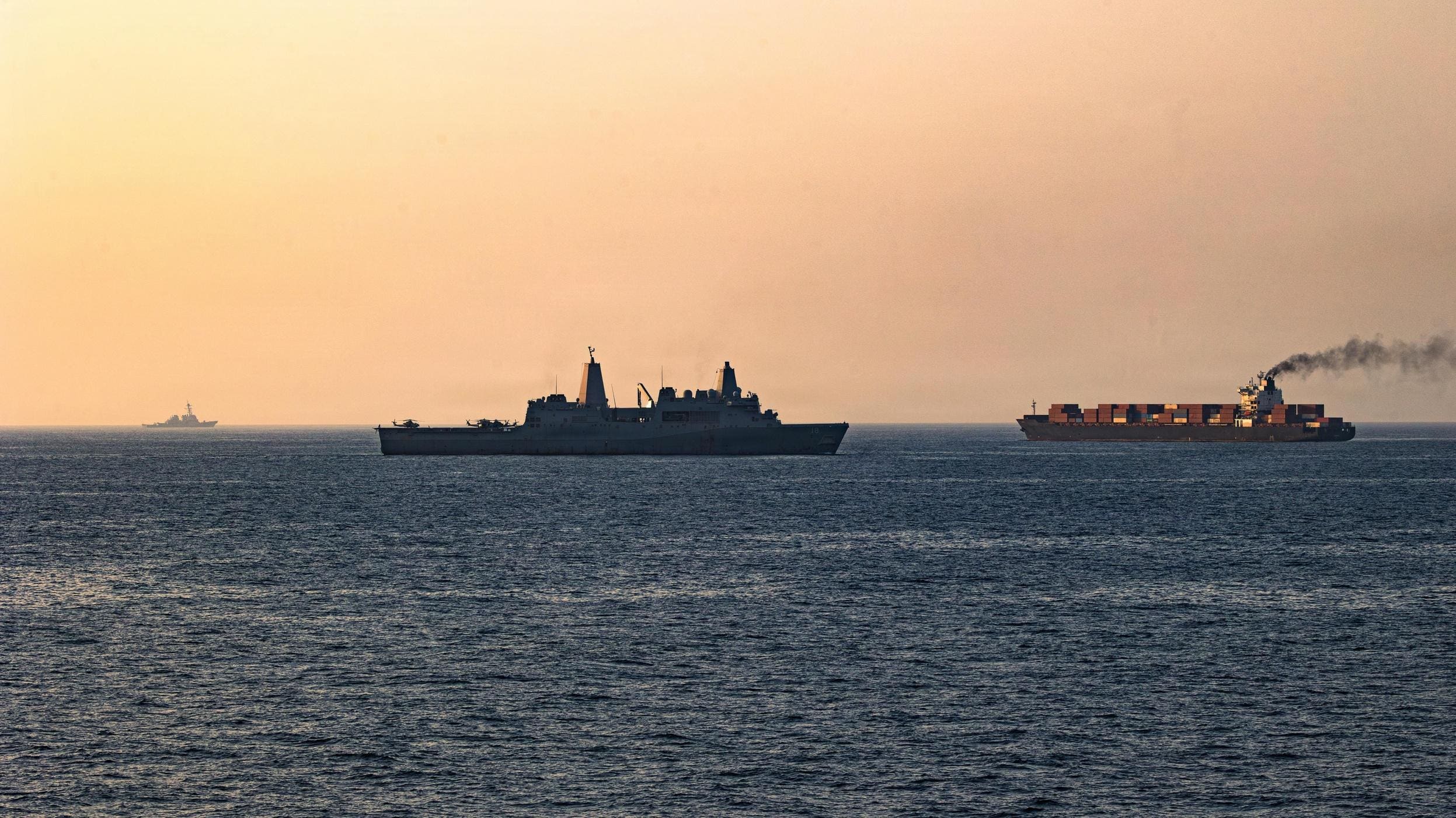
WASHINGTON—The U.S. has burned through so many munitions in Iran that some administration officials increasingly assess that America couldn’t fully execute contingency plans to defend Taiwan from a Chinese invasion if it occurred in the near term, U.S. officials said.
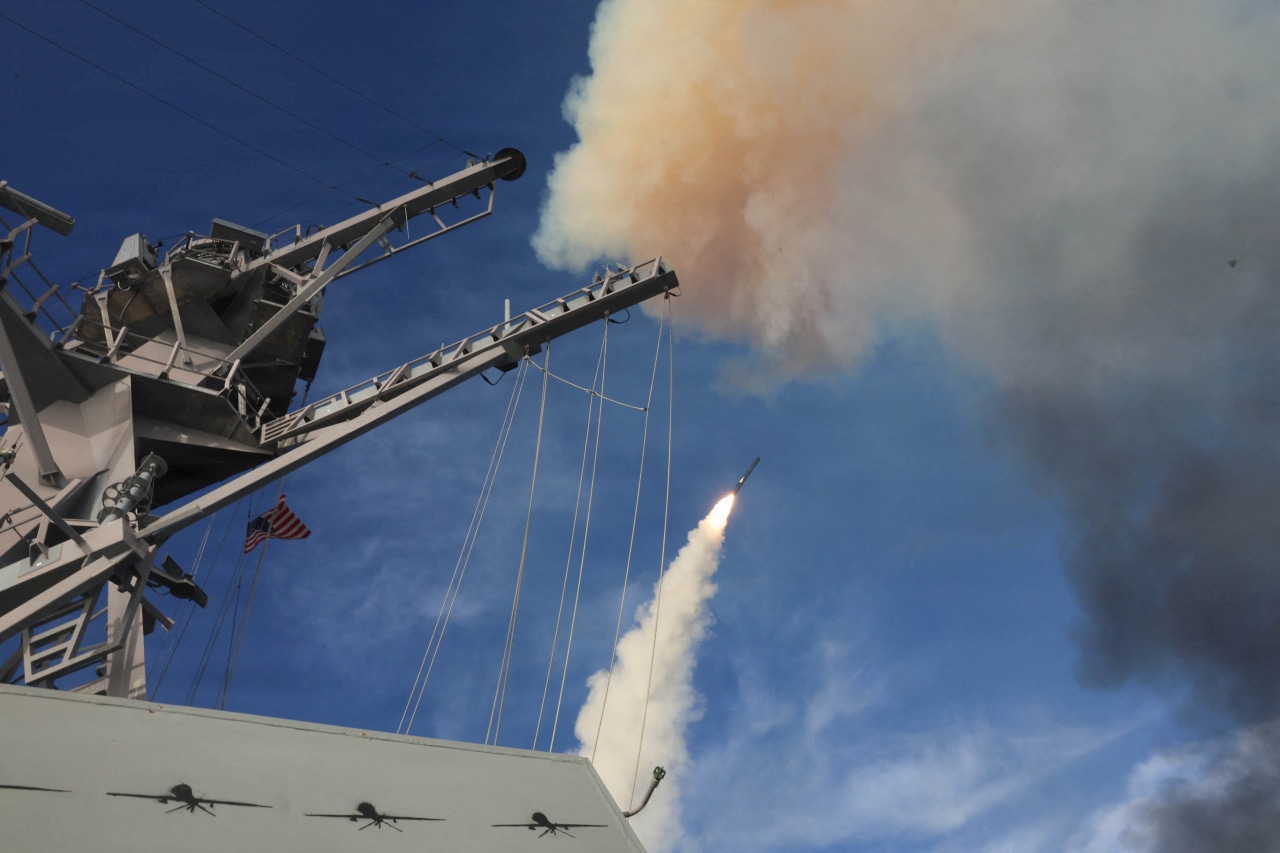
The U.S. has fired more than 1,000 long-range Tomahawk missiles since the war with Iran began on Feb. 28, as well as 1,500 to 2,000 critical air-defense missiles, including Thaad, Patriot and Standard Missile interceptors, according to U.S. officials who declined to give exact figures.
Wholly replacing those stockpiles could take up to six years, officials said, kicking off discussions in the administration about adjusting operational plans in preparation for any potential presidential order for the military to defend Taiwan.
The Pentagon plans for multiple scenarios, regardless of the shifting geopolitical tides and political winds in Washington. U.S. officials say there is no sign of a conflict with China on the horizon. Chinese leader Xi Jinping is preparing to hold a high-stakes summit with President Trump next month in Beijing, and China’s military is reeling from a purge of generals.
The U.S. follows a “One China” policy, acknowledging that there is only one Chinese government—the People’s Republic of China—even as the U.S. maintains relations with the self-governing democracy of Taiwan. Trump, like most of his predecessors, hasn’t publicly committed to sending American forces to protect the island against an invasion.
But if a conflict were to materialize, the officials say the U.S. would suffer from a munitions gap in the short term while it restocked, potentially exposing troops to increased risk. Other administration officials argued the U.S. could shrink the timeline to replace munitions with heavy investments in the defense-industrial base and a new emphasis on producing low-cost munitions.
U.S. officials familiar with the munitions status didn’t detail the precise impact the depletions would have on China-related plans. The U.S. intelligence community assessed in March that Beijing was unlikely to launch a war against Taiwan in 2027 and had no fixed timeline for unification, though China would like full sovereign control of the island by 2049, the 100th anniversary of the founding of the PRC.
Several senior U.S. officials dismissed the idea that the U.S. isn’t fully prepared for a near-term conflict with China and that the loss of munitions impacts its readiness.
Adm. Samuel Paparo, the commander of U.S. troops in the Pacific who would be responsible for executing a war, in congressional testimony on Tuesday, said that the Iran war was giving U.S. troops valuable combat experience and that he supports the continuing operations in the Middle East.
“For now,” Paparo told the Senate Armed Services Committee, “I don’t see any real cost being imposed on our ability to deter China.”
White House press secretary Karoline Leavitt disputed the story, saying “the entire premise of this story is false.”
“The United States of America has the most powerful military in the world, fully loaded with more than enough weapons and munitions, in stockpiles here at home and all around the globe, to effectively defend the homeland and achieve any military operation directed by the commander in chief,” she said.
Chief Pentagon spokesman Sean Parnell said the U.S. military “has everything it needs to execute at the time and place of the President’s choosing.” Since Trump took office, he said, “we have executed multiple successful operations across combatant commands while ensuring the U.S. military possesses a deep arsenal of capabilities to protect our people and our interests.”
National security analysts have been monitoring munitions stocks closely and are tracking any potential impact on America’s ability to address other crises around the world.
The Center for Strategic and International Studies released a report Tuesday that expressed similar concerns about dwindling stockpiles. Based on prewar inventories, CSIS estimated that munitions expended in Iran would represent roughly 27% of Tomahawk stockpiles, about 36% of Jassm, one-third of SM-6, nearly half of SM-3, more than two-thirds of Patriot interceptors and more than 80% of Thaad interceptors. That means the shortfalls are more pronounced for defensive weapons like missile interceptors.
“It’s going to be years before we can rebuild those inventories,” said Mark Cancian, a senior adviser at CSIS who co-wrote the report.
On Capitol Hill, Paparo said it would take major defense contractors one to two years to increase production of munitions, though he maintained that the U.S. has adequate supplies.
On April 8, Gen. Dan Caine, chairman of the Joint Chiefs of Staff, said the U.S. along with Gulf nations had intercepted 1,700 ballistic missiles and one-way attack drones since the Iran war began. The high-tempo operation came less than a year after the U.S. expended interceptors to defend Israel during the country’s 12-day war with Iran, revealing an alarming gap in U.S. supplies.
China is a far tougher adversary than Iran. It has more than 600 nuclear warheads and an expanding intercontinental ballistic missile program, according to a December 2025 Defense Department report. Beijing also had a growing fleet of military drones, analysts note.
The U.S. has a nuclear arsenal that is much bigger than China’s, experts believe. Still, China’s nuclear and other weapons, mixed with a vast naval arsenal and large ground force, make any U.S. war to defend Taiwan among the riskiest operations for which the Pentagon maintains contingency planning.
The report indicated China’s options to forcibly reunite Taiwan to the mainland included “an amphibious invasion, firepower strike, and possibly a maritime blockade.”
Wargames run by U.S. think tanks found that fighting over Taiwan would be brutal, leading to the loss of tens of thousands of American, Chinese and allied troops, as well as scores of ships and hundreds of aircraft.
Analysts say a large American stockpile of munitions is critical for countering China’s array of missiles that would likely be fired at aircraft and warships to deny them freedom of movement, a strategy known as “anti-access, area denial.”
“The U.S. would have to fight China in a way that is potentially much more costly and dangerous for U.S. forces,” said Kelly Grieco, a senior fellow at the Stimson Center think tank in Washington. “You’re going to take higher attrition.”
The U.S. has also pulled air defense equipment from the Pacific to support operations in the Middle East. It previously sent radars from South Korea ahead of Operation Midnight Hammer, and it is in the process of moving interceptors, according to Gen. Xavier Brunson, commander of U.S. Forces Korea. Brunson, who was testifying alongside Paparo Tuesday, told lawmakers that Thaad systems remain in Korea.
Officials in the Trump administration have long said that the U.S. must conserve its munitions for a great-power war with China, requiring Washington to stop sending its stocks to Ukraine or using them to target lesser adversaries abroad, like the Houthis in Yemen.
The Pentagon is racing to buy more munitions and is pushing defense companies to ramp up production. It is also diverting interceptors intended for European countries and funneling them into U.S. stocks, according to U.S. officials and people familiar with the matter. The White House is pushing for major investments in the defense-industrial base to replenish the American arsenal, asking Congress to approve $350 billion for critical munitions in the fiscal 2027 budget.
Defense companies RTX and Lockheed Martin recently signed agreements with the Pentagon to significantly increase the production of weapons in the coming years. Lockheed said it would quadruple the production of Thaad and PAC-3 Patriot interceptors, while RTX announced it was speeding the deliveries of Tomahawks, Advanced Medium-Range Air-to-Air Missiles and several Standard Missile variants. The Pentagon has approached U.S. automakers and manufacturers about helping to boost weapons production.
The efforts are part of a bigger push led by Defense Secretary Pete Hegseth to ramp up defense manufacturing and overhaul the Pentagon’s acquisition process. “Our objective is simple: transform the entire acquisition system to operate on a wartime footing,” Hegseth said in a speech last November.
At the same time, Trump insisted last month on social media that the U.S. has a “virtually unlimited supply of Medium and Upper Medium Grade Munitions.” Despite a two-week cease-fire that Trump extended Tuesday, the president has repeatedly warned the U.S. could resume its bombing campaign if Iran doesn’t make a deal to end its nuclear work.
Write to Alexander Ward at alex.ward@wsj.com, Shelby Holliday at shelby.holliday@wsj.com and Yoko Kubota at yoko.kubota@wsj.com