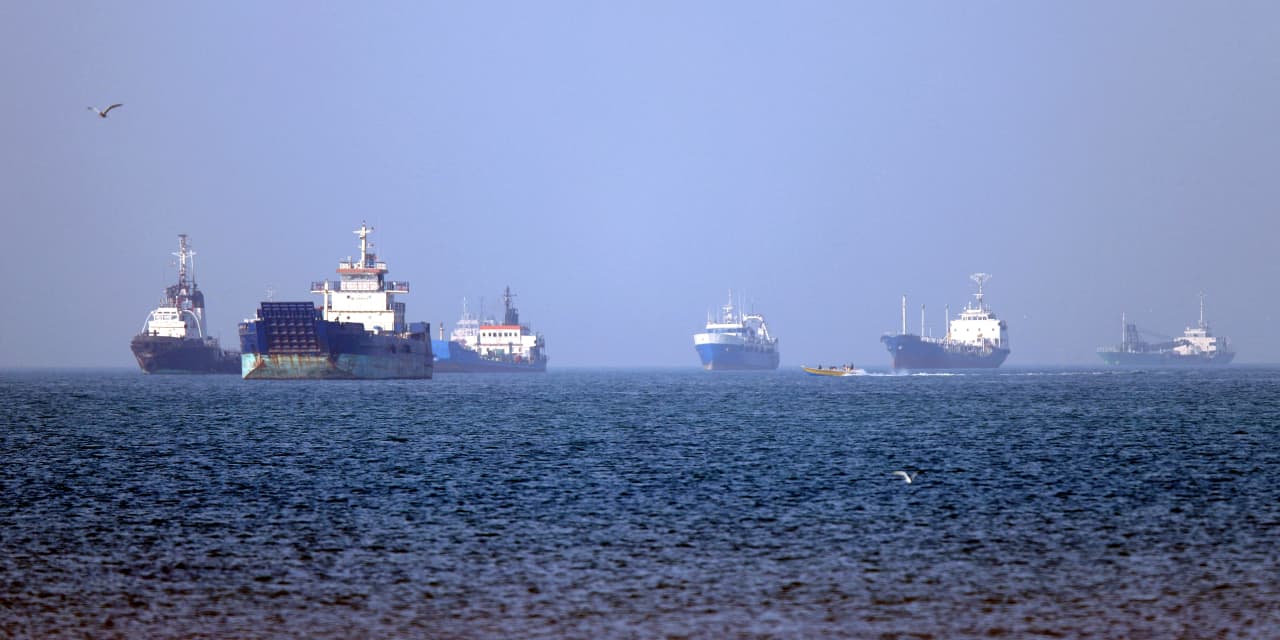
Global oil stockpiles have provided a cushion for the severe production disruptions caused by the U.S. and Israel war’s with Iran — and the resulting near-standstill of shipping traffic through the Strait of Hormuz.
But as hopes for peace falter and with U.S. inflation hitting a three-year high on Tuesday, analysts are sounding the alarm about dwindling energy reserves.
From a geopolitical perspective, the current stalemate in peace negotiations and the mix of ultimatums and extensions could go on for a long time, said Jaime Brito, executive director of refining and oil products at Dow Jones Energy.
“But from the point of view of energy, this is a snowball — and every week that passes, you have tighter markets,” Brito said.
If the Middle East war doesn’t end quickly, the world — including the Group of 7 developed nations that have relied on their ample oil reserves — “will start facing scarcity,” warned Ipek Ozkardeskaya, an analyst at Swissquote. And analysts at J.P. Morgan recently said that developed countries’ commercial crude stocks could be close to operational stress levels by early June.
On paper, global crude inventories are ample, and they include both commercial stockpiles held by companies and strategic stockpiles held by governments. But not every barrel is available, and operating with low levels of inventories causes its own problems.
Estimates on exactly how much is stockpiled vary, because both companies and governments are playing it close to the vest: They are not keen on letting the world know exactly how much crude they have stockpiled.
Analysts at Morgan Stanley recently pegged global commercial and SPR crude inventories at 5.75 billion barrels, while Societe Generale sees it at about 7.8 billion barrels and J.P. Morgan has it at around 8.2 billion barrels — and all three used a mix of official and private data to arrive at their estimates. For context, there were about 9 billion barrels sitting in inventories back in 2020.
The draws have been “unevenly distributed by geography and by type of product, and the biggest declines are in the least visible areas of the market,” said Antoine Antoine Halff, a fellow at Columbia University’s Center on Global Energy Policy and co-founder of Kayrros, a geospatial analytics company.
“Asia is the main outlet for crude oil from the Middle East Gulf, and that’s predictably enough where the downward pressure on crude inventories has been most severe,” he said. Crude stocks in the Asia-Pacific region, excluding China, have fallen by about 12% since Feb. 28, the start of the war, to their lowest levels in at least 10 years, he noted.
Providing some relief in March, the International Energy Agency coordinated the release of 400 million barrels from the strategic reserves of its member countries, with the U.S. Strategic Petroleum Reserve set to provide nearly half of the backup supplies.
Demand curbs, including flight cuts from global airlines and restrictions mostly in Asian countries, have also helped manage the disruptions in crude production. According to J.P. Morgan, global oil demand fell by an average of 2.8 million barrels a day in March, and was tracking a larger decline of 4.3 million barrels a day in April and an even steeper decline of about 5.5 million barrels a day in May.
“A core assumption of our framework is that the accelerating pace of oil inventory depletion will ultimately force the reopening of the Strait of Hormuz, one way or another,” J.P. Morgan analysts said in a recent note.
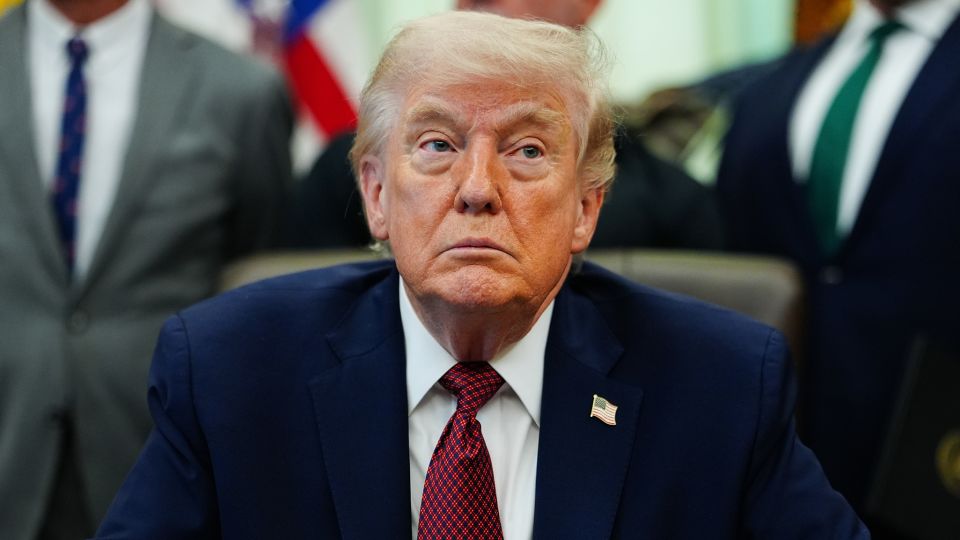
President Donald Trump headed for China on Tuesday with negotiations with Iran at a stalemate. A tenuous cease-fire remains in place.
Oil futures traded above $100 a barrel, and the uptick in U.S. inflation numbers — which jumped to a nearly three-year high of 3.8% in April because of higher gas prices — spooked the stock market
Analysts at Morgan Stanley on Monday said that oil markets are in a “race against time,” as the combination of factors that have been in place to curb crude-price jolts will fray if the Strait of Hormuz stays closed through June.
And once the conflict ends and tanker transit through the Strait of Hormuz resumes, it would still take weeks for flows to resume, and markets likely will still price in risk of potential additional disruptions.
Saudi Arabia’s state-controlled oil giant Saudi Aramco cautioned Monday that if the strait remains closed for weeks further, a market rebalance likely will extend into 2027 and “oil supply challenges” will continue.
Aramco echoed what U.S. energy giants Exxon Mobil and Chevron said earlier this month. Both companies’ profits fell in the latest quarter, and their executives highlighted dislocations that the conflict is causing.