Virginia‘s Supreme Court tossed out a new congressional map voters passed last month that created four new blue-leaning districts, dealing a massive blow to Democrats ahead of this year’s midterm elections.
The court ruled on Friday the new map is a “constitutional violation” that “incurably taints the resulting referendum vote and nullifies its legal efficacy.” It’s a major loss for Democrats in the national redistricting arms race that could lower their chances of winning control of the U.S. House of Representatives in November.
Virginia Supreme Court Ruling: What to Know
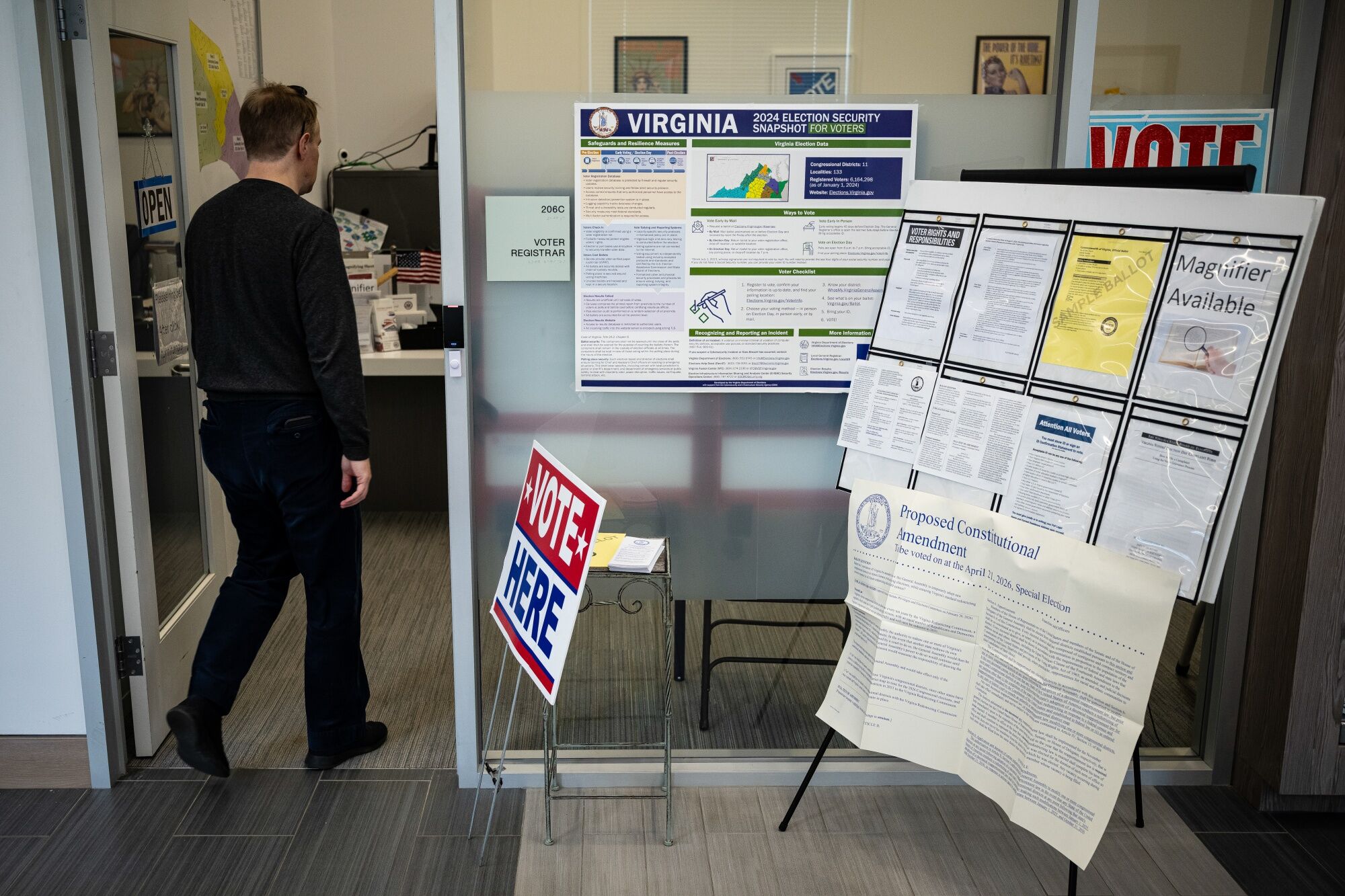
Virginia voters passed the new map in April, with Democrats casting it as retaliation after Republicans in states like Texas, Missouri and North Carolina redrew their maps ahead of the midterms with the aim of drawing Democratic incumbents into more conservative seats. The new map would have placed four Republican representatives in a more Democratic-leaning districts ahead of the midterms.
The 4-3 ruling, however, invalidates the referendum results and restores the current map, which has six seats held by Democrats and five held by Republicans.
“In this case, the Commonwealth submitted a proposed constitutional amendment to Virginia voters in an unprecedented manner that violated the intervening-election requirement in Article XII, Section 1 of the Constitution of Virginia. 31 This violation irreparably undermines the integrity of the resulting referendum vote and renders it null and void,” the opinion reads.
Virginia House of Delegates Speaker Don Scott wrote in a statement that Democrats “respect the decision” but will “keep fighting for a democracy where voters—not politicians—have the final say.”
“That truth doesn’t change because of a court ruling. This was always about more than one election – it was about whether the voices of the people matter. And no decision can erase what Virginians made clear at the ballot box,” he wrote.
Democratic Congressional Campaign Committee (DCCC) chair Representative Suzan DelBene, a Washington Democrat, the ruling is a “setback that sends a terrible message to Americans—the powerful and elite will do everything they can to silence you.”
How Virginia Supreme Court Justices Ruled on Map
The ruling was authored by Justice D. Arthur Kelsey. Justices Teresa Chafin, Stephen McCullough and Wesley Russell Jr. joined the majority opinion.
Justices Cleo Powell, Thomas Mann and Junius P. Fulton III dissented. Powell wrote the dissenting opinion.
“Notwithstanding this bedrock principle, today the majority has broadened the meaning of the word ‘election,’ as used in the Virginia Constitution, to include the early voting period. This is in direct conflict with how both Virginia and federal law define an election,” the dissenting opinion reads.
DNC Chair Vows to ‘Not Roll Over’
Democratic National Committee (DNC) chairman Ken Martin criticized the ruling in a statement, describing it as a “group of unelected judges on the Virginia Supreme Court” putting “partisan politics over the will of the people by invalidating the referendum and rejecting the votes of millions of Virginians.”
“Make no mistake, Democrats will not roll over while Republicans undermine our democracy to entrench their power. This is not over. Democrats will use every tool at our disposal—the courts, Congress, and public opinion—to fight back on behalf of all Americans who believe in and seek to uphold fair elections, democratic representation, and the sacred right to vote,” he wrote.
What Is the Impact on the Midterms?
The ruling could complicate Democrats’ efforts at retaking control of the U.S. House in November.
It is a “significant setback” for Democrats, Stephen Farnsworth, political science professor at the University of Mary Washington, told Newsweek.
“The hope for the Democrats had been that Virginia could counter Republican gains in Ohio, Missouri and North Carolina and now that’s not going to happen,” he said. “Democrats are still probably likely to pick up one or two seats with the old map but nowhere near the net gain of four with the new lines.”
The ruling could energize Virginia Democrats to turn out in greater numbers than they would have otherwise in November, Farnsworth said. The big question nationally remains what other states do in the wake of the Supreme Court’s ruling in Louisiana v. Callais.
Democrats are still likely to target the 1st Congressional District, held by GOP Representative Rob Wittman, and 2nd Congressional District, held by GOP Representative Jen Kiggans. Both are viewed as competitive, though they did narrowly back President Donald Trump in the 2024 presidential race.
Shawn Donahue, a political science professor at the University at Buffalo, told Newsweek winning a House majority becomes “more difficult but not impossible” for Democrats given the national political environment where Trump is unpopular.
“In the last two weeks, Democrats went from feeling pretty good about redistricting to where it feels like pretty much everything is going against them,” he said.
Prediction markets still gave Democrats an advantage to win control of the House in November. Their chances of victory stood at 74 percent on Kalshi and 77 percent on Polymarket. Historically, the party in the White House loses seats in the midterms, and Trump’s declining approval rating threatens to weaken Republicans running in competitive contests. A strong enough national environment could carry Democrats across the finish line even after taking several redistricting blows.
However, Democrats may face tougher odds in 2028 or 2030 if the national environment is more difficult for them, though Democrats could mitigate that risk by redrawing in more states after the midterms.
Democrats Facing Several Redistricting Losses
Democrats were already reeling after Florida redrew its maps to draw out Democratic-leaning seats, and several Republican states across the South prepare to redraw their maps after the Supreme Court weakened the Voting Rights Act in Louisiana v. Callais. States like Florida and Tennessee have already redrawn their maps to become more favorable to Republicans.
Texas Republicans hoped to win up to five new seats on the map, though a leftward reversion among Hispanic and Latino voters could limit gains. California retaliated with their own map that could yield up to five new Democratic seats.
Republicans could pick up a seat in Missouri and North Carolina due to redistricting. Ohio was required by a court to redraw its maps, and the new map placed two Democratic swing seat incumbents in slightly more conservative seats, but those are not guaranteed pickups for Republicans. Utah, on the other hand, was required to redraw its map to give Democrats one new seat based around Salt Lake City.
Florida redrew its map after Virginia’s redraw and could pick up three or four new seats there.
The Callais decision struck down the map in Louisiana, and Republicans are likely to pick up one seat there. Alabama Republicans are challenging an injunction preventing them from redistricting in their state and could pick up another seat if that is lifted.
Tennessee Republicans quickly moved to redraw after the ruling, cracking the Democratic stronghold of Memphis into three strong GOP seats, rather than one solid Democratic seat. This redraw is facing challenges.
Missouri and South Carolina Republicans could also redraw those seats.
The Tennessee and Mississippi redraws being allowed to proceed would signal that Section 2 of the Voting Rights Act is “completely dead” rather than on “life support” following the Callais ruling, Donahue said.
There is some “trepidation” about drawing out Democratic Representative Jim Clyburn, he said, noting Democrats could remove its early-voting presidential primary status in the case of the redraw. Having early voting status brings attention, and money, into the state. Having a Democrat in office also gives the state some ties to the White House in a Democratic administration, Donahue added, noting that Clyburn was one of the first calls former President Joe Biden would have taken from Congress.
Trump, Republicans Celebrate Supreme Court Ruling
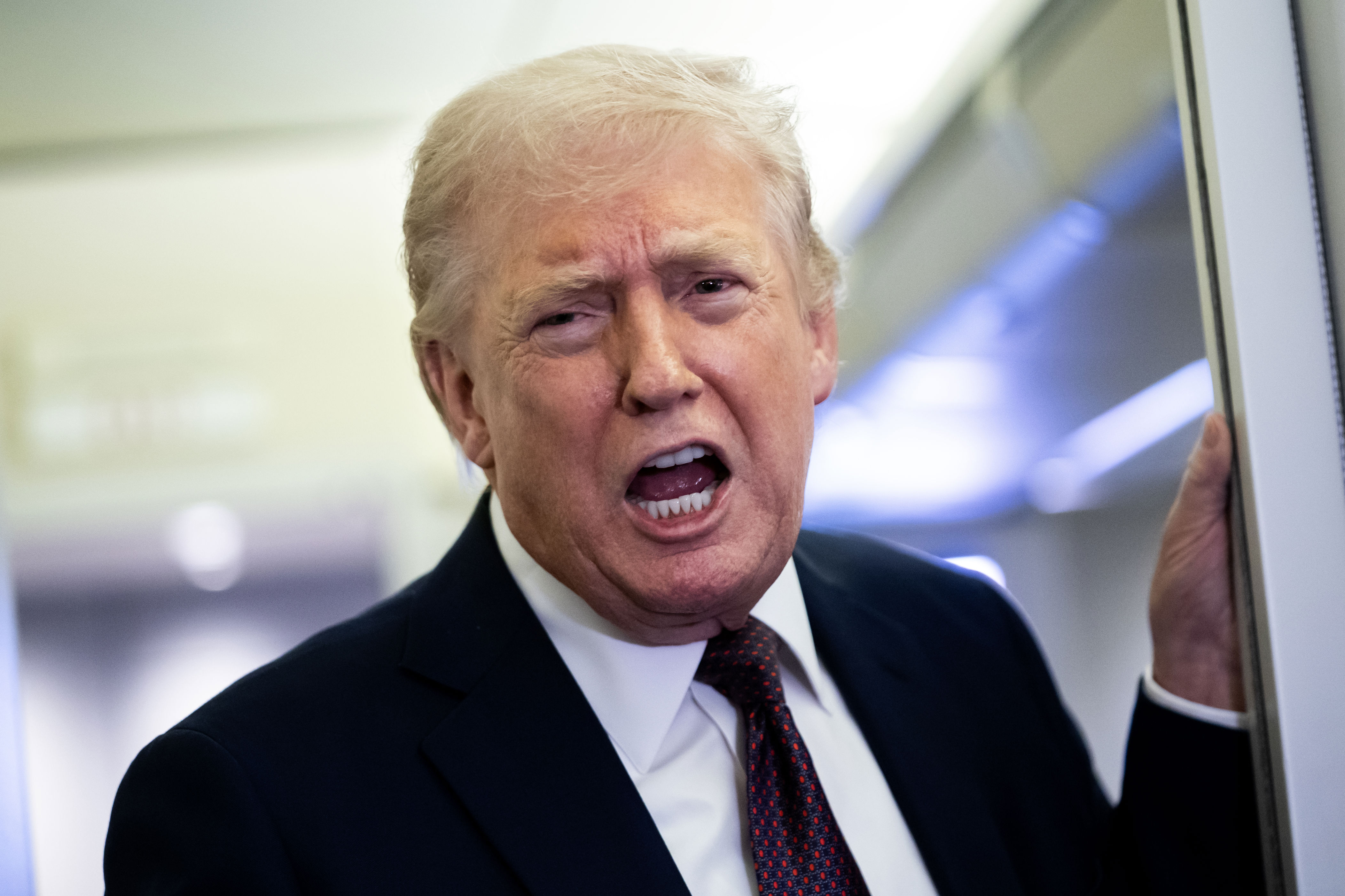
Trump reacted to the ruling in a post to Truth Social on Thursday.
“Huge win for the Republican Party, and America, in Virginia. The Virginia Supreme Court has just struck down the Democrats’ horrible gerrymander. MAKE AMERICA GREAT AGAIN! President DONALD J. TRUMP,” he wrote.
The case was led by the Republican National Committee (RNC), whose chair Joe Gruters, wrote in a statement the court “sided with the rule of law and struck down Democrats’ unconstitutional maps.”
“Democrats just learned that when you try to rig elections, you lose,” he said.
Former Governor Glenn Youngkin praised the ruling.
“The Constitution prevailed, and Virginians will never forget this unlawful attempt to rob them of their voice in Congress,” he wrote to X.
Can Virginia Democats Revisit Redistricting?
The ruling lays out procedural issues with the Virginia redistricting effort, so Democrats could revisit the possibility of redistricting before the 2028 election, Donahue said. Other Democratic states that failed to pass redistricting efforts including Colorado, Illinois, Maryland and New York could do so as well. Even a state like Minnesota could redraw if Democrats win a trifecta, he said.
“You have to wonder—are we getting into, because of what happened last year with Trump in Texas, where redistricting is not going to be something outside of a legal challenge that happens every 10 years?” he said. “It something that we’re looking at whenever a party has control of the process, that they’re going to look to try to do it multiple times during a decade.”
Abigail Spanberger ‘Disappointed’ by Ruling
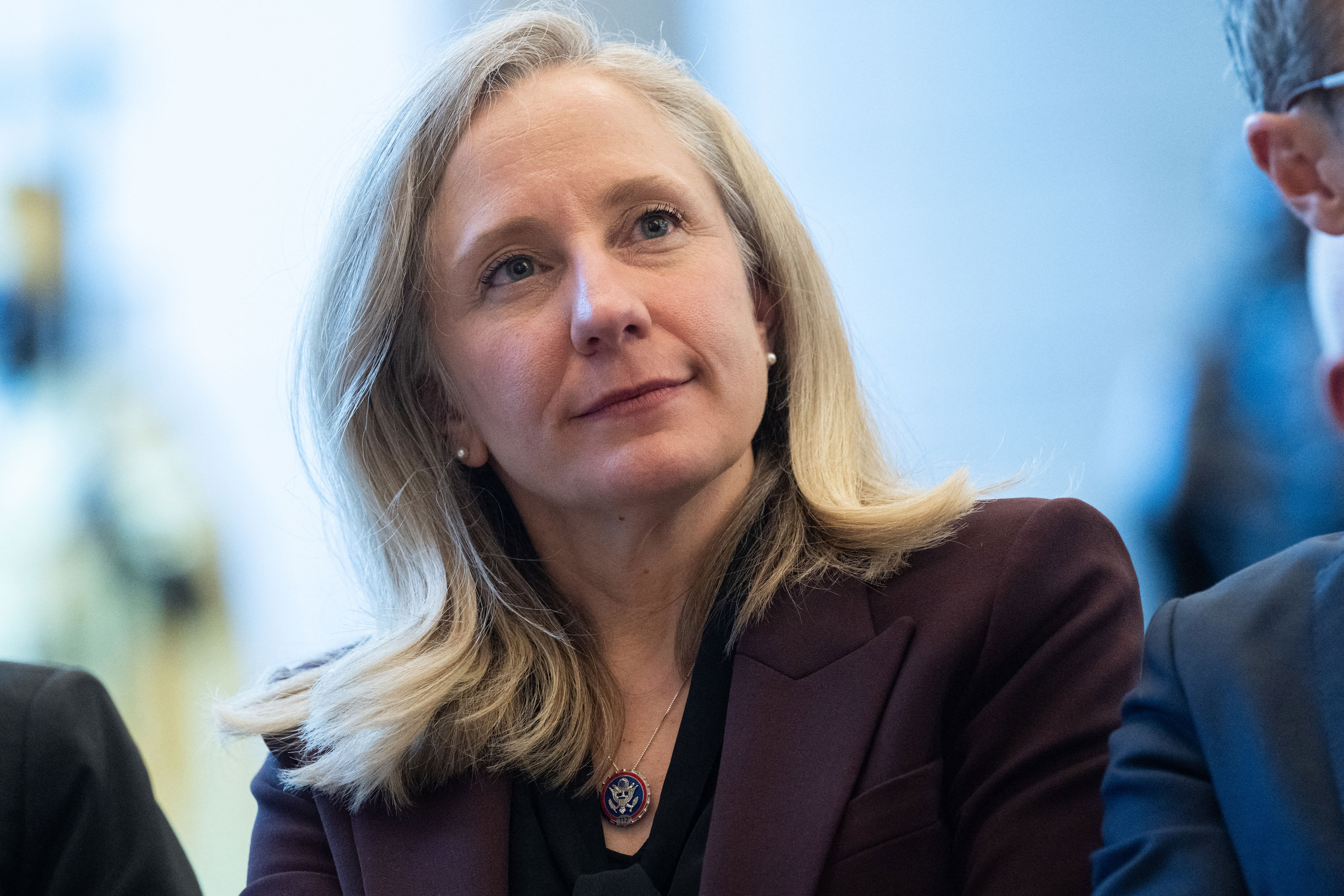
Spanberger, a Democrat, wrote in a statement that a majority of Virginia voters voted “to push back against a President who said he is ‘entitled’ to more Republican seats in Congress with a temporary and responsive referendum.”
I am disappointed by the Supreme Court of Virginia’s ruling, but my focus as Governor will be on ensuring that all voters have the information necessary to make their voices heard this November in the midterm elections because in those elections we — the voters — will have the final say,” she wrote.
Related Articles