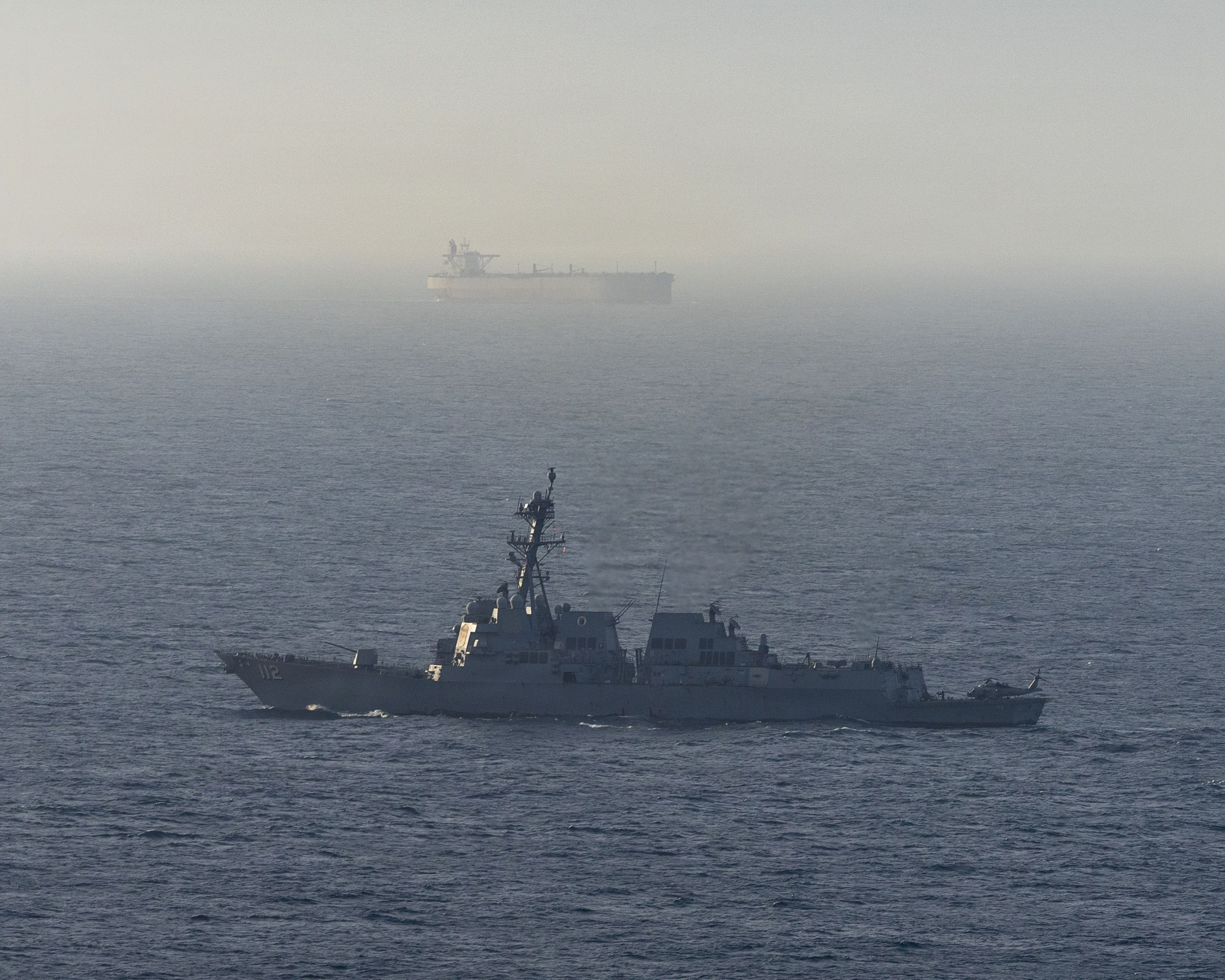
Shipping specialists say more than two dozen oil tankers have sailed through the U.S. naval blockade of Iranian ports since it began on April 13.
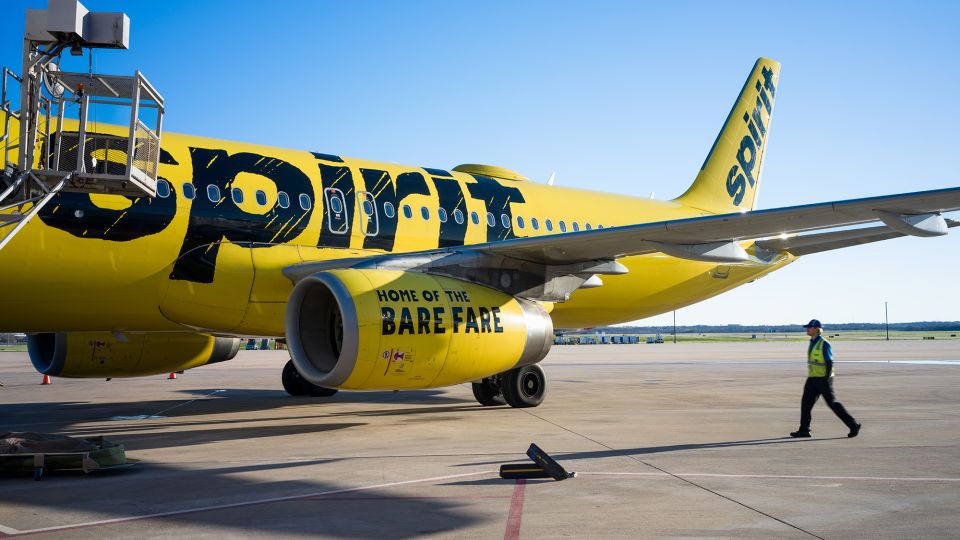
While the U.S. military says it has turned around scores of ships leaving Iranian waters, at least some of Iran’s “shadow fleet” has made it past the dense web of warships, surveillance planes and possibly satellites to reach loading areas in the Persian Gulf and trade routes on the high sea.
Where is it going? Most of Iran’s oil goes to China, where it’s bought by small refineries at a steep discount. The waters off Malaysia, east of the Singapore Strait, are a known gathering point for illicit ship-to-ship transfers.
That’s prompted the U.S. Navy to cast a wider net this week in trying to stop the ships, with troops intercepting and stopping vessels in the Indian Ocean—closer to Asia than the Middle East.
It’s a significant step-up in the operation, analysts say. What we are seeing now is a blockade operating at a global level, not just a regional one.
What Ships Have Made It Through the U.S. Net?
The U.S. blockade has worked to an extent, but several Iranian-linked ships may have evaded detection through a variety of methods.
Ships can falsify their position, cargo and destination—a practice known as “spoofing”—and just run the blockade that way. Some have also turned off their automatic identification system (AIS) transponder altogether. Both are breaches of an international convention governing safety at sea.
The U.S. Central Command (CENTCOM) said this week it had turned around 33 vessels in 11 days.
But energy analytics firm Vortexa reported that in the first nine days of the operation, up to 34 tankers had transited the U.S. blockade line, which begins at the Iran-Pakistan border in the north and ends at Oman’s Ras al Hadd headland, the easternmost point of the Arabian Peninsula.
Vortexa added that of its tally, six of the outbound ships—together carrying over 10 million barrels of oil—had been sailing “dark” with their location transponders off. They later reached the open sea, Vortexa said. But it’s unclear how much of the Iranian product will reach global markets, if any.
That’s because the U.S. has started to intercept ships further afield.
Stopping Ships in the Indian Ocean
On Wednesday, a day after U.S. troops seized the stateless Iranian-linked tanker the Tifani in the Bay of Bengal, CENTCOM said it had also in the past days turned back the Iranian tankers Hero II and Hedy and interdicted the Dorena, an Iranian-flagged crude carrier last seen off the west coast of India one week ago.
The trio of vessels was previously reported as having evaded the U.S. blockade by reaching the Indian Ocean.
On Thursday, Reuters reported that the U.S. had also intercepted the Iranian tankers Deep Sea and Sevin, both of which were last seen returning from Asian waters in mid-March, according to Newsweek’s review of publicly available AIS data.
There have been reports that the U.S is deliberately letting Iranian-linked ships bypass the blockade in order to catch and isolate them in open waters using faster Navy destroyers, away from the risk of sea mines and the missiles of Iran’s Revolutionary Guard.
Why Is the U.S. Stopping Iranian Ships Again?
Iran produces about 5 percent of the world’s oil—over 4 million barrels per day—but its exports have long been sanctioned by Washington and allies opposed to the Islamic Republic regime.
Since the start of the war, Tehran has fought back against the U.S. and Israel by exerting control over the Strait of Hormuz, a critical trade route in global oil supplies which runs along its southern coast.
Prior to the war, a quarter of the world’s crude oil supply and a significant chunk of gas and other commodities transited the strait which links Middle East producers to markets in Europe and Asia.
After U.S.-Israeli strikes began, Iran’s Guard threatened to attack commercial shipping in the strait, and in the first weeks of the war, they did. That in effect led to the shutdown of traffic, scaring ships off from moving through the waterway.
At the same time, Iran’s own ships were able to sail through unencumbered, delivering millions of barrels to its customers in Asia.
That’s why President Donald Trump announced the U.S. blockade on Iranian ports last week, despite agreeing to a ceasefire on the bombing campaign on Iran’s cities. The blockade will act as leverage and pressure on Iran in peace negotiations.
“Interdicting exports cuts off revenue and reduces the adversary’s ability to fund the war, pay salaries, support its population, or fill other functions,” said Jennifer Kavanagh, director of military analysis at Defense Priorities, a Washington think tank.
She noted that the U.S. blockade when confined to the Middle East “met the requirements for a legal blockade, under international law.”
But, Kavanagh said: “The expansion of the blockade to the global level does not meet these standards.”
Is the Blockade Working To Damage Iran’s Economy?
A blockade need not be 100 percent successful to be effective; the risk of interdiction could change Tehran’s calculus as Iranian leaders weigh the odds of success.
However, much will also depend on the Trump administration’s own efforts to balance further pressure on Iran against a possible energy crisis.
Having received criticism from both sides of the aisle for issuing a 30-day waiver on seaborne Iranian oil on March 20—due to rising market demands—the Treasury Department has now extended the sanctions relief for another 30 days, Treasury Secretary Scott Bessent told a Senate panel on Wednesday.
The move was prompted by pleas from allied capitals in the Gulf and in Asia and has helped manage global oil prices, according to Bessent, who said previously that the Iran waiver would not be renewed.
But the decision makes it doubly challenging to determine whether, how or why Iranian-linked tankers are bypassing the U.S. blockade, with sanctioned ships interdicted days later, far beyond the blockade line.
The previous waiver authorized the sale of Iranian crude that was loaded on vessels prior to March 20, including on shadow fleet tankers sanctioned by the Treasury Department’s Office of Foreign Assets Control, Roxanna Vigil, a former senior sanctions policy adviser at OFAC, said.
“To the extent that vessels with Iranian oil are getting through the blockade, I would want to know whether they are getting through the blockade because they have permission from the United States and why, or whether they have successfully evaded the blockade or whether there is some other reason to explain the vessel getting through,” said Vigil, who is now a national security fellow at the Council on Foreign Relations think tank in New York.
Bessent said on Wednesday that the U.S. blockade would force Iran to maximize its crude storage capacity, thereby halting further production.
But Vortexa, the oil analytics company, noted that Iranian oil production was unlikely to be immediately constrained, because it would take 22 days for Iran to reach its maximum fill level since 2020, if it stores 1.5 million barrels per day of crude production in storage tanks.
The firm added that the U.S. blockade was unlikely to impact Iran’s crude supply in the next 2-3 months due to the volume of oil already on the water—about 160 million barrels, including 130 million barrels beyond the blockade area.
“This is sufficient to supply about 2.5 months of typical Chinese import needs,” Vortexa said. “And more vessels are likely to trickle through the U.S. net.”
Related Articles