The US Senate will vote on a bipartisan resolution on Wednesday aimed at limiting the president's ability to wage war in Iran as the administration continues its military campaign.
Democratic lawmakers - and a handful of Republicans - have questioned whether President Donald Trump exceeded his powers in launching strikes without congressional approval. This measure would require the withdrawal of military force within and against Iran until approved by Congress.
Sponsors of the war powers resolution have said the president must have congressional authorization, but opponents have argued that Trump is following a precedent set by his predecessors.
The measure is not expected to pass.
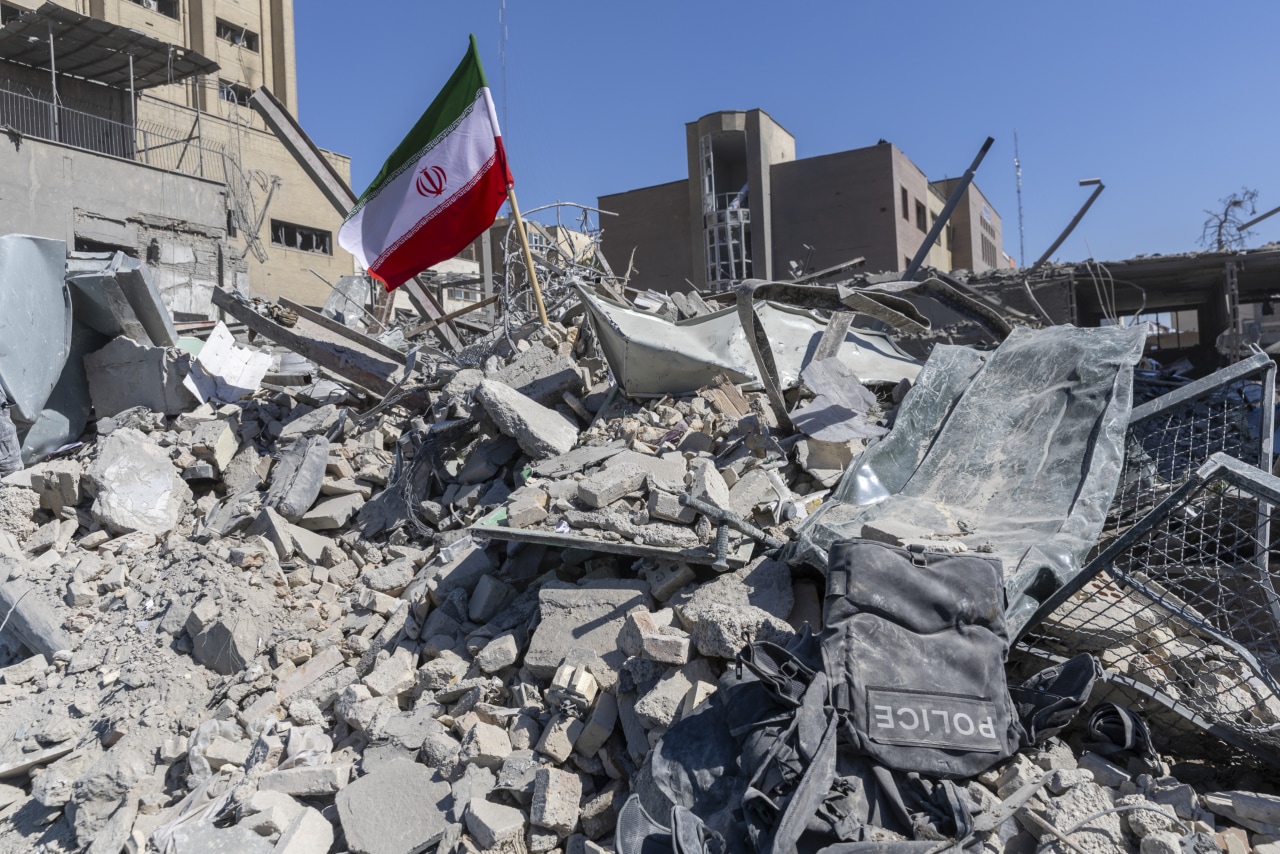
The US and Israel began striking Iran on Saturday. Iran responded by firing missiles and drones at Israel and Gulf states.
Since then, some lawmakers have been on edge, watching and waiting to see what role, if any, they would play in the ongoing attacks.
"Every senator will have to go on the record to declare whether it is in our best interest to send our sons and daughters into conflict against Iran," said Senator Tim Kaine, a Virginia Democrat who sponsored the legislation. "I pray that my colleagues will vote to end this dangerous and unnecessary war that has already resulted in the loss of six servicemembers and injured others."
On Tuesday, some lawmakers indicated they do not support the resolution now but may change their stance if the war continues past the four- or five-week duration that Trump has mentioned.
A majority of Democrats in the Senate are expected to back the measure. The exact number of Republicans who will support it remains unclear, but the bill would need a majority - more than 50 votes - to pass.
While the president has broad authority to launch military action without a formal declaration of war, Congress, by law, must be notified within 48 hours of hostilities beginning.
Secretary of State Marco Rubio has repeatedly said that the Trump administration has complied with that requirement. Top congressional leaders were notified before the initial strikes began, and Trump informed Congress in a letter on Monday.
Though he maintained it wasn't necessary.
Trump has previously ordered military operations without congressional approval, such as the US strikes against Iranian nuclear facilities last year, and the seizing of Venezuela's President Nicolás Maduro in January.
"To begin with, no presidential administration has ever accepted the War Powers Act as constitutional – not Republican presidents, not Democratic presidents," Rubio, a former senator, said.
Congress passed the War Powers Resolution, or Act, in 1973 to constrain the ability of then-President Richard Nixon to wage war in Vietnam. It requires the 48-hour notification and passage by Congress within 60 days of an Authorization to Use Military Force or official declaration of war.
Since 2001, administrations have relied on the AUMF passed after the 9/11 attacks as justification for the use of military force in the Middle East. Multiple attempts to repeal that authorisation have been unsuccessful.
The resolution being voted on Wednesday in the Senate on Wednesday is expected to garner support from lawmakers of both parties but also bipartisan opposition.
If the measure passes, it would still need to pass the US House of Representatives, which is expected to vote on Thursday, and then survive an expected veto from the president. To override a veto, both chambers would have to pass the measure with a two-thirds majority.