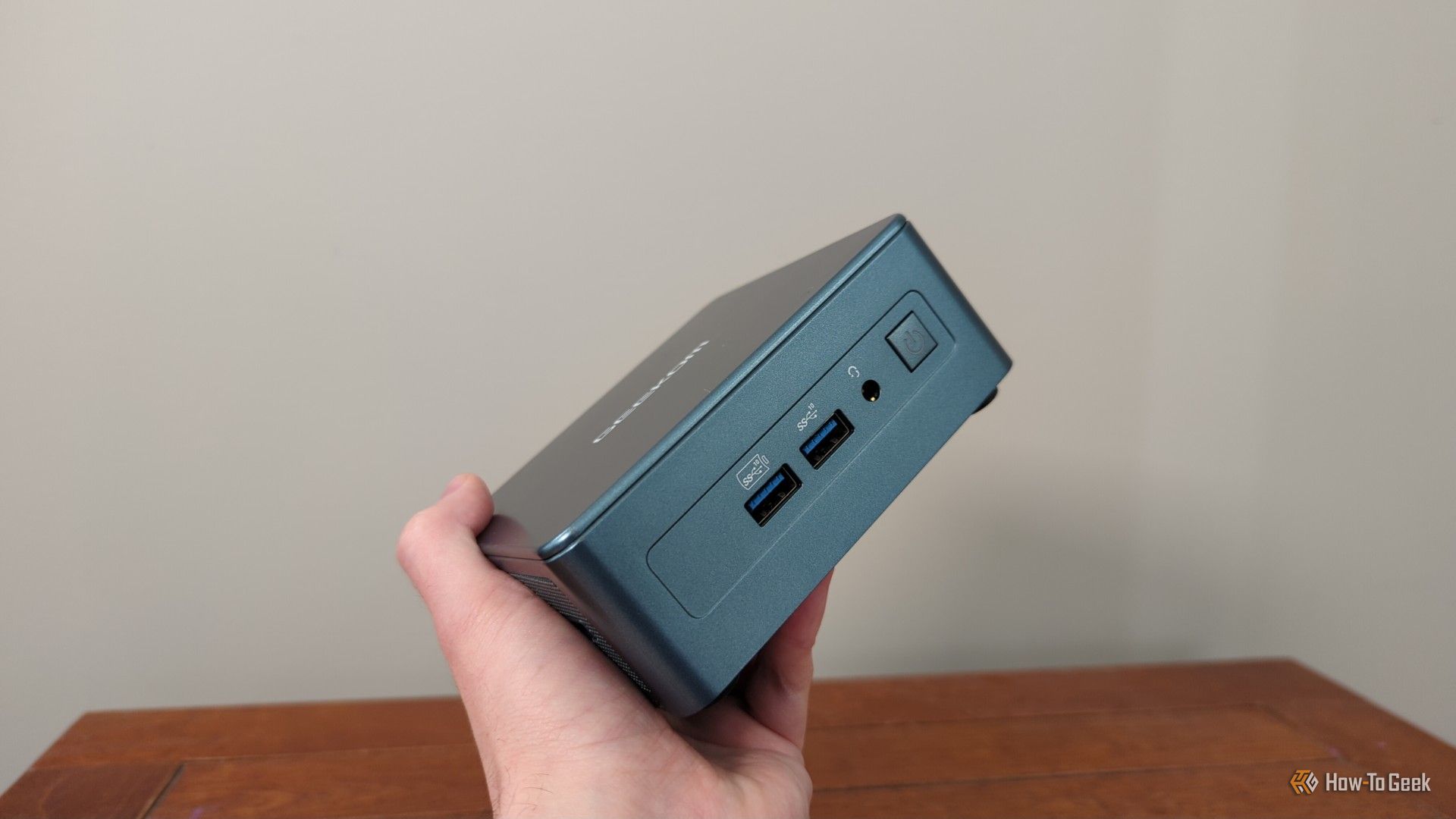
I've been flying the mini PC flag for some time now, after I realized just how much value these little computers could provide. The used mini PC market in particular was replete with machines that cost less than a Raspberry Pi. but could run circles around the popular single-board computer for just about any computing task.
I wrote that we are living in the golden age of mini PCs, but that it probably wouldn't last. It happened even faster than I thought, but it seems that the good times with small computers are over, at least for now. So if you didn't get yours while the getting was good, here's what you missed out on.
Performance got good enough
Balance in all things
If you haven't really been paying attention to mini PCs, you might still think of them as under-powered little computers that are good for nothing more than running a cash register or some other extremely basic task. The thing is, computer processors passed the "good enough" stage a long time ago.
We can go all the way back to Intel's Sandy Bridge generation of CPUs and find processor cores that are still more than powerful enough for browsing the web, doing office work, and most of the things people do with their computers every day. Even 15 years later, software developers haven't managed to bloat basic computer tasks so much that it won't work well on older processors.
Have a look at this video by Budget-Builds Official, where a Sandy Bridge Core i5 2400 is put through its paces in a modern context.
Clearly this processor is overkill for general-purpose computing even today, and it's a common CPU to find in old mini PCs. My Plex mini PC server has a dual-core Haswell CPU (one generation newer than above) and it has zero issues with direct 4K streams, or (with hardware acceleration) transcoding.
So, in short, there are lots of mini PCs out there that can do what you need.
The part people missed: they were unusually cheap
We had it good
Used mini PCs were usually depreciated tax writeoffs from companies on a fixed upgrade cycle, and refurbishers snapped them up for scrap, checked that everything worked, and then put them out for a quick buck. This was a great deal for anyone who wanted to do homelab stuff or otherwise just needed a basic computer to do a basic job. Sure, Windows 11 support is an issue on the older stuff, but that's nothing a nice modern Linux distro can't solve.
But it wasn't just used and refurbished mini PCs that were a good deal. As they became more popular, and the market expanded, new systems from numerous OEMs were going for great prices. Look at this price history for the Beelink S13 Mini PC.
At one point, the price dipped all the way down to around the $150 mark, but over time it's creeped up to over $400 for some models.
The shift that ended it (without anyone noticing)
All good things...
That the mini PC fun has ended shouldn't be too surprising. We all know about the cost of RAM and SSDs rising. These are, of course, two key components in any PC, mini or otherwise. So the latest models that use the latest RAM and SSD generations are going to feel the squeeze.
These are still "cheap" computers in the greater scheme of things, but the value proposition has been destroyed. The only mini PC that still feels like great value to me is, ironically, the Apple Mac Mini. If you're going to spend hundreds of dollars on a mini PC, it might as well be one that can actually replace a desktop PC when it comes to performance.
What you actually missed
I still love mini PCs as computers and as a concept, but unless you can still find a few genuine good deals on them where you are, it seems that for now it's probably better to hold off. That said, a potential alternative is to build your own machine from parts that people generally give away for free.
RAM, motherboards, and CPUs from 15 years ago are considered e-waste, but as we've seen, the performance potential is excellent. The smallest you might manage is an ITX build, but if you're looking for performance per dollar, there is still a way.