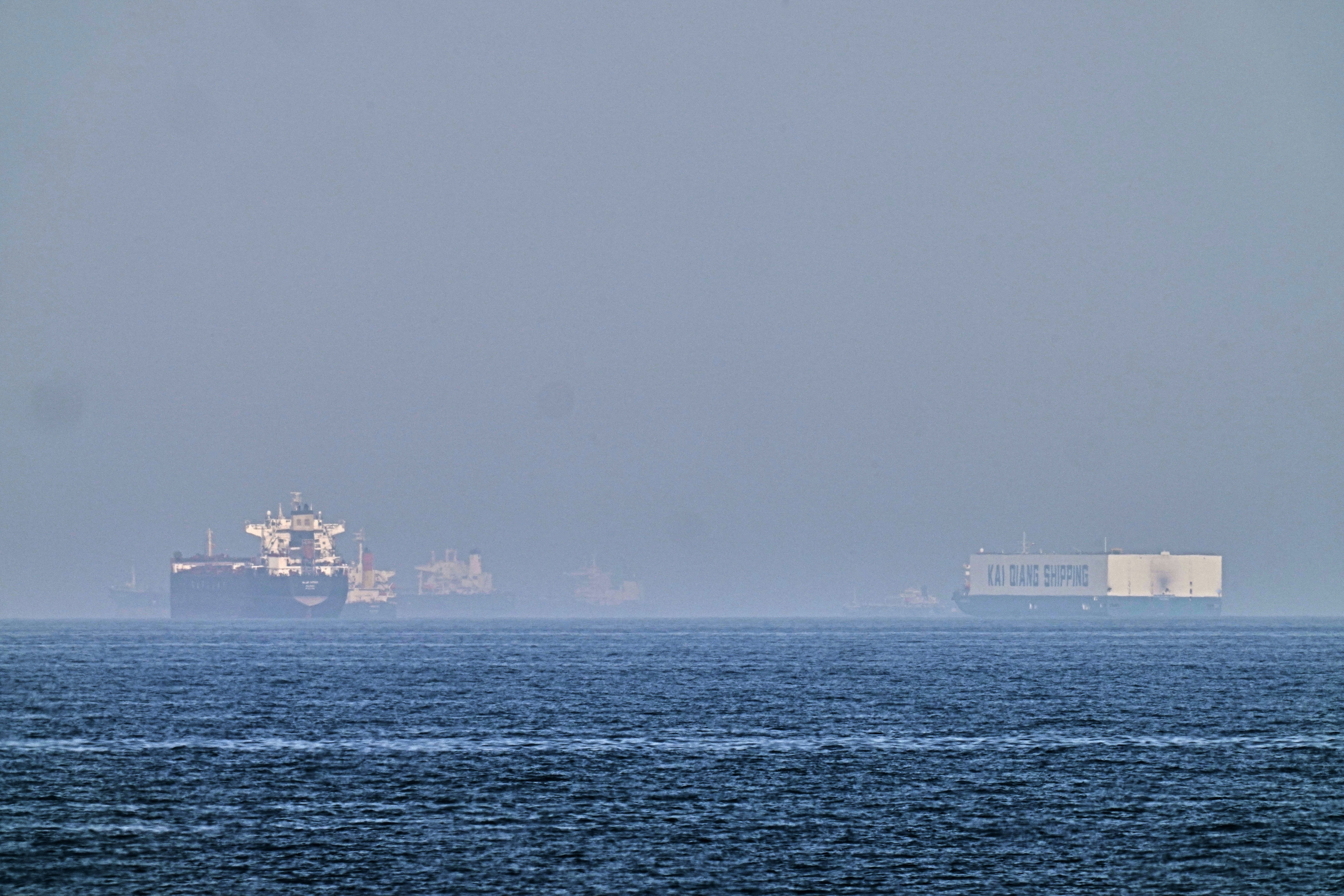
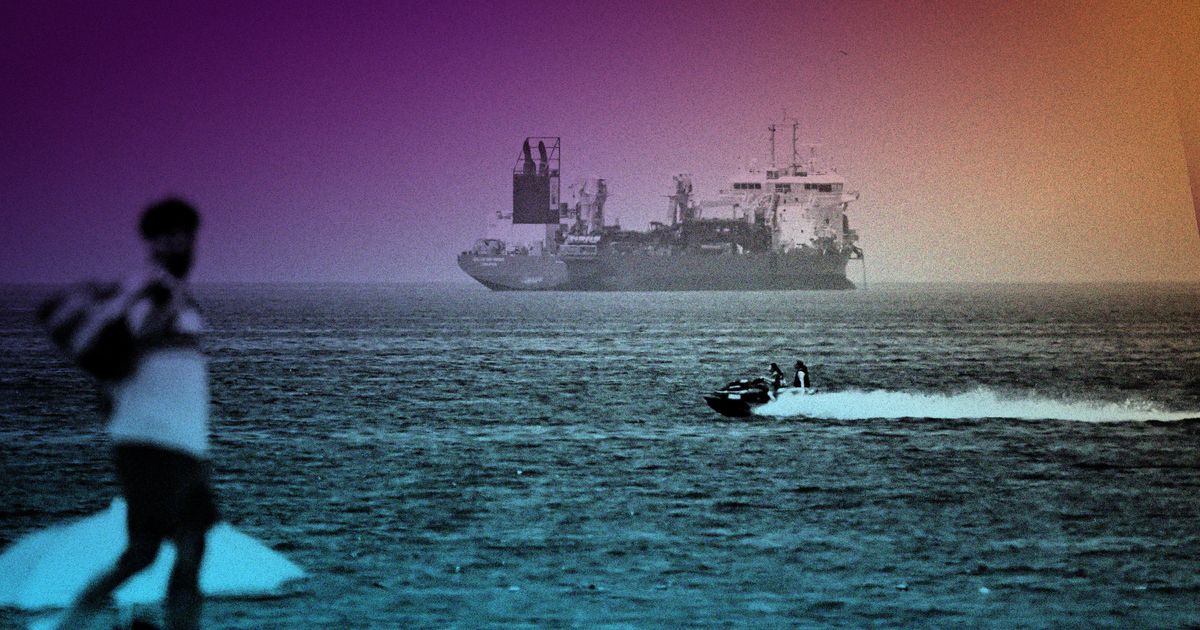
In a blockbuster announcement last week, the United Arab Emirates announced that it would leave the Organization of Petroleum Exporting Countries (OPEC) on May 1. The UAE has been a member of the oil cartel since the country was founded in 1971, but in recent years, it has grown frustrated with OPEC quotas to produce less in order to keep prices high enough to appease Saudi Arabia, by far OPEC’s largest producer. Meanwhile, blowback from the war on Iran — the blockade of the Strait of Hormuz, and Iran’s missile and drone attacks on Dubai and Abu Dhabi — has hastened the Emirates’ slow economic pivot toward the U.S. and Israel.
,Joe DeLaura, an energy specialist at the Dutch multinational Rabobank, says the UAE’s split from OPEC is more than just about the price of a barrel of oil — and that its effects will be far-reaching. I spoke with him about the bigger factors that influenced this breakup and what it means for the splintering international order.
,,Was this move broadcast in advance or did it come as a surprise to the people in your world?
If you look at what was going on in Sudan and in Yemen, the Saudis and the UAE were basically fighting proxy wars. It all almost got to be a hot war for a very brief second. And now the fact that the UAE can’t sell their oil — I think they’re just trying to say they want to hitch their ride to a bigger horse.
,I was looking at Federal Reserve data for the breakeven price of oil for the UAE and for Saudi Arabia — the minimum price required to cover the cost of production. The UAE’s number is a lot less than the Saudis’. Is their motivation to leave OPEC as simple as wanting to produce more to sell at a lower price?
This is a much bigger geopolitical issue. I think we are entering a multipolar, fragmented world in which there will be these alliance blocs or trading blocs. The war in Iran is the beginning of that fragmentation. So you’re basically going to have the Israel and the E.U. as vassal states of the U.S. — that’s one trading bloc. Australia, Japan, and South Korea are probably going to be included, and the UAE is also signaling that they are going 100 percent with the U.S.
,The UAE is this place that is attractive to western capital with pretty good oil reserves. They really see they’ve been leashed by Saudi Arabia and OPEC. Once this war is over, they could probably get their production from 3 million barrels a day up to 4.5, 5 million barrels a day pretty quickly.
,How would this be different than the status quo? Is South Korea not already getting oil from the UAE?
All of the Gulf countries are already selling to those countries, yes. What I think is going to shift in the coming five years is a de facto rule that you cannot sell to other countries. The U.S. Navy will not provide escort service or guaranteed shipping if you sell to China, if you go outside of the trading bloc.
,What does it mean for OPEC that its third-largest producer is out?
It’s the start of the fragmentation of OPEC, because oil is still the master resource. We talk about the digital age, and it’s kind of horseshit. We’re still in the oil age. Everything still runs on crude in the real world.
,I think Kazakhstan will be the next to leave OPEC. I think you’ll also see the U.S. try to pry away at Nigeria as well. They’ll say, “All right, do you want access to the U.S. dollar? Do you want to be able to sell things in the world’s biggest markets? Then you’ve got to be a part of our alliance. And if not, well, good luck with China.” Kazakhstan’s really the one to watch. They’ve already been flouting the OPEC production quotas for a couple of years now. And now with this conflict, there’s no way they’re going back to the quota. They’re making money, and they can sell to Europe with the CPC pipeline.
,Angola, Ecuador, and Qatar have all left OPEC in the past seven years. Is this going to be more disruptive just because UAE is a larger producer?
It’s a big deal because they’re a big producer, but also because the UAE, Kuwait, and Saudi Arabia were the three OPEC members that had the ability to overproduce and punish other members to drive the price down to harm everybody in the cartel. The UAE also has the ability to ramp up pretty quickly or ramp down without harming their wells too much, although we’ll see how that pans out with the closures right now.
,You can use history as a starting point, but this is going to be a bit different because you can’t separate it from the war in Iran. This conflict is all about that fragmenting, multipolar world. The UAE is signaling that “After this U.S.-Iran conflict wraps up, we are going to be in the U.S. camp because the U.S. will guarantee our shipping through the Strait of Hormuz. And we will be the de facto Middle Eastern center for finance and oil.”
,What pressure does this put on Saudi Arabia? They’re the largest member of OPEC and produced nearly as much as the next three closest combined.
The Saudis are going to be in an increasingly tight spot because now they don’t have as much control over that production as they did, and they have to grapple with the fact that they’re also pretty much de facto aligned with the U.S. So it just means they have less power, because the thing that Saudi Arabia has that the world wants is oil. Nobody’s going there for vacation. They’re not doing the Dubai thing.
,It’s hard to say what the effects will be on Saudi Arabia. Perhaps that means a pivot to Yemen or Sudan in their regional proxy wars. But it’s unclear where they turn next.
,And when will we be seeing the effects of this — not necessarily at an American consumer level, but on the world stage?
It’s not going to have really any material effects until the U.S. conflict with Iran is over. But the first effect is that the UAE will be increasing oil production. That oil is probably going to the U.S.-directed trade block: Japan, South Korea, Australia. I don’t think the U.S. will allow them to sell to China. That’ll be part of the tit for tat: “You give us a base, we’ll put nuclear weapons there, we’ll protect you. But you have to sell to our approved counterparties.”
,In the meantime, how is Iran treating UAE oil tankers in the Strait of Hormuz now?
Iran is blowing up anybody’s tankers except for India, Bangladesh, Pakistan, and China, I believe.
,This interview has been edited for length and clarity.
,