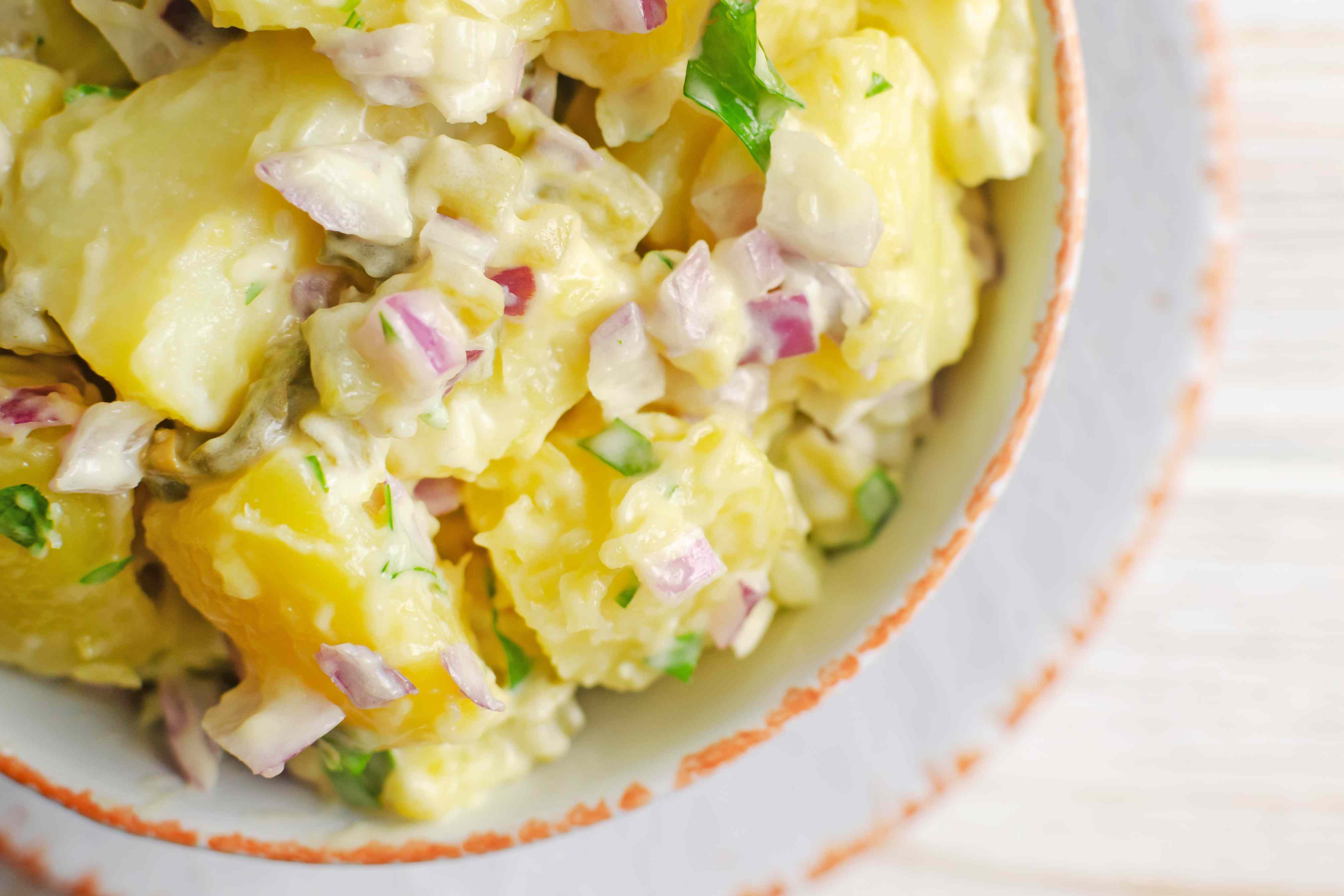
It's a lot less work for you.
My first day in a professional kitchen, someone handed me a vegetable peeler and pointed me to a 50-pound case of small potatoes. I peeled every last slippery little spud.
Turns out, maybe I didn't have to. After years of cooking professionally, that instinct has come into question many times: there are applications where leaving the skin on saves both time and texture, and I've become firmly Team Leave-the-Skin-On whenever possible. To confirm I'm not just defending a shortcut, I called three culinary professionals with serious potato credentials.
Meet the Potato Pros
- Stephanie Pixley: Recipe Developer/Chef and Deputy Food Editor at America's Test Kitchen
- Kayla Tabb: Recipe Developer and Chef-in-Residence at the Boston Public Library
- Jonathan Warnock: Executive Chef of State Road on Martha's Vineyard
The Appeal of the Peel
Pixley has her own origin story. She grew up watching her mother boil potatoes skin-on, completely enamored with her mom's ability to peel them while still ripping-hot. When she finally asked why, her mother answered, "Because that’s how my mother did it!" And without fail, mothers tend to know best. Though, it's not just about nostalgia and tradition—science backs her up.
"Starchy russet potatoes are more likely to absorb moisture; the starches gelatinize and swell with water," Pixley explains. "If you peel those potatoes and [then] cook them in water, they're more likely to get water-logged." For something like mashed potatoes, where you're after silky, not soupy, the skin acts as a barrier. Leave it on.
Warnock agrees, there's "real merit to cooking [potatoes] and peeling them afterwards" in many applications, though he adds a practical caveat: the skin's protection comes with a trade-off. Potatoes that absorb less water also absorb less salt during cooking, so you'll need to season more aggressively at the finish line.
At State Road, Warnock often cooks and serves baby Yukon Golds—waxier, less starchy that russets—and keeps their skins on entirely. "The skin helps to keep the potato intact so you can cool them, smash them with the heel of your palm, and sear them in a hot pan. The skins are delicious." The result is a potato that's crispy where it counts and creamy where it should be. The skin is doing most of that work.
For his signature hand-cut fries, though, Warnock peels and cuts before boiling. "It's more an issue of convenience than anything else," he explains. The extra-large russets get cut in half to fit the fry-cutter, and the speedy par-boil jump-starts the cook before they hit the fryer. It's a different potato, a different application, and a different set of rules.
Tabb approaches her potatoes from a starch-behavior angle. "The less waxy a potato is, the less protection it has from waterlogging. So, I'm especially careful with russets when I use them." She opts to leave their peels intact through boiling anytime a waterlogged spud would be a deficit. For gnocchi especially, moisture control is everything. "I definitely want to boil those whole and unpeeled. I really need to control the moisture content there, so a dry [russet] is ideal."
That said, she carves out two legitimate exceptions. When cutting potatoes into smaller pieces for faster, more even cooking, the peel comes off first. Same goes for British-style roasted potatoes, where shaking and roughing up the exposed starchy surface is exactly the point. It gives you those crackly, lacquered edges.
For most boiling applications—mashed potatoes, potato salad, gnocchi—leave the skin on. It prevents waterlogging and the skin slides off easily after cooking.
Read the original article on Simply Recipes