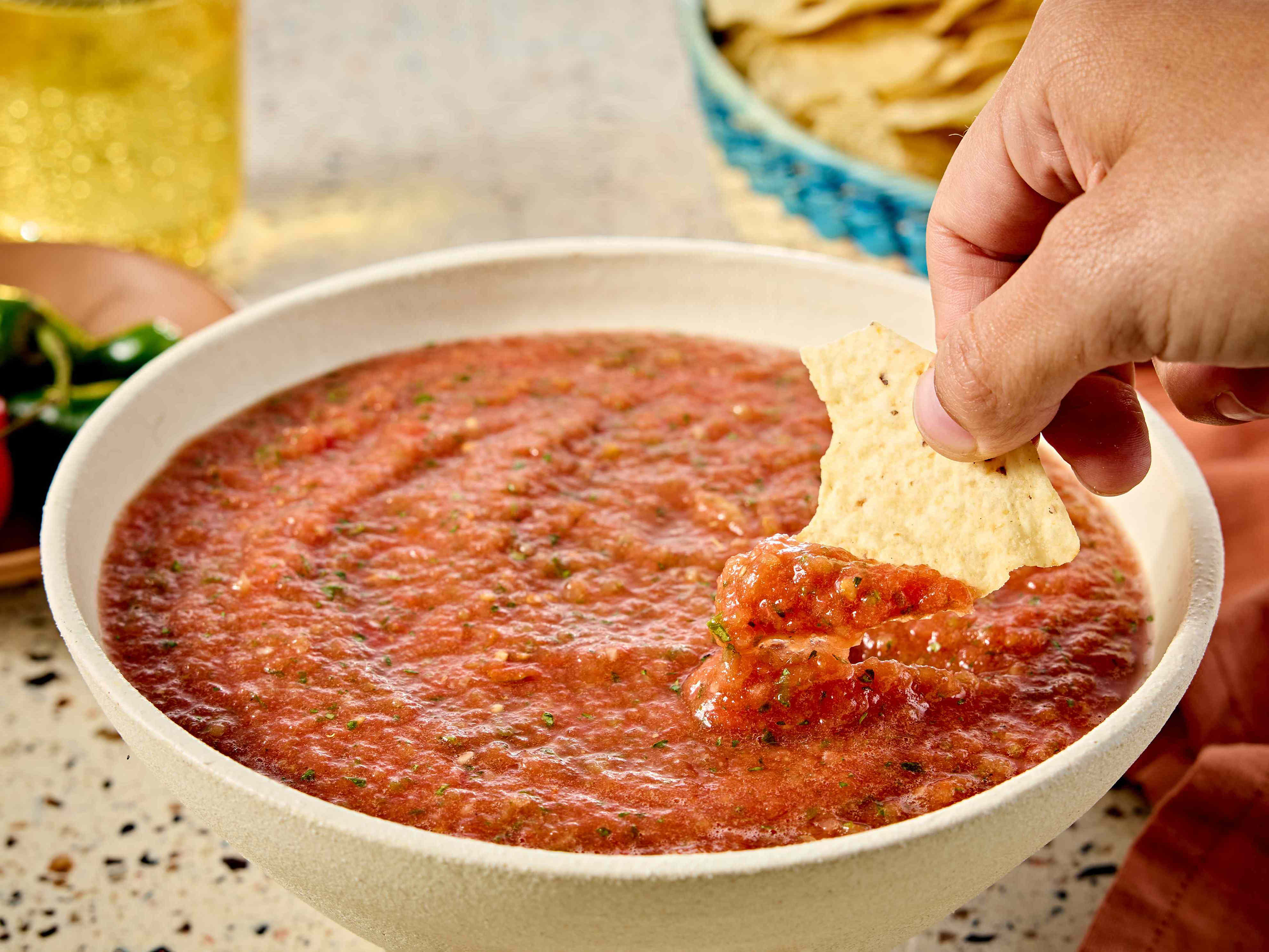
Get your tortilla chips ready!
Key Points
- Professional chefs share what they look for in a store-bought salsa, from ingredients to texture and flavor.
- A few affordable brands come close to capturing the fresh, chile-forward taste of homemade salsa.
- These come in handy to keep in the pantry to elevate everything from tacos to soups to marinades, and beyond.
Chefs with Mexican heritage tell us they rarely salsa their way to the prepared dip section of the supermarket.
"I grew up in Tabasco, Mexico, where salsa was always fresh and chile-forward. These flavors are hard to replicate in jarred products," admits Concrete Rose chef Fernanda Alamilla.
Still, when time is tight, energy is low, and fresh tomatoes aren’t at their peak, the culinary pros we polled readily admit they outsource dip prep every so often. This is especially true since the quality of grocery store salsas has been increasing in recent years, they note.
In lockstep with the rise in quality, the selection has been expanding, too, and now the salsa section is stocked with dozens of brands. So which store-bought salsa is worthy of a spot in your cart—and on your tortilla chips and tacos?
Our Panel of Salsa-Scoring Chefs
- Fernanda Alamilla, chef at Concrete Rose in Houston, Texas
- Ricardo Mirón, Mexico-born chef de cuisine at Toro in Denver, Colorado
- Omar Ramirez, chef and co-owner of Macizo in Indianapolis, Indiana
- Richard Sandoval, a New York City-based Mexican-American chef and restaurateur
Qualities of the Best Jarred Salsa
When surveying the salsas on supermarket shelves, these Mexican chefs tell us they seek out products with:
- A short, recognizable ingredient list. When Mexican-American chef and restaurateur Richard Sandoval analyzes any packaged food, including salsa, he pays close attention to the ingredient list. "The shorter and more recognizable, the better," he says. For salsa, "simple, real ingredients should do the heavy lifting: tomatoes, chiles, onion, garlic, cilantro, salt, and a little acid," Sandoval adds. Toro chef de cuisine Omar Ramirez echoes that sentiment, flagging that if the ingredient list includes anything he wouldn’t use in his own kitchen, "I'm not interested." Thickening agents, artificial smoke flavor, added sugars, or "anything that tastes more like tomato sauce than salsa," are not invited to this party, Ramirez confirms.
- Bright acidity and heat. Excess additives "tend to dull the bright acidity and heat that make salsa so good in the first place," Sandoval adds. The best salsas taste "crafted, not engineered," Ramirez tells us. They should be balanced, with tomatoes as the star. The supporting cast: A pleasant amount of heat from chiles (not just hot sauce or cayenne to boast about the burn), brightness from citrus or vinegar, and seasoning from salt and herbs.
- A versatile (and not-too-watery) consistency. "Texture is just as important as flavor," Sandoval notes. "A good salsa should have some body to it. It shouldn’t be watery or blended into a purée." Mirón chimes in to add that top-tier salsas are chunky and show signs of real vegetables.
The Best Store-Bought Salsa, According to Chefs
Enough talk; let’s salsa. If the chefs have their say about which brand is part of the spread, it’s Herdez.
Ramirez and Mirón verify that Herdez salsas are reminiscent of traditional Mexican-style table salsas. This is particularly true of the "Casera" (homemade) line, which is made mainly with tomatoes, onions, green chile peppers, salt, cilantro, and citric acid. The result: Salsas with "balanced heat and acidity," according to Mirón.
"Herdez salsas stand out because they don’t taste engineered. The chile flavor comes through, it’s not overly sweet, and the acidity feels balanced instead of sharp," Ramirez explains. In terms of consistency and flavor, "it’s closer to something you’d make at home than something designed just to be shelf-stable." So it’s no surprise that this is the top-selling salsa brand in Mexico.
Available in a wide range of spice levels (mild to hot) and flavors (including Salsa Verde, Roasted Poblano, Guacamole Salsa, chipotle, and classic tomato), Mirón awards bonus points for accessibility, affordability, and versatility.
"Unlike many jarred salsas designed mainly for snacking, Herdez holds up well when heated or incorporated into dishes," Mirón says.
Honorable Mentions
Herdez takes the gold. However, it’s highly unlikely that you’ll be disappointed by one of these other chef-approved brands.
- Frontera: Celebrated by Sandoval for being a "solid option," these salsa recipes were developed by James Beard Award-winning chef Rick Bayless. Whether you reach for chunky or chipotle; habanero or jalapeño cilantro, "these salsas are well-balanced and feel true to the flavors they’re meant to highlight," Sandoval says. The magic here "comes down to restraint," according to Sandoval. Since the ingredient list is short—fire-roasted and diced tomatoes, onions, peppers, garlic purée, salt, vinegar, cilantro, and very little else—"you can taste the roasted notes. The acidity feels bright and natural, and the heat adds character without overpowering everything else," he tells Allrecipes. Bonus: Like Herdez, Frontera salsas are available at most supermarkets nationwide.
- Tatemada: Alamilla acknowledges that this brand’s salsa has grown to become a "pantry staple." A standout due to its bold chile flavor, balanced texture, and versatility, this brand has the "cleanest" ingredient list of the bunch, he says, with zero preservatives or thickeners. For some flavors, carrots, cumin, or olive oil make the cut. Otherwise, it’s all about tomatoes, peppers, onions, salt, herbs, and citrus juice. "I admire how the brand balances delicious taste, reliable texture, and beautiful packaging," Alamilla says. Find the Árbol, Molcajete, Tomatillo, Jalapeño, Habanero, or Casera Salsas on the Tatemada website, on Amazon, and at major retailers including Target, Walmart, Sprouts Farmers Market, and Costco.
How To Use Salsa, Chef Style
No matter which brand you buy—or if you DIY—scooping up salsa with tortilla chips is just the beginning, the chefs say. Keep a jar (or several) handy so you can:
- Spoon salsa over grilled fish or shrimp.
- Use it to braise chicken or eggs (think: spicy shakshuka).
- Fold it into rice.
- Add it to marinades.
- Blend it into soups like pozole.
- Toss it with fried tortillas and eggs for chilaquiles.
- Feature it as part of salads or burrito bowls.
- Try it as a condiment for tacos, enchiladas, or burgers.
Read the original article on Allrecipes