WASHINGTON – On the night he was elected to a second term, President Donald Trump tried to put to rest concerns raised by his critics that he would lead the United States into war.
“I’m not going to start a war,” he said during his victory speech before a crowd of supporters at the Palm Beach County Convention Center in Florida. “I’m going to stop wars.”
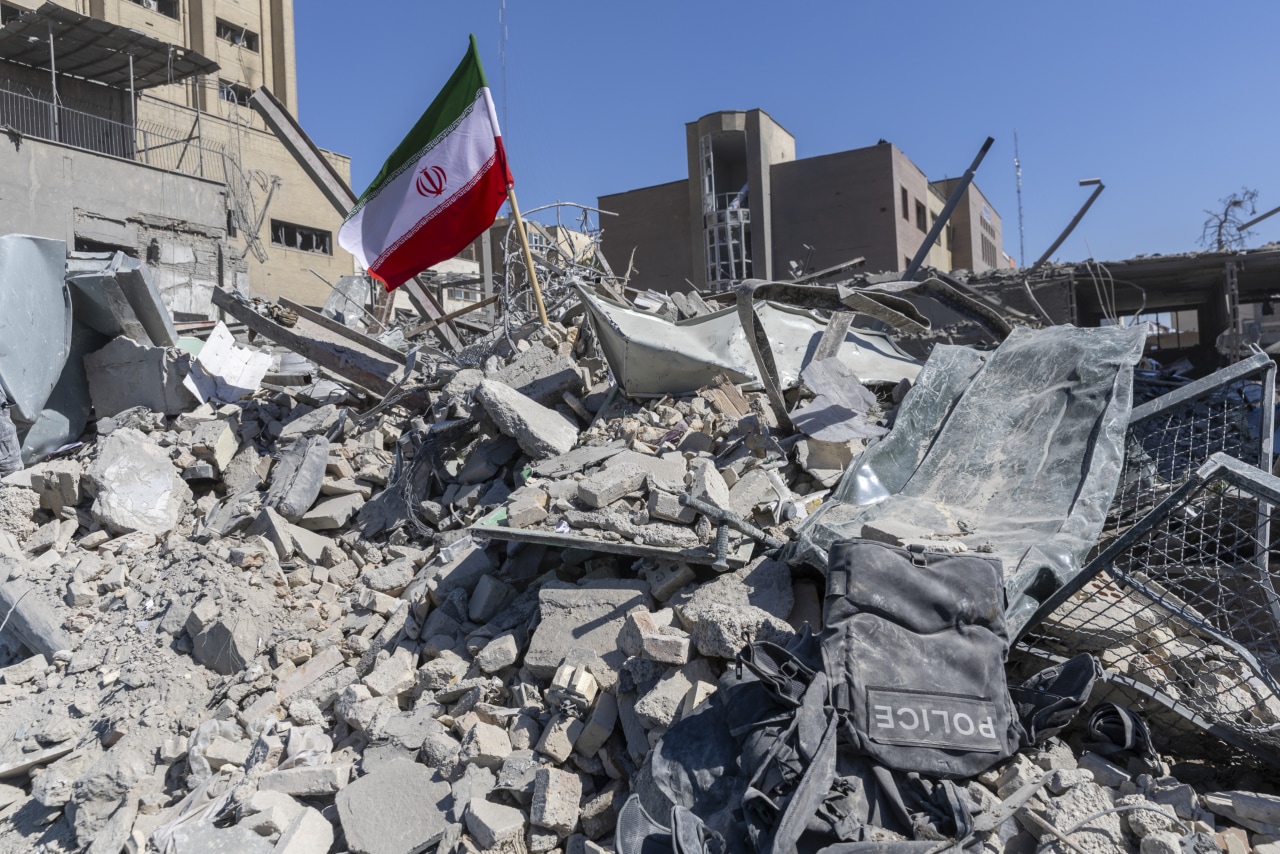
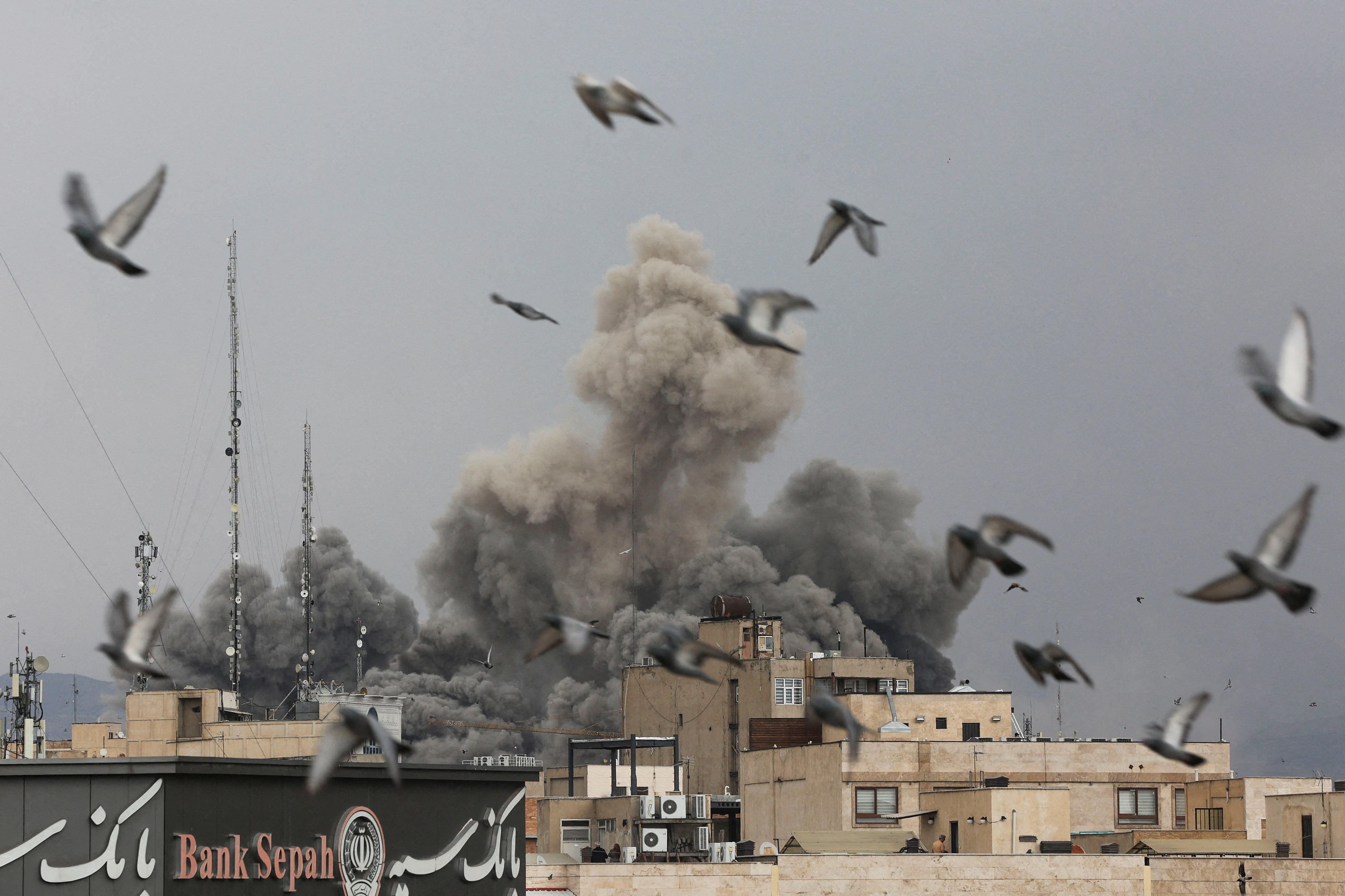
Yet during his first year back in the White House, Trump unleashed U.S. military power on eight other nations. He ordered U.S. forces into Venezuela to capture that country’s leader, Nicolás Maduro. And, in the most sweeping military operation of his presidency, the United States and Israel launched a joint attack on Iran last weekend that targeted the Middle Eastern county’s missile capabilities and its leadership.
Start the day smarter. Get all the news you need in your inbox each morning.
Six U.S. service members and more than 700 Iranians, including the country’s top official, Supreme Leader Ayatollah Ali Khamenei, have been killed in the attacks.
The capture of Maduro and the war in Iran are significant not only because of the scale of those operations, but because they appear to signal a new approach to foreign policy under Trump. Both attempted not only to eliminate what Trump claims is a threat to the United States, they decapitated the governments of those countries and removed their heads of state.
“We are in uncharted territory,” said Alexander Downes, director of the Institute for Security and Conflict Studies at George Washington University.
White House press secretary Karoline Leavitt said in a statement to USA TODAY that Trump’s decision to launch the military strikes in Iran was grounded “in a truth that presidents for nearly 50 years have been talking about, but no president had the courage to confront: Iran poses a direct and imminent threat to the United States of America and our troops in the Middle East.”
“The rogue Iranian regime under the evil hand of the ayatollah has killed and maimed thousands of American citizens and soldiers over the years – and that ends with President Trump,” she said.
From John F. Kennedy’s Bay of Pigs invasion in Cuba to Ronald Reagan’s bombing of Libyan leader Muammar Gaddafi’s compound to George W. Bush’s war in Iraq, the United States has a long – and mostly unsuccessful – history of trying to bring about regime change or unleash internal forces that would cause people in other countries to rise up and overthrow their leaders.
But what happened in Venezuela – U.S. forces swooping into another country to seize its elected leader – has never happened before except in war. U.S. troops captured Manuel Noriega of Panama during an invasion in 1990, but Noriega never officially served as president of the Central American country. He was a military dictator and unelected leader who ruled behind the scenes.
Likewise, the attacks on Iran are unprecedented because they mark the first time a sitting head of state has been killed by U.S. airstrikes, Downes said.
The United States has taken aim at other foreign leaders in the past.
The U.S. government, mostly through CIA-led covert operations, tried several times to kill Cuban leader Fidel Castro. Reagan ordered airstrikes on Gaddafi’s compound in Tripoli in 1986 after Libyan agents were connected to the bombing of a Berlin nightclub that killed two U.S. servicemen and injured dozens of others. Gaddafi survived the attack on his home but claimed his adopted infant daughter was killed, although later reports suggested that was bogus.
But Trump’s decision to use military force to go after foreign leaders is an about-face that has infuriated many of his own MAGA supporters.
“‘Make America Great Again’ was supposed to be America first, not Israel first, not any foreign country first, not any foreign people first, but the American people first,” former Rep. Marjorie Taylor Green, a Trump supporter turned critic, said on former FOX News host Megyn Kelly’s podcast on Monday, March 2.
“What is happening to the man that I supported, you supported, the man that denounced what happened in Iraq, the man that said no more foreign wars, no more regime change, promised it on the campaign?” Greene asked.
Tucker Carlson, a longtime Trump backer and former FOX News host, denounced the Iran operation as “absolutely disgusting and evil.”
Before he entered politics, Trump repeatedly slammed then-President Barack Obama and claimed he would start a war with Iran to improve his public image because he wasn’t an effective negotiator.
Trump repeatedly condemned “forever wars” and regime change during his first term and at a campaign events when he was running for re-election. During his second inaugural address, he said the country would measure his administration’s success “not only by the battles we win but also by the wars that we end – and perhaps most importantly, the wars we never get into.”
But just eight months after taking office, he seemed to signal a change of heart.
Last September, Trump changed the name of the Department of Defense to the Department of War, a designation the government had done away with more than seven decades earlier.
To some, the rebrand seemed to suggest a move from a defensive posture to a more aggressive, dangerous image. Defense Secretary Pete Hegseth, who has argued the military should shift to a “warrior ethos,” said the name change would convey “peace through strength.”
While he publicly pledged he would not entangle the United States in costly and destructive wars – and lobbied to win the Nobel Peace Prize – Trump has been willing to turn U.S. military power against foreign adversaries.
In the year since he returned to office, he has attacked eight nations (Iran, Venezuela, Nigeria, Somalia, Syria, Iraq, Yemen and Ecuador).
Syria, for example, was hit with large-scale airstrikes last December and again the following January in a campaign directed at Islamic State targets. Somalia, targeted multiple times in a campaign against Islamic State operatives, has been struck 168 times, according to New America, a nonprofit group that has tracked the military campaign.
In the Caribbean and the Eastern Pacific, Trump has ordered strikes on boats that his administration says were shipping drugs, such as fentanyl and cocaine, into the United States.
In January, U.S. troops stormed Maduro’s compound in Caracas, captured the Venezuelan president and his wife, and whisked them to New York to stand trial on drug-conspiracy charges. Trump allowed Venezuela’s leadership structure to remain in place. Venezuelan Vice President Delcy Rodríguez was elevated to interim president, but Trump said she would run the country under the oversight of a U.S. team including Secretary of State Marco Rubio.
The administration’s successful operation in Venezuela may have encouraged Trump to take even greater risks in Iran, said Tim Natfali, a presidential historian and scholar at Columbia University’s Institute of Global Politics.The United States and Israel bombed three nuclear facilities in Iran last summer, arguing that the regime was developing a nuclear weapon. Those attacks were a precursor to the current war that killed Supreme Leader Khamenei and other senior leaders.
The Trump administration has offered different justifications for the war, saying Iran was close to building a nuclear weapon and ballistic missiles that could reach the United States. But Trump also has urged the Iranian people to rise up and overthrow the ruling regime.
With the use of airstrikes targeting Iran’s leaders, the United States has entered a new era, Naftali said.
“The removal of Ayatollah Khamenei – and I don’t weep any tears for him – is a new chapter in U.S. foreign relations, and that sets in motion the possibility of unintended consequences,” Naftali said.
For decades, U.S. policy has banned the government or its employees from targeting foreign leaders. Gerald Ford enacted the policy by signing an executive order in 1976, and Reagan expanded it five years later. While the government has targeted and killed the leaders of terrorist groups, such as Osama bin Laden, the ban on political assassinations remains in effect.
When it comes to forcing regime change in other countries, the United States has an uneven record.
During the Cold War, the United States tried 72 times to change the leadership of foreign governments, according to Lindsey O’Rourke, a Boston College political scientist who has studied international relations and regime change. Sixty-six of those were covert operations. Only 26 successfully brought a U.S.-backed government to power, O’Rourke reported.
Even with the death of Khamenei, regime change remains a long shot in Iran, said Downes, the institute director at George Washington University.
“The United States and Israel are not going to do it ourselves,” he said. “We’re trying to set the conditions for the Iranian people to do it.”
But Iran’s ruling regime has been in place for almost 50 years, is well entrenched and has a long history of suppressing dissent. Iranian security forces slaughtered thousands of protesters in a crackdown on street demonstrations in January.
With Trump’s calls for regime change, “we’re basically expecting them to rise up without weapons and fight against a regime that just a couple of months ago killed thousands of them,” Downes said.
Trump, meanwhile, predicted the war in Iran would go on another four or five weeks – or longer if needed. The United States has enough weapons stockpiled, he wrote on Truth Social, to fight wars “forever.”
Michael Collins writes about the intersection of politics and culture. A veteran reporter, he has covered the White House and Congress. Follow him on X: @mcollinsNEWS
This article originally appeared on USA TODAY: A new era: Trump actions in Iran, Venezuela are 'uncharted territory'