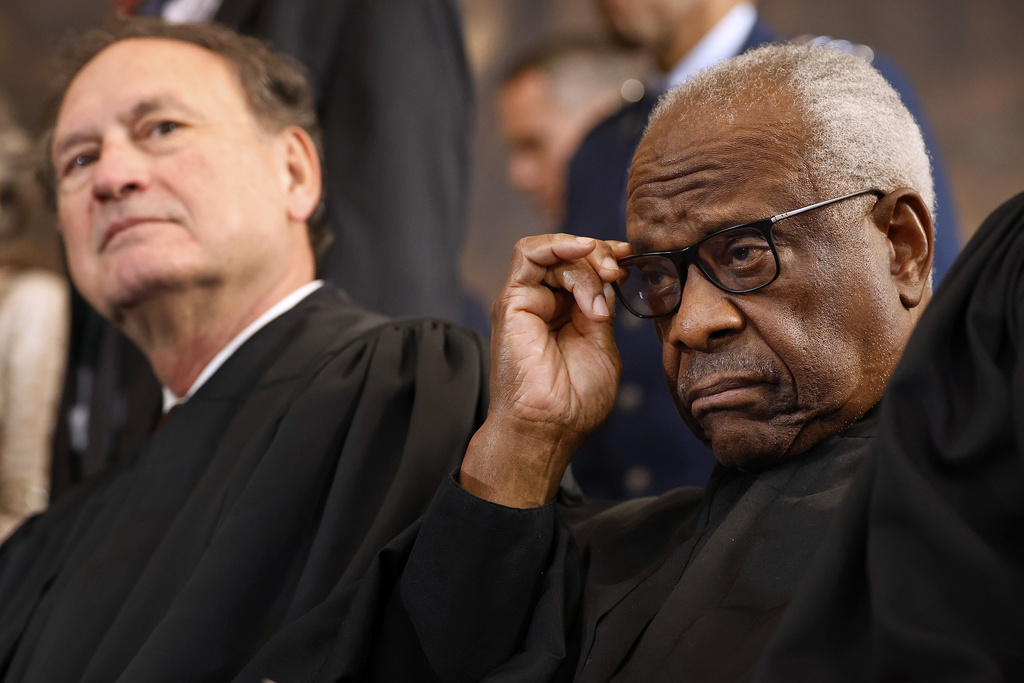
U.S. Supreme Court Justice Samuel Alito on Wednesday dissented from a court majority opinion, delivered by fellow conservative Justice Clarence Thomas, in a case about whether federal or state law takes precedence in a lawsuit stemming from a Taliban suicide bombing.
The lawsuit was filed by former Army Specialist Winston T. Hencely, who suffered a fractured skull and brain injuries in a suicide-bomb attack at the U.S.’s Bagram Air Base in Afghanistan in 2016. The Army’s investigation found military contractor Fluor Corporation primarily responsible because it negligently supervised Ahmad Nayeb, a Taliban operative who carried out the attack.
Nayeb had been hired by Fluor as part of the “Afghan First” initiative, a military program requiring contractors to hire Afghans to help stimulate the local economy and stabilize the nation’s government.
Hencely, who is permanently disabled, sought damages under South Carolina law for negligent supervision, negligent entrustment of tools and negligent retention of Nayeb. A district court entered a summary judgment for Fluor and an appeals court affirmed. The courts held that, during wartime, state-law claims against military contractors under military command, arising out of combatant activities, are preempted by federal law.
The Supreme Court vacated the appeals court’s judgment.
“No provision of the Constitution and no federal statute justifies that preemption of the State’s ordinary authority over
tort suits. Nor does any precedent of this Court command such a result,” Thomas wrote in an opinion, joined by Justices Sonia Sotomayor, Elena Kagan, Neil Gorsuch, Amy Coney Barrett and Ketanji Brown Jackson.
Thomas said the justices “disagree” with the appeals court’s holding that combatant activities are preempted regardless of
whether any conflict exists between the military’s instructions and state law.
“As this history shows, the mere fact that the conduct here occurred overseas in a warzone perhaps makes this a good case for Congress to intervene, but it does not give courts a license to bar all such suits on their own authority. Nor is Fluor protected from the consequences of its conduct simply because it was working for the Federal Government and state law is at issue,” Thomas wrote.
Alito wrote a dissenting opinion, joined by Chief Justice John Roberts and Justice Brett Kavanaugh.
“May a State regulate security arrangements on a military base in an active warzone? May state judges and juries pass judgment on questions that are inextricably tied to military decisions that balance war-related risks against long-term strategic objectives? In my judgment, the answer to these questions must be ‘no,’ and for that reason, this state-law tort case is preempted by the Constitution’s grant of war powers exclusively to the Federal Government,” Alito wrote.
How Often Do Justices Thomas and Alito Agree?
Thomas and Alito are considered the “most ideologically conservative” and “most closely aligned” Supreme Court justices, SCOTUSblog reported last year.
Thomas and Alito agreed in 97 percent of cases resolved with opinions from the court in the 2024-2025 term, and they agreed in 100 percent of the closely divided cases, according to SCOTUSblog statistics.
Are Thomas and Alito Retiring?
There has been speculation about the court’s two oldest conservative justices, Thomas and Alito, retiring. Alito, 76, and Thomas, 77, have not publicly said they will retire from the court.
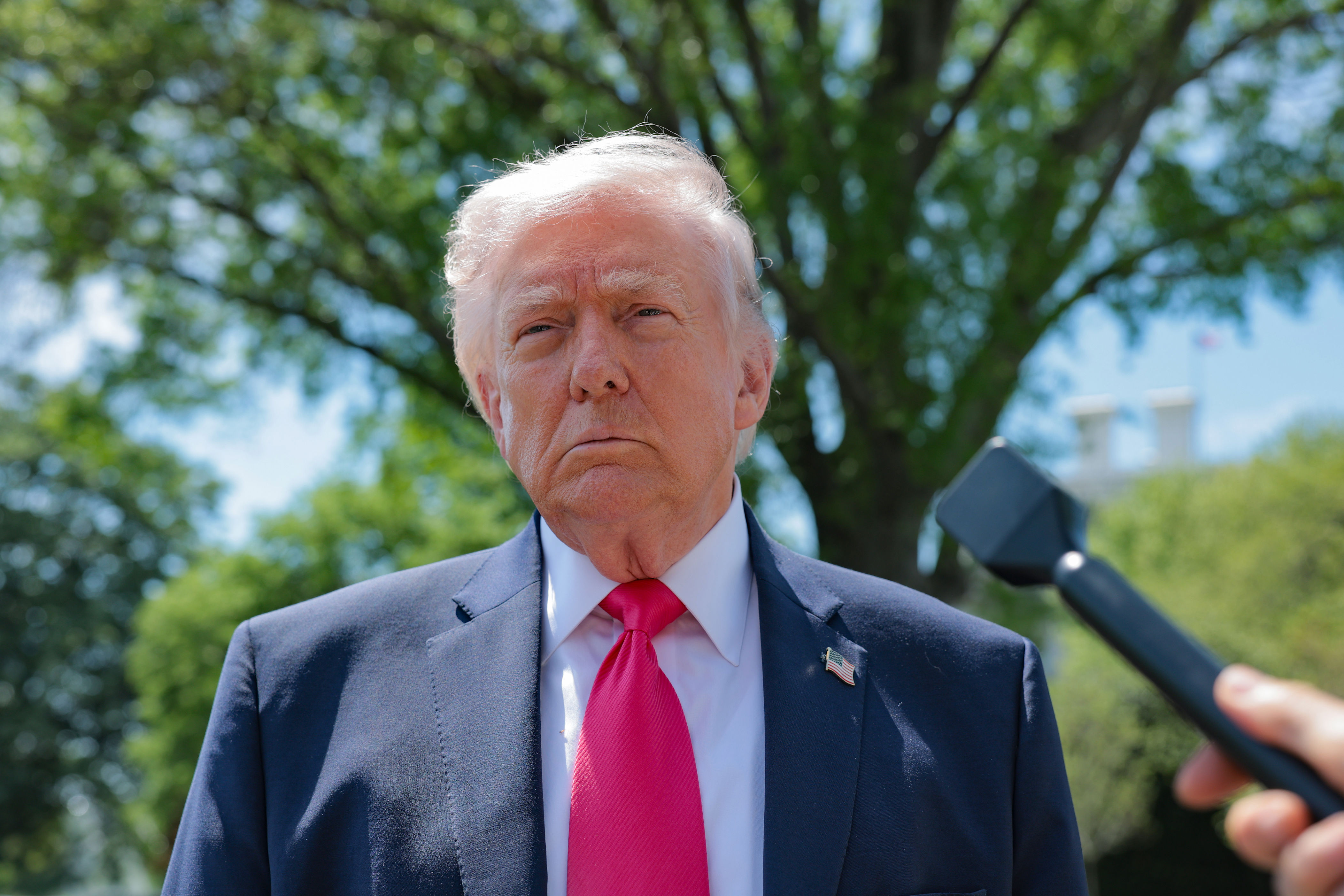
President Donald Trump said in an interview with Fox Business Network’s Maria Bartiromo last week that he is “prepared” to name another justice if one or more retire.
“It could be two, could be three, could be one. I don’t know—I’m prepared to do it,” he said.
He previously said in an interview with Politico that he hopes Thomas and Alito remain on the bench.
“I hope they stay ’cause I think they’re fantastic, OK? Both of those men are fantastic,” Trump said.
There has been less speculation about Thomas’ retirement, The Hill reported.
The New York Times reported that those in close contact with Alito said they are unsure about his plans.
Alito became ill at an event in Philadelphia on Friday, March 20, and was treated for dehydration. He did not stay at the hospital overnight and returned to court on March 23.
Alito’s friends, former colleagues and law clerks said that he would prefer to have a Republican president choose his successor, The New York Times reported.
The expected release date of Alito’s new book has also led legal experts to speculate that he might have plans to retire this year. The book, So Ordered: An Originalist’s View of the Constitution, the Court, and Our Country, is scheduled to be released on October 6. The first day of arguments in the Supreme Court’s 2026-2027 term is set for October 5.
How Many Justices are on the Supreme Court?
There are nine Supreme Court justices, and the court currently has six conservative justices and three liberal justices. The liberal justices are Kagan, Sotomayor and Jackson. The conservatives are Roberts, Thomas, Alito, Gorsuch, Kavanaugh and Barrett.
Do you have a story that Newsweek should be covering? Do you have any questions about this story? Contact LiveNews@newsweek.com.
Related Articles