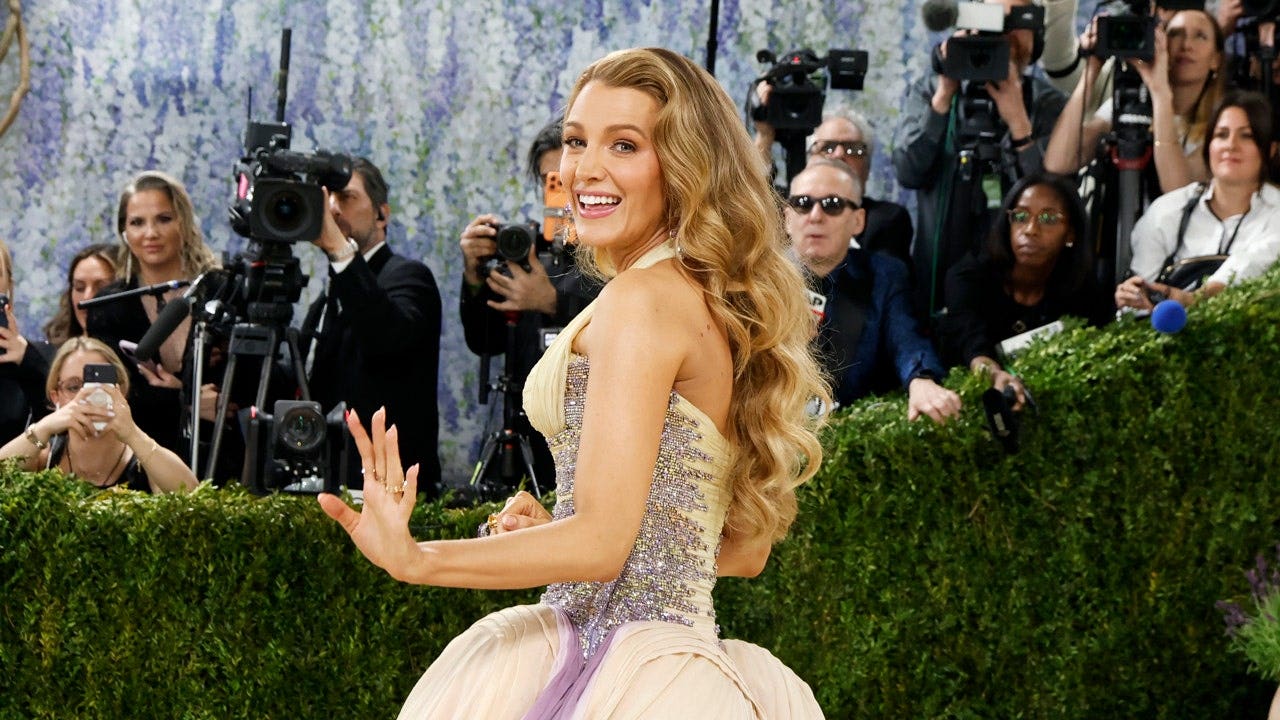
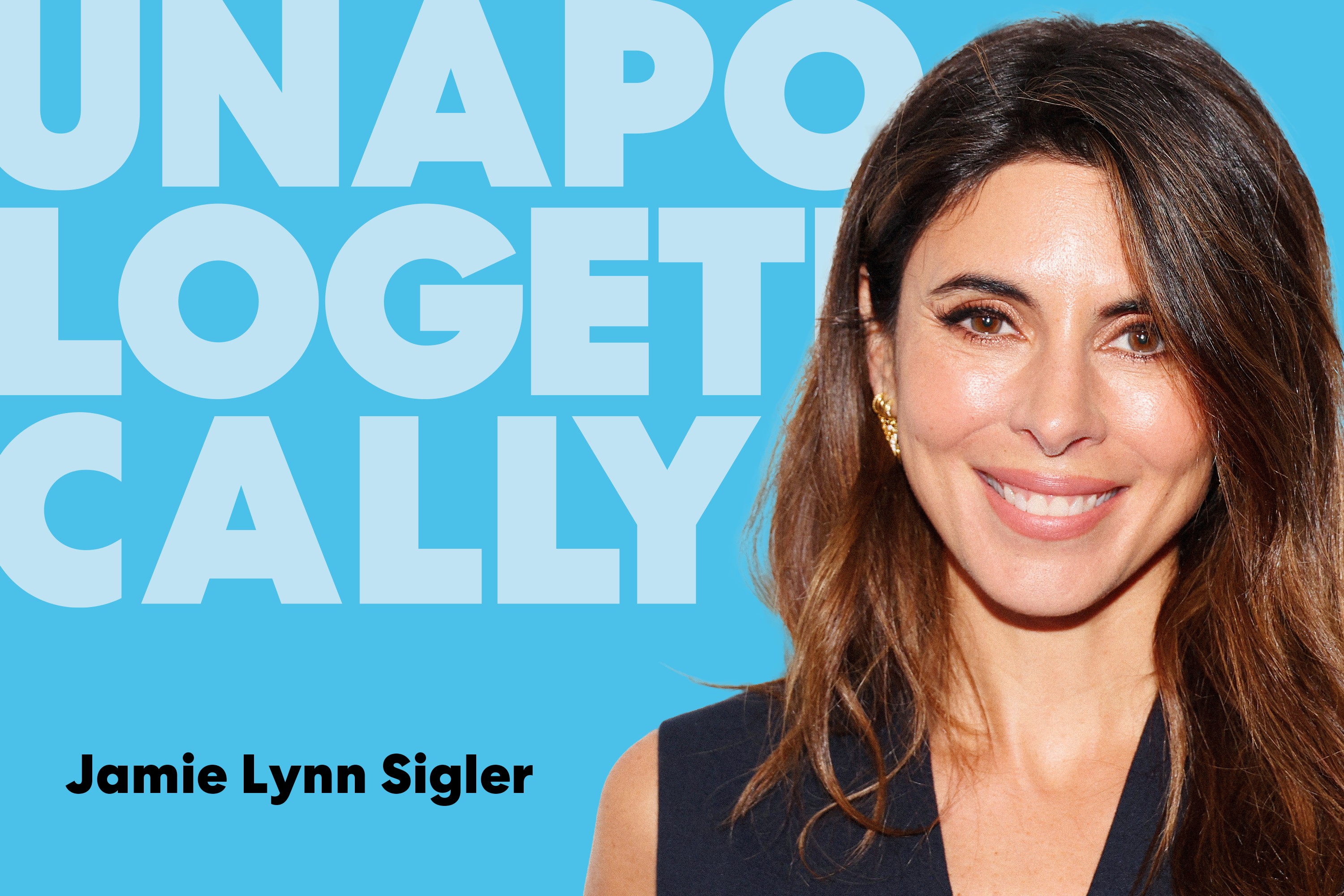
Jamie Lynn Sigler’s 40s are defined by transparency. You hear it on her MeSsy podcast, where she talks about living with multiple sclerosis (MS), read it in the pages of her new memoir, And So It Is…, and feel it in conversation with her.
“Secrets — any type — cause us to feel shame,” the 44-year-old actor tells me for Yahoo’s Unapologetically series.
It’s something she had to learn, especially as a teen thrust into the spotlight playing Meadow Soprano on The Sopranos in 1999. She dealt with an explosion of fame — 2000s-style, where young women in the public eye were treated harshly — alongside an eating disorder and relentless scrutiny of her body.
“When you’re getting to know yourself and your body is changing, and you’re in the public eye with everyone telling you who you should be, it can be really confusing, especially without the guidance you need,” she says.
Sigler was diagnosed with MS at 20 and kept it hidden from the public for about 15 years. That secrecy played out alongside a challenging first marriage, at age 22 to her then-manager, who controlled both her career and finances.
It has taken time for Sigler to find her voice, but she has. Now a mother of two with husband Cutter Dykstra, whom she married in 2016, she has embraced a more open life, becoming an advocate and speaking candidly about how MS affects her daily life and her work as an actor, including recent roles on Grey’s Anatomy and in the film The Man in the Window.
While it’s not easy, the lens she looks through is one in which her experience “gives life a lot more meaning and beauty,” she says.
Here she opens up about learning to accept herself, navigating 2000s stardom — from Maxim cover shoots to public shaming — and the lessons she and her friend James Van Der Beek, who died in February, learned about carrying on amid challenges.
You became Meadow Soprano before you were fully formed as a person. What did fame interrupt for you? Adolescence. Being able to grow up, make mistakes and learn from them — that messy time when you could fall back on your parents. The stakes were higher for me as a teen, and unfortunately a lot of those decisions I made were for the world to see.
Are there traits you took from playing Meadow that stayed with you? Meadow was a safe place for me. I was so insecure and unsure during that time … and she was the opposite — confident and self-assured. And loyal. No matter how much she disagreed with her family, she had their backs till the end.
There are memes about being older than Tony Soprano. When you think about that — and about how young James Gandolfini was when he died — how does it shape the way you see aging?
When you start out as a kid in this business, aging feels really weird. I'm constantly getting comments on Instagram about how old I am. I'm like, I'm about to be 45, not 16. What did you expect? I'm not in a time capsule. People latch on to the version of you that they first meet.
To think I’m almost a decade older than Edie [Falco] and Jim were when we shot the pilot is wild. I still feel like a kid. I have so much to learn and so much that I want to do. It makes me think that they felt the same way at that time — hopeful, figuring it all out. It gives me a lot of peace [about what’s to come].
My husband tells me, “Your story isn't over.” For me aging feels like a beautiful process — you're coming to the table with more experience, more depth. I feel freer and more youthful in my essence than I ever have, and that comes from caring less about certain things as you get older.
Reading your book, I was struck by how many people commented on your body as a young person — producers, stylists, your ex-husband.
I have so much compassion for that version of myself — and that's who I wrote this book for.
When you’re young and people tell you the way you look is wrong, you believe them. And it doesn’t stop at your body — you question who you are, whether you're desirable and all of these things that you're trying to come to terms with as a young woman. It was very damaging.
The 2000s were an especially brutal time for female celebrities.
We still deal with comments on social media, but it felt harsher then. There was no body positivity or conversation about mental health or who you are inside. It was all about the package you were presenting.
I always felt like I didn’t belong. I never thought I looked like a Hollywood starlet. I was this Cuban, Jewish girl from Long Island passing as Italian. I never felt like I fit into the box people wanted me to be in.
Now I celebrate those things about myself. Living with MS has changed the way I think about my body. It's about appreciating the things that I can do and the way it shows up for me. I’m trying to get back to my roots — bring back that Cuban Jamie, my Long Island accent, all the things I thought I had to strip away to fit in.
I wish I had someone then to remind me that I was perfect as I was.
You called your 2001 Maxim cover shoot “a blur of regret.” Take us back.
When I got the call, I was excited. I was 19 years old, and [the cover stars] were always the women that everybody wanted. The idea that I could be on the cover … was a fantasy in my head.
I thought the shoot would give me confidence, that it would finally make me feel good and sexy — things that I wanted to feel as a teenage girl. And I didn’t. I felt the opposite. I felt manufactured, uncomfortable, unnatural. I wanted to crawl out of my skin.
Your life was also being managed by someone else at that time. You wrote that your ex had “total control” of your finances. What does being in control of your life and money now look like for you?
I went from having my parents manage everything to my manager-husband doing everything. I was left with a bunch of broken pieces to put together. I didn't even know how much money I had … or where things were going.
It's important as a woman to educate yourself on your finances — how to save for your future but also enjoy the present. I had to catch up in a really difficult way, unfortunately. Now I'm on every call with my accountant.
What does a healthy relationship look like to you now?
It involves honest communication. My husband and I try, whenever we have notes for each other, to begin from a place of, “I’m saying this because I love you and want the best for you.” It doesn’t always work, but that intention is really healthy.
It’s not perfect, but never go to bed angry, even if it’s one in the morning. It’s like: We’re not going to break up over this. We're going to talk this out.
What kind of mom are you because of everything you’ve been through? A very present one. I try not to tell my kids how to feel but stay curious about how they’re feeling.
I hid so much from my parents to protect them, so I’m more conscious of my kids — constantly checking in, asking extra questions to make sure nothing’s simmering underneath.
I tell them all the time: As long as you don't lie to me, I will not be mad. You are safe to tell me everything. I've made a lot of mistakes.
You hid your MS diagnosis for 15 years. What did that secrecy cost you?
My self-worth. I had such shame. I was embarrassed to have it. I didn't let anyone help me. I isolated myself in an unfortunate way. It changed when I met my husband. He said, “I'm not going to let you do this alone anymore.”
When I went public, that’s when the real work began. I had to learn to let people in and be vulnerable. Today I don’t feel shame. I have compassion and forgiveness for myself, and I’m grateful I didn’t hold it a secret a day longer than I did.
You and Christina Applegate, who also has MS, are incredibly candid on your podcast, MeSsy. What has that openness done for you?
Podcasting has really helped me find my voice — my opinions — and share it without fear. With MeSsy, talking honestly about the hard parts of this — the embarrassing things we go through — takes the awkwardness away. Because people can be like, “I don't wear diapers, but I [deal] with this.”
We all carry things we want to hide. Mine’s on the outside. You see that I walk with a limp. You see that I have a struggle. I have to talk about it. So it's kind of a gift.
There's a universalness in sharing vulnerability. It creates understanding and compassion. When you open yourself up and ask for help, people want to be of service. We’re not meant to go through life alone. We're meant to pick each other up. I’m strong in some ways my friends need, and I need [their] physical strength a lot of the time. It's a dance, and we figure it out day by day.
You bonded with James Van Der Beek over your health. What did that connection mean to you?
I'd known James for a really long time, so he knew about my MS. He and [his wife] Kimberly were dear friends — we moved to Austin at the same time.
He was always very gracious, loving and kind — checking in and being conscious of me and what I dealt with. When he was ill, we were able to have a deeper understanding of parenting and working with an illness. Trying to transmute a physical struggle into a learning lesson and squeezing all the juice we can out of an experience, no matter how painful and difficult it is.
These aren't experiences we would have chosen for ourselves, but we have nothing to do but accept them, learn from them and grow. He was an exquisite human being. I'm very lucky that I was his friend.
You carried so much for so long. What does it feel like now that your story is out there?
I feel the lightest I’ve ever felt, even though I’m in a body with a significant disability.
I take each day at a time. I still have hope for modern medicine and the future, but also acceptance that this is part of my experience. I try to just really take advantage of whatever physical ability I still have and do the best I can with it.
If days get harder, I know I'm still really loved and supported. I have a beautiful family. My worst-case scenario is still pretty awesome.
This interview has been edited for length and clarity.