
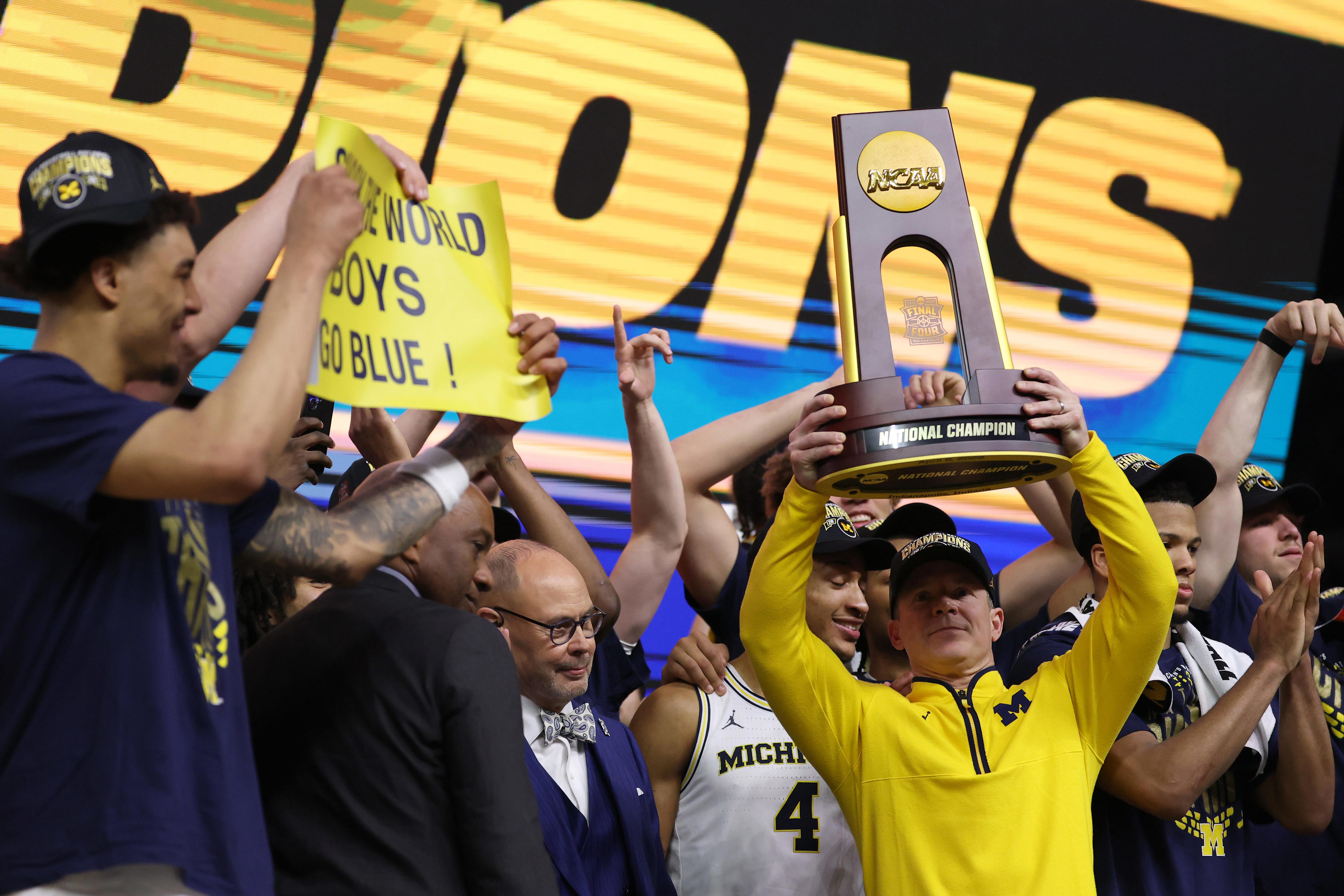
March Madness is expanding.
The men’s and women’s NCAA basketball tournaments will increase 76 teams starting with the 2026-27 season, following approval from a vote by the NCAA selection committees, Thursday, May 7.
“Expanding the Division I Men’s and Women’s Basketball Championships is the right decision for the student-athletes and programs that will now have access to the greatest events in college sports,” board of directors chair and Virginia Tech president Tim Sands said in a statement. “As NCAA leaders, we are especially excited to provide additional, highly competitive games for fans who look forward to March Madness every year.”
From NFL plays to college sports scores, all the top sports news you need to know every day.
CBS Sports' Matt Norlander reported Thursday's vote was unanimous: "Not a single dissenting vote."
It’s the first time the NCAA tournament will expand on the men’s side since it went for 65 to 68 teams in 2011. The women’s side followed suit in 2022. However, it’s the first major expansion since the men went from 53 to 64 in 1985, and the women’s jumped from 48 to 64 in 1994.
The move has been anticipated since conversations began in 2025 as NCAA president Charlie Baker has strongly vouched for expansion. Multiple college athletic directors and coaches confirmed to USA TODAY Sports on April 28 there’s an “expectation” for it to grow.
The proposal was accepted by the men's and women's basketball committees, the men's and women's basketball oversight committees, the Division I Cabinet and DI Board of Governors approval is all that's needed to finalize the move.
How many teams in March Madness? New NCAA Tournament format
With eight more spots in the field, the new tournament format will shift from a First Four involving eight teams in four games to 24 teams playing across 12 games with the winners advancing to the first round. The Tuesday and Wednesday schedule before the first round will now have six games on each day. Three games will be played in Dayton, Ohio, the traditional First Four site, with six games in a yet to be determined second city. The women's side will take place Wednesday and Thursday and played on campuses of the top 16 seeds.
The name changes from the First Four to the March Madness Opening Round. The first round of 64 and ensuing rounds remain intact.
While the major bracket stays the same and keeps the excitement of it, the main issue with expansion is it waters down the potential field, allowing power conference teams with subpar records in, while still keeping quality mid-major teams out.
If the format existing in the 2025-26 season, 17-16 Auburn and 18-14 Indiana would have qualified for men's tournament play-in games.
Another factor is the expanded field will require mid-major conference tournament champions that are high seeds to play their way into the first round. In the 68-team format, the four-lowest seeded automatic qualifiers (No. 16 seeds) played in the First Four to advance to the first round.
Now, the opening round consists of the 12-lowest seeded automatic qualifiers − four 15 and eight 16 seeds − playing against each other, while the other side will feature the 12-lowest seeded at-large teams. Exceptions could be made to avoid regular season rematches or for geographic reasons, and the selection committee will try to avoid teams from the same conference playing each other in the opening round and round of 64.
The NCAA estimates said it will be able to award more than $131 million in new revenue distributions to tournament schools over the remaining six years of broadcast agreements. Yahoo Sports reported the expansion overall would generate more than $300 million in additional revenue during that span.
The 2027 men’s NCAA Tournament is scheduled to begin on March 16 and the women’s on March 17.
This article originally appeared on USA TODAY: March Madness expanding to 76 teams, starting next season, like it or not