Iran has warned it will attack “any foreign armed force” in the Strait of Hormuz, “especially, the aggressive U.S. Army” as President Donald Trump’s escort mission is set to begin.
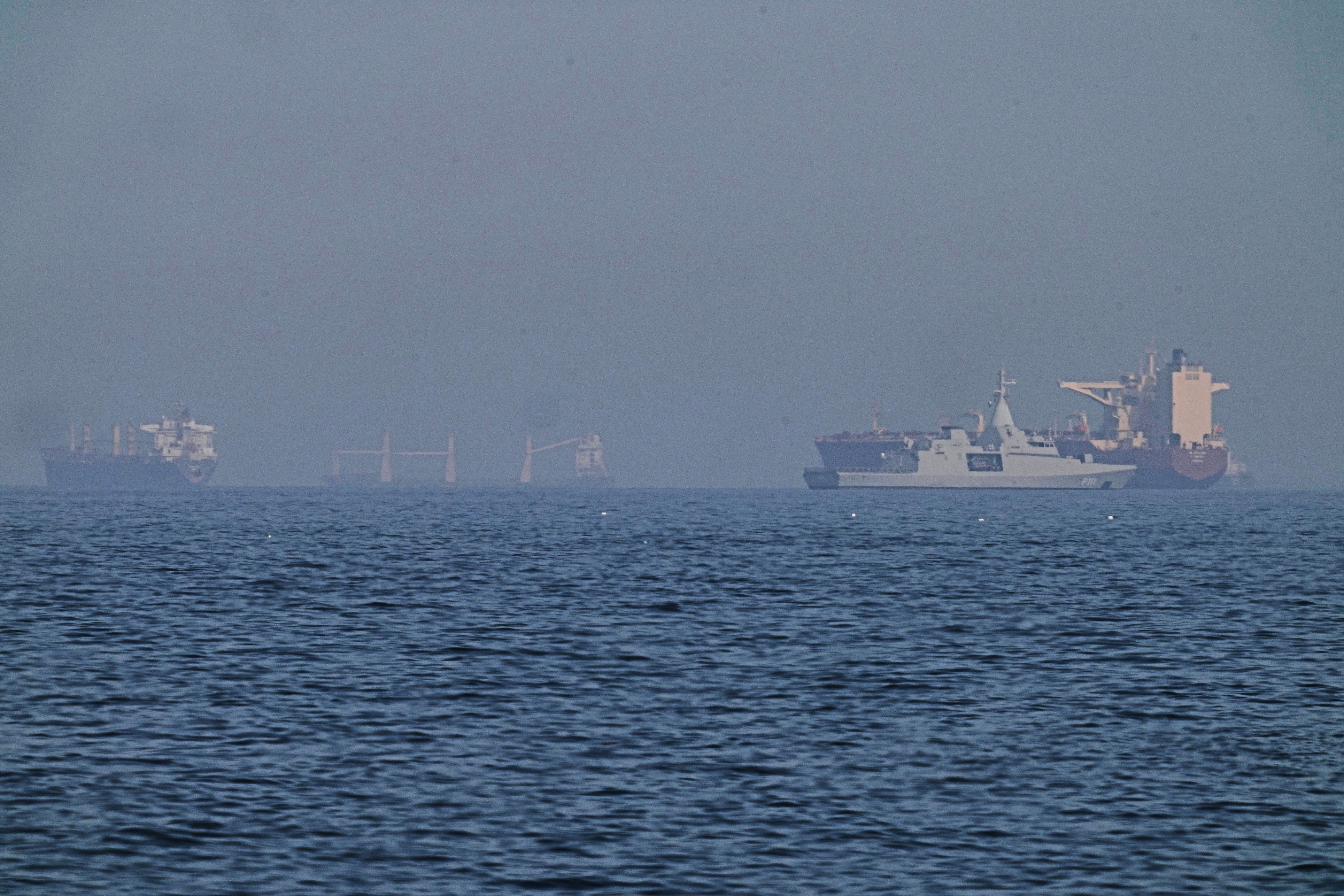
The head of Iran’s central command Major General Ali Abdollahi made the warning in a statement to Iranian state broadcaster IRIB, adding that the strait is “under the control” of Tehran.
Tehran said on Monday morning that it had hit a U.S. warship with two missiles but U.S. Central Command denied this, saying: “No U.S. Navy ships have been struck. U.S. forces are supporting Project Freedom and enforcing the naval blockade on Iranian ports.”
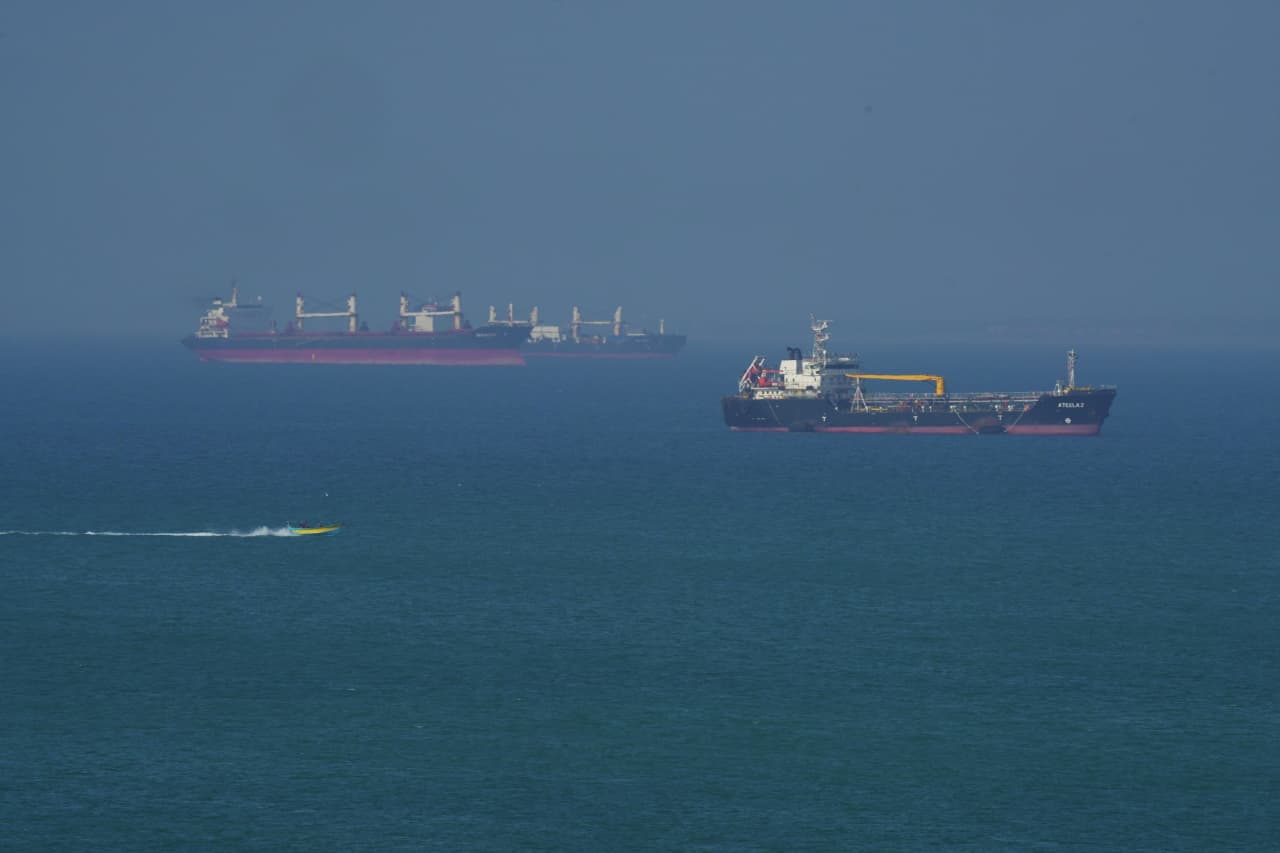
It comes as Trump’s plan, code-named “Project Freedom,” for U.S. military to escort cargo ships out of the Strait of Hormuz where Iran has effectively closed shipping traffic and trapped vessels by threatening attacks, was set to begin on Monday morning Middle East time.
The head of the Iranian parliament’s National Security Commission, Ebrahim Azizi, has said “any interference in the new maritime regime of the Strait of Hormuz will be considered a violation of the ceasefire.”
“The Strait of Hormuz and the Persian Gulf would not be managed by Trump’s delusional posts,” he said in a post on X. “No one would believe Blame Game scenarios!”
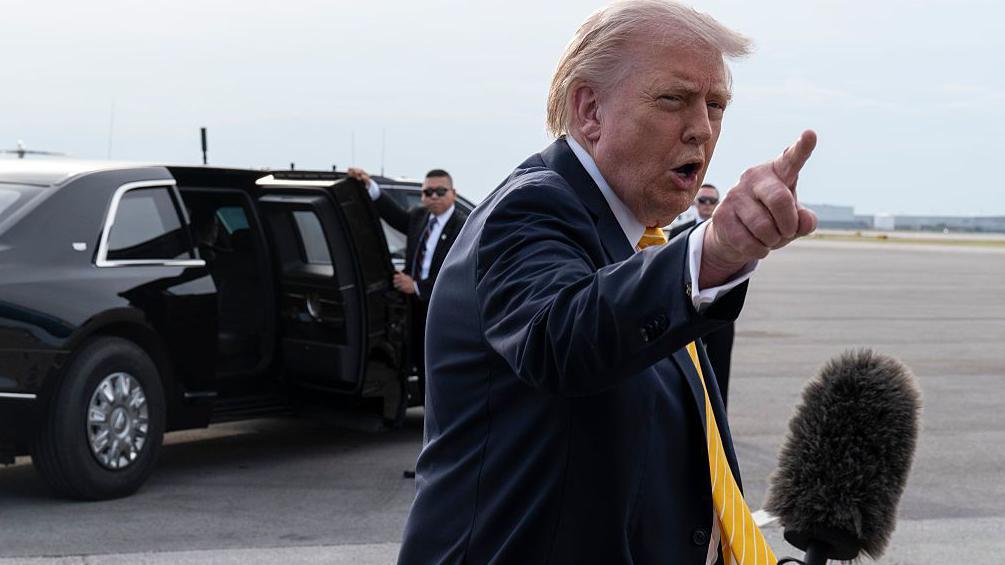
Trump announced the initiative, set to take place Monday morning Middle East time, via Truth Social amid the ongoing Iran war. The Trump administration is also weighing Iran’s latest 14-point proposal to end hostilities even as the deputy parliament speaker said Iran “will not back down” from its grip on the strategic waterway.
Newsweek reached out to the White House via email on Sunday for additional comment and details.
Why It Matters
The Strait of Hormuz is one of the most critical choke-points in global shipping, and Iran’s blockade has shaken oil and natural gas markets since the U.S. and Israel launched the war on February 28. Fertilizer badly needed by farmers around the world also typically passes through the waterway.
Iran has asserted control over the strait and has been charging tolls to ships not affiliated with the U.S. or Israel—a position that directly challenges the freedom of navigation guaranteed under international law. A U.S. naval mission to escort trapped ships out of the strait would mark a significant military escalation in the conflict.
US Begins Mission To ‘Guide’ Ships Out of Strait of Hormuz
The Joint Maritime Information Center said on Monday that it had set up an “enhanced security area” south of normal shipping routes, near the Oman side of the strait. It said mariners should coordinate with Omani authorities “due to anticipated high traffic volume.”
It also warned that passing close to typical shipping routes “should be considered extremely hazardous due to the presence of mines that have not been fully surveyed and mitigated.”
It is not yet clear whether any ships have accepted American help, according to the Associated Press (AP).
US Advice to Ships Navigating Strait of Hormuz
The U.S. “enhanced security area” in the Strait of Hormuz, which is just over 20 miles wide at its narrowest point, is directing commercial vessels closer to the Omani coast off the country’s Musandam Peninsula.
Oman and Iran previously agreed to a traffic separation scheme for inbound and outbound traffic in the strait, standard routes adopted by the U.N.’s International Maritime Organization in 1968 for maritime safety.
Sailing in or near the internationally recognized sea lanes “should be considered extremely hazardous due the presence of mines that have not been fully surveyed and mitigated,” according to an advisory by U.S. Naval Forces Central Command, distributed by the U.S.-run Joint Maritime Information Center.
On April 9, two days into the ceasefire, Iran’s military announced alternative routes through the strait. It warned that the actual traffic zone had been mined and declared it a “hazardous area.”
The Iranian traffic lanes direct inbound ships to the waters north of its Larak Island, while outbound vessels are told to use the deeper waters south of the island—but both are within Iran’s territorial sea.
Tehran has selectively allowed merchant ships through the strait without attack and in certain cases has reportedly collected a fee for utilizing its designated corridor.
The U.S. Treasury Department said last month that any vessel found to have paid the Iranian “toll” also risked U.S. sanctions.
The Latest Attack
A cargo ship near the strait reported it was attacked by “multiple small craft” on Sunday, the British military’s United Kingdom Maritime Trade Operations center said, the latest in at least two dozen attacks in and around the strait since the war began. All crew on the unidentified northbound cargo ship were safe after the attack off Sirik, Iran, the British monitor said.
It was the first reported attack in the area since April 22. Iran denied an attack took place, with semiofficial Iranian outlets Fars and Tabnak saying a passing ship had been stopped for a documents check as part of monitoring. The British monitor said the threat level in the area remains critical and reported that ships near Ras al-Khaimah—the northernmost emirate in the United Arab Emirates (UAE), close to the strait—received VHF radio warnings to move from anchorages. It was not clear who sent the messages.
Iranian patrol boats—some powered only by twin outboard motors—are small, nimble, and difficult to detect. Trump last month ordered the U.S. military to “shoot and kill” small Iranian boats that deploy mines in the strait. The three-week ceasefire appears to be holding, though Trump told reporters Saturday that further strikes remain a possibility.
Trump Announces ‘Project Freedom’ on Truth Social
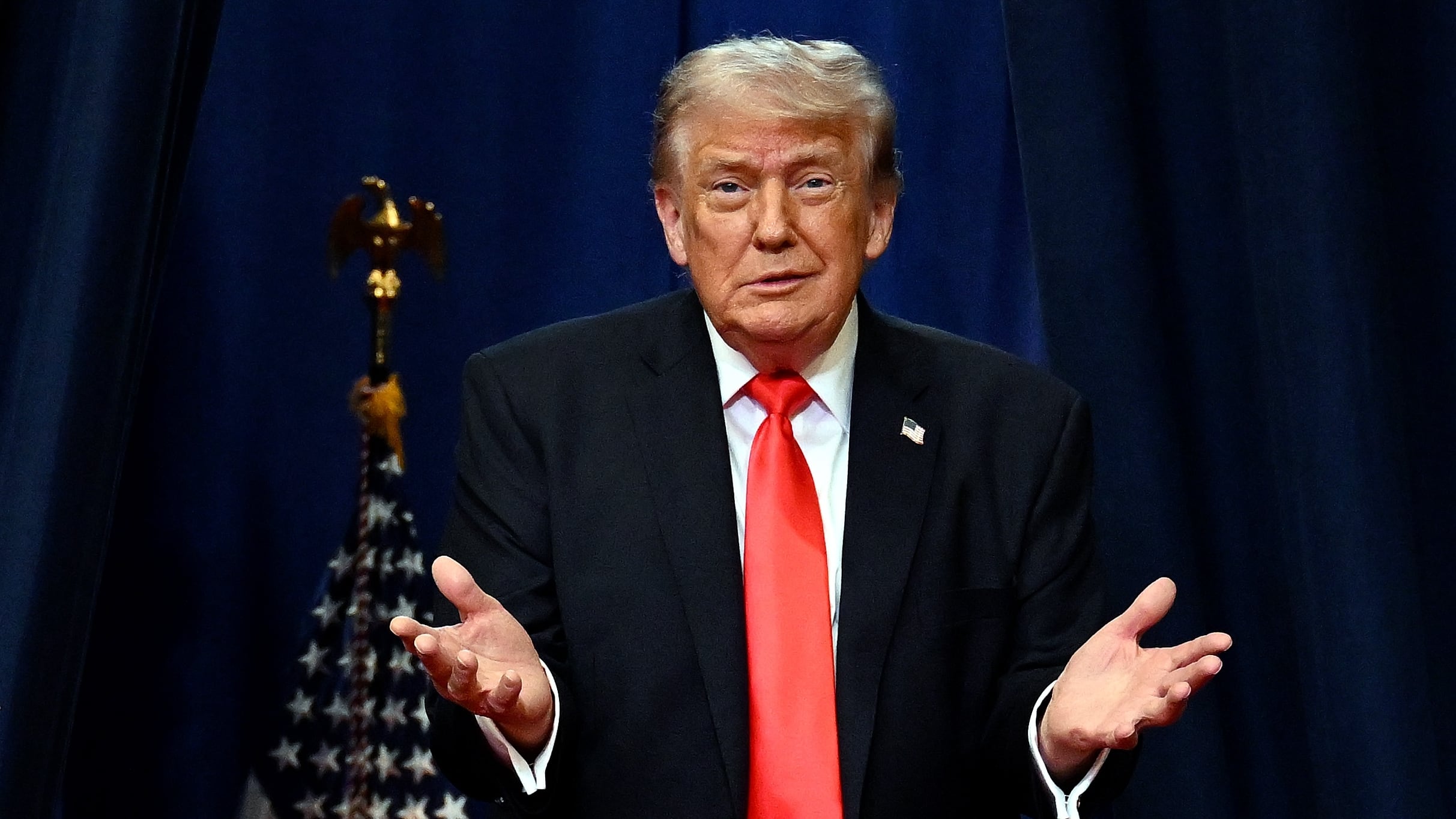
Trump announced the U.S. naval escort mission Sunday in a lengthy Truth Social post, framing the operation as a humanitarian gesture in response to requests from countries with no direct stake in the war.
“Countries from all over the World, almost all of which are not involved in the Middle Eastern dispute going on so visibly, and violently, for all to see, have asked the United States if we could help free up their Ships, which are locked up in the Strait of Hormuz, on something which they have absolutely nothing to do with—They are merely neutral and innocent bystanders!” he wrote.
Trump said he had instructed U.S. representatives to use “best efforts to get their Ships and Crews safely out of the Strait” and the affected vessels would not be returning to the area “until the area becomes safe for navigation, and everything else.” He named the operation “Project Freedom” and said it would begin Monday morning, Middle East time.
The president framed the move as a goodwill gesture to all parties—including Iran. “I am fully aware that my Representatives are having very positive discussions with the Country of Iran, and that these discussions could lead to something very positive for all,” Trump wrote. “The Ship movement is merely meant to free up people, companies, and Countries that have done absolutely nothing wrong—They are victims of circumstance. This is a Humanitarian gesture on behalf of the United States, Middle Eastern Countries but, in particular, the Country of Iran.”
Trump cited deteriorating conditions on board many of the trapped vessels. “Many of these Ships are running low on food, and everything else necessary for large-scale crews to stay on board in a healthy and sanitary manner,” he wrote. “I think it would go a long way in showing Goodwill on behalf of all of those who have been fighting so strenuously over the last number of months.”
He also issued a clear warning that any interference would draw a forceful response. “If, in any way, this Humanitarian process is interfered with, that interference will, unfortunately, have to be dealt with forcefully,” the president wrote. 7
CENTCOM Reveals Mission Scale
U.S. Central Command (CENTCOM) announced Sunday on X that its forces will begin supporting Project Freedom on May 4 with a substantial military force, providing the first detailed picture of the operation’s scale. CENTCOM said the mission, directed by Trump, is designed to “restore freedom of navigation for commercial shipping through the Strait of Hormuz” and will support merchant vessels seeking to freely transit the international trade corridor.
The U.S. military support package includes guided-missile destroyers, more than 100 land and sea-based aircraft, multidomain unmanned platforms, and 15,000 service members, CENTCOM said. The deployment will continue alongside the existing U.S. naval blockade of Iranian ports, which has been in place since April 13.
“Our support for this defensive mission is essential to regional security and the global economy as we also maintain the naval blockade,” said Admiral Brad Cooper, the CENTCOM commander.
CENTCOM also tied the operation to a broader diplomatic effort. Last week, the U.S. Department of State announced the Maritime Freedom Construct—a new initiative launched in partnership with the Department of War to enhance coordination and information sharing among international partners on maritime security in the strait. CENTCOM said the construct “will be critical during Project Freedom” by combining diplomatic action with military coordination.
CENTCOM noted the strategic significance of the strait, where a quarter of the world’s seaborne oil trade and significant volumes of fuel and fertilizer products typically pass through.
The Economic Pressure on Iran
U.S. Treasury Secretary Scott Bessent told Fox News on Sunday Iran’s tolls have generated “less than $1.3 million,” which he called “a pittance” compared with Iran’s previous daily oil revenues. He said the country’s oil storage is rapidly filling up and “they’re going to have to start shutting in wells, which we think could be in the next week.”
The pressure is showing in Iran’s currency as the U.S. military’s blockade of Iranian ports continue. The rial weakened further against the U.S. dollar Sunday, with the dollar trading at 1,840,000 rials in Tehran‘s Ferdowsi Street currency exchange hub. The rial had been at 1.3 million to the dollar in December—a record low at the time that triggered widespread protests over the worsening economy. Analysts say the currency could slip further.
According to Iranian media reports, several factories have not renewed worker contracts after the Iranian new year in March, and significant numbers of workers have lost their jobs.
Iran’s 14-Point Proposal
Tehran is reviewing the U.S. response to its latest proposal, Iran’s judiciary Mizan news agency cited Foreign Ministry spokesman Esmail Baghaei as saying Sunday. But “at this stage, we have no nuclear negotiations,” Baghaei said. Iran’s nuclear program and enriched uranium have long been the central issue in tensions with the U.S., but Tehran would rather address it later.
Iran’s proposal calls for the U.S. to lift sanctions on Iran, end the U.S. naval blockade of Iranian ports, withdraw forces from the region, and cease all hostilities—including Israel’s operations in Lebanon, according to the semiofficial Nour News and Tasnim agencies, which have close ties to Iran’s security organizations. The proposal seeks to resolve other issues within 30 days and aims to end the war rather than extend the ceasefire, according to Iran’s state-linked media.
Iran sent its proposal via Pakistan, which hosted face-to-face talks last month between Iran and the U.S. Pakistan’s prime minister, foreign minister, and army chief continue to encourage the two countries to speak directly, according to two Pakistani officials who spoke on condition of anonymity because they were not authorized to speak to the media. Iranian Foreign Minister Abbas Araghchi also spoke Sunday with his counterparts in Oman, which oversaw previous rounds of talks before the war, as well as in Brazil and Spain.
Trump said Saturday he was reviewing the proposal but expressed doubt it would lead to a deal. “They have not yet paid a big enough price for what they have done” in the nearly 50 years since the Islamic Revolution, Trump posted on social media.
Yousef Pezeshkian, the son and adviser of President Masoud Pezeshkian, wrote on Telegram the U.S. and Iran see themselves as winners of the war and are unwilling to back down.
Timeline of the Iran War
On February 28, the U.S. and Israel targeted key military targets in Iran and killed Supreme Leader Ayatollah Ali Khamenei and other government leaders. Iran responded by launching missiles and drones targeting Israel and several Gulf Arab states that host U.S. armed forces.
By early March, Iran had begun intermittently restricting or fully closing the Strait of Hormuz in retaliation for what it called violations of its sovereignty. Each closure or threat of closure sent global energy markets into turmoil, forcing tankers to reroute and driving up fuel prices worldwide.
Through March and April, the strait became a focal point of the conflict. Iran shut it down multiple times in response to Israeli operations in Lebanon against Hezbollah, U.S. naval movements, and strikes on Kharg Island, while Washington and Gulf states increased patrols to keep commercial traffic moving.
The repeated disruptions have left the global oil market on edge, with even brief shutdowns reverberating into higher gasoline and diesel prices across the U.S.
Reporting from the Associated Press contributed to this article.
Related Articles