Look to the ancient Greeks, and it’s clear our obsession with the idealized body is nothing new. Today, though, women and girls are compared to highly edited images on social media rather than unattainable marble sculptures.
Social media algorithms are accelerating that issue, rewarding images that generate the most engagement and thereby perpetuating certain faces and beauty ideals. This pushes women to change their appearance, with 1 in 2 women and girls in the U.K. feeling pressured to do so even when they know an image is false, according to Dove’s State of Beauty report.
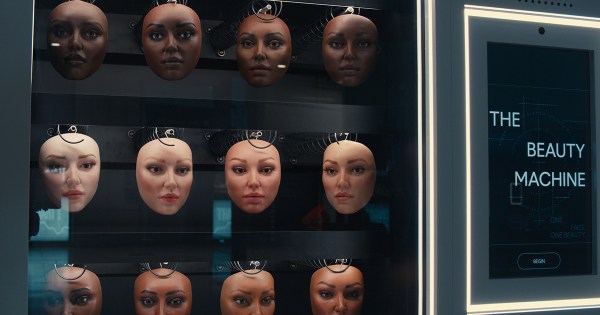
Alarmed by the report’s findings, Dove installed “The Beauty Machine” in London’s Waterloo Station to mimic the role social media algorithms play in setting unrealistic beauty standards. Created with Ogilvy and Emmy-winning documentary filmmaker and photographer Lauren Greenfield, the stunt was essentially a vending machine that appeared to offer variety but, like social media feeds, only dispensed unreal faces.
"For over 20 years now, Dove has championed ‘Real Beauty' to make beauty a source of happiness, not anxiety – working to broaden beauty representation so more types of beauty are seen," Marcela Melero, chief growth marketing officer at Dove, told ADWEEK.
"But we know, from speaking to women and girls, that there is still more to do. Part of that work has been looking at algorithms. Beauty online is starting to look the same, and that sameness flattens beauty into an unrealistic ideal that women and girls feel pressured to conform to."
Beyond raising awareness, inspiring action and participation was vital to the campaign. To remind women to feel happy with their unique traits and expressions, Dove invited passersby to interact and then share their individual beauty in an open casting call. Their images appeared on billboards around the station within 48 hours and on Dove’s social media channels. So far, 250 women have submitted unfiltered photos to the #DoveOpenCall.
"Commuters wondered what they were seeing, questioned it, and most importantly, reflected on their own relationship with beauty," Melero said. "Many of the conversations happening around the machine were deeply personal, which speaks to how people feel about this topic."
Keeping up with the accelerating algorithms, the project came together in less than 13 weeks. “We were translating something abstract, like algorithmic bias, into a physical experience people could immediately understand,” Melero explained. “That required precision across every detail, from designing the machine to crafting the masks with some of the best visual effects artists, so they realistically embodied the single face the algorithm repeats.”
On familiar ground, Dove has historically challenged narrow beauty standards and, more recently, highlighted the dangers of digital distortion and unhealthy beauty content on social media.
“We’ve consistently taken on the biggest issues that impact how beauty is perceived,” said Melero. “‘The Beauty Machine’ is our next step in that journey. It’s about responding to the newest pressure point we’re seeing: how algorithms are now starting to dictate a single, narrow beauty ideal.”
Previously, when TikTok launched its Bold Glamour filter, Dove took action to draw attention to the unrealistic body standards it perpetuated. Created by David, “Turn Your Back” showed women turning away from the camera, “because no filter should tell you how to look.”
When news emerged that Facebook had hidden internal data suggesting Instagram had worsened body image issues for teenage girls, Dove ran a social experiment called “Toxic Influence,” using deepfake technology to expose the dangers of toxic beauty advice online.
And concerned about how selfie culture bombards young women and pressures them to compare themselves to heavily retouched images, Dove created “Reverse Selfie,” a film that captures, in reverse, the emotional and physical effort a young girl puts into taking the perfect shot.