Iranian strikes across the Mideast are risking drawing in a raft of America’s NATO allies.
The U.K. and France have in recent days both said they would send additional warships to the region after an Iranian drone targeted a British military base in Cyprus.
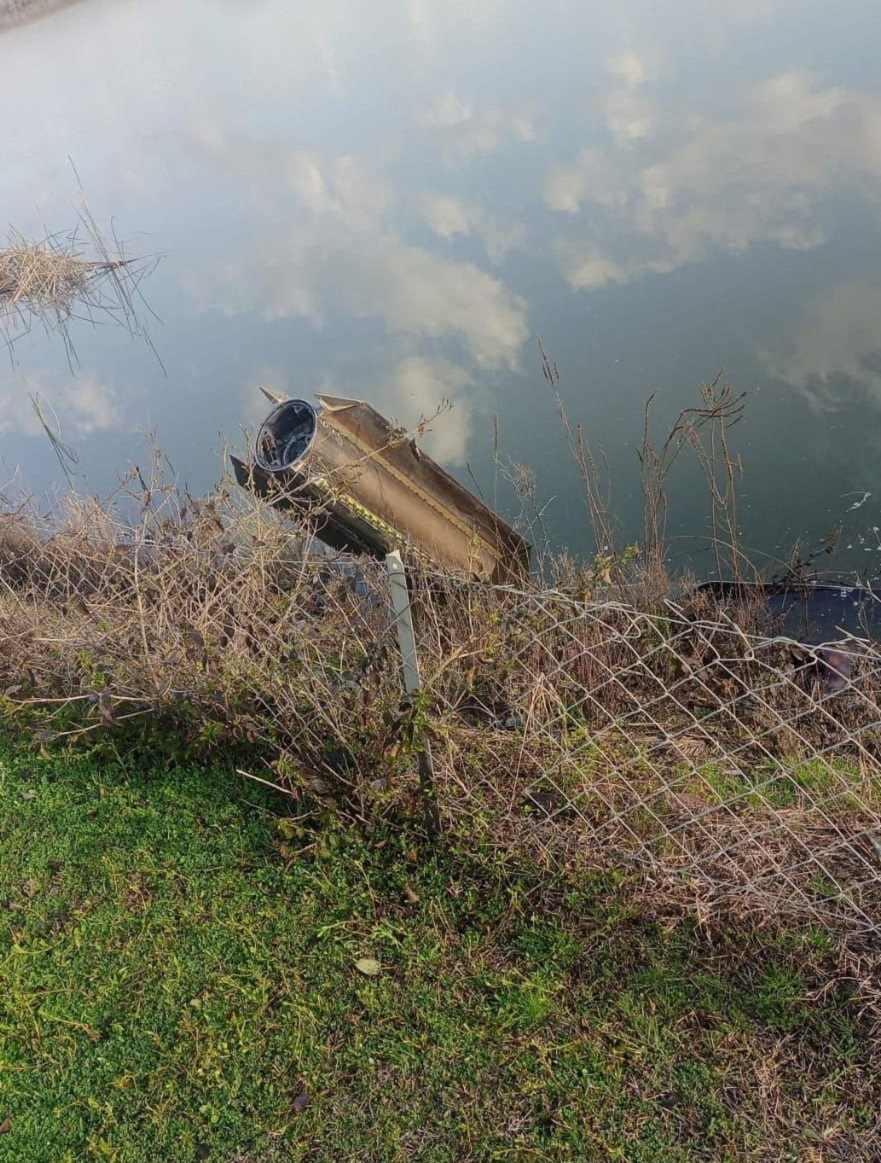
And on Wednesday, a U.S. Navy destroyer in the eastern Mediterranean shot down an Iranian missile on its way toward an important Turkish military base that hosts American forces, according to a U.S. official and a regional official, marking the crossing of another line in the rapidly expanding conflagration. Iran until Wednesday had refrained from attacking its neighbor Turkey.
The North Atlantic Treaty Organization condemned the targeting of Turkey, a member of the military alliance. The Turkish Defense Ministry said the Iranian missile was destroyed after passing through Iraqi and Syrian airspace on its way toward southern Turkey. The air defense ordnance fell in an open area in southern Turkey’s nearby Hatay province, causing no injuries or damage, it added.
The U.S. Air Force has a hub at the base, called Incirlik, a facility it shares with the Turkish military.
The U.S. has long stationed nuclear weapons at the base. Among the weapons currently there are B-61 thermonuclear bombs, said Hans Kristensen, director of the nuclear information project at the Federation of American Scientists.
The incoming Iranian missile was first identified by a NATO radar station at a different Turkish base, called Kurecik in southeastern Turkey, according to a regional official briefed on the attack.
Turkish Defense Minister Hakan Fidan called his Iranian counterpart in response, saying that Tehran should avoid any actions that would widen the conflict. Turkey also summoned the Iranian ambassador to Ankara.
Turkey’s Defense Ministry said earlier that NATO forces shot down the missile as it headed toward Turkish airspace.
“We reserve the right to respond to any hostile act directed at our country,” the ministry said.
Other NATO allies are also deepening their involvement in the conflict. The U.K. recently granted the U.S. access to its military bases for strikes on Iranian missile capabilities, enabling the U.S. to increase the intensity of its bombing campaign. France said it is building a coalition to protect commercial ships from Iran and its proxy groups in the Strait of Hormuz, the Red Sea and the Suez Canal.
NATO’s Article 5 says an attack on one member of the alliance is considered an attack on all.
“We condemn Iran’s targeting of Türkiye,” said NATO spokesperson Allison Hart, using the Turkish name for the country used in official discourse. “NATO stands firmly with all allies,” she said.
Speaking to reporters in the U.S. on Wednesday, Defense Secretary Pete Hegseth played down the chances that the attack would trigger Article 5.
The strike also highlights how countries that didn’t support the Trump administration’s war are getting dragged into the conflict after Iran unleashed waves of missile and drone attacks across the region, targeting U.S. military bases, airports, and infrastructure that pumps much of the world’s oil and gas supply.
Tehran’s strategy is to internationalize the conflict, imposing a higher cost on U.S. allies and disrupting global markets, military analysts say, as a response to what Trump and Israeli Prime Minister Benjamin Netanyahu say is a war to enable the removal of the Iranian regime.
“It’s a moment of desperation on the part of the Iranians,” said Alper Coskun, the former director for international security at the Turkish Foreign Ministry and now a senior fellow at the Carnegie Endowment for International Peace in Washington.
“I don’t think Turkey will want to escalate even after this development, but it will lead to sobriety on the part of the Turks,” he said.
The Turkish government mounted a diplomatic effort to avoid the current U.S. and Israeli military offensive on Iran, and Turkish officials say they have continued to push to defuse the crisis in recent days.
Iran also attacked Qatar and Oman, two other countries that also attempted to mediate in the conflict.
“We reiterate our warning to all parties to refrain from steps that could increase tensions in the region and lead to the spread of conflicts,” said Burhanettin Duran, the head of the Turkish government’s communications office, an arm of the presidency, in a social-media post.
Write to Jared Malsin at jared.malsin@wsj.com and Shelby Holliday at shelby.holliday@wsj.com