Tesla said it would offer hardware upgrades or trade-in discounts to the millions of customers who own its older vehicles that don’t have the technology to drive autonomously.
Chief Executive Elon Musk said on a call with investors that the older technology, known as Hardware 3, isn’t capable of handling fully autonomous rides, as the company previously promised.
Tesla has said those vehicles, which were produced between 2016 and 2024, had the computer and cameras necessary to drive autonomously once Tesla’s software became sophisticated enough.
“Unfortunately, Hardware 3 simply does not have the capability to achieve unsupervised FSD,” Musk said, referencing the company’s driver assistance software, which is called Full Self-Driving (Supervised). “We did think at one point it would have that.”
The matter has galvanized many Tesla owners, some of whom paid thousands of dollars for lifetime access to FSD with the expectation that they would eventually have a self-driving car. The company previously offered lifetime access to the technology, connected to a specific vehicle, for a one-time fee in the thousands of dollars.
Now, Musk said, the company will need to set up “micro factories” in major metro areas capable of updating the older cars with the latest computers and cameras. “If it’s done just at the service center, it’s extremely slow to do so and inefficient,” Musk said. “So we basically need many production lines to make the change.”
Musk also said owners would be offered a “discounted trade-in” for a newer car, but he didn’t say whether the company will let owners transfer their lifetime FSD access to the new car, as many Tesla owners have hoped.
The company has emphasized the importance of FSD for the future of its business as it moves away from electric-vehicle sales to focus on autonomy, artificial intelligence and robotics. Chief Financial Officer Vaibhav Taneja said on the call that the company changed its car sales strategy to “emphasize FSD as the product, and the vehicle as only the delivery mechanism.”
Despite this shift, revenue grew 16% in the first quarter compared with the same period last year. Vehicle sales were also up 6.3%, though it was the company’s second-worst sales quarter since 2022.
The company also increased FSD subscriptions to 1.28 million subscribers. That is up 16.4% compared with the prior quarter, and a 51% increase compared with the year before. Tesla currently only offers a subscription for the service that costs $99 a month.
Musk didn’t give a cost estimate or timeline for when Tesla would provide these upgrades. Executives previously said that the company would wait to upgrade old hardware until it has stabilized the development of its autonomy software.
At the end of June, the company plans to release a software update for drivers using the old hardware, which will give them many of the features currently only available on the new hardware, Ashok Elluswamy, vice president of AI software, said on the call.
Today, Tesla’s software can navigate most streets, change lanes and park, but it requires the driver to pay attention and be prepared to take over. In some jurisdictions, such as Europe, customers paid for the service but didn’t get access because of regulatory restrictions on the software.
In areas such as the U.S., customers with older hardware aren’t able to use the most advanced version of the software, which is designed to run on a newer hardware setup now called AI4.
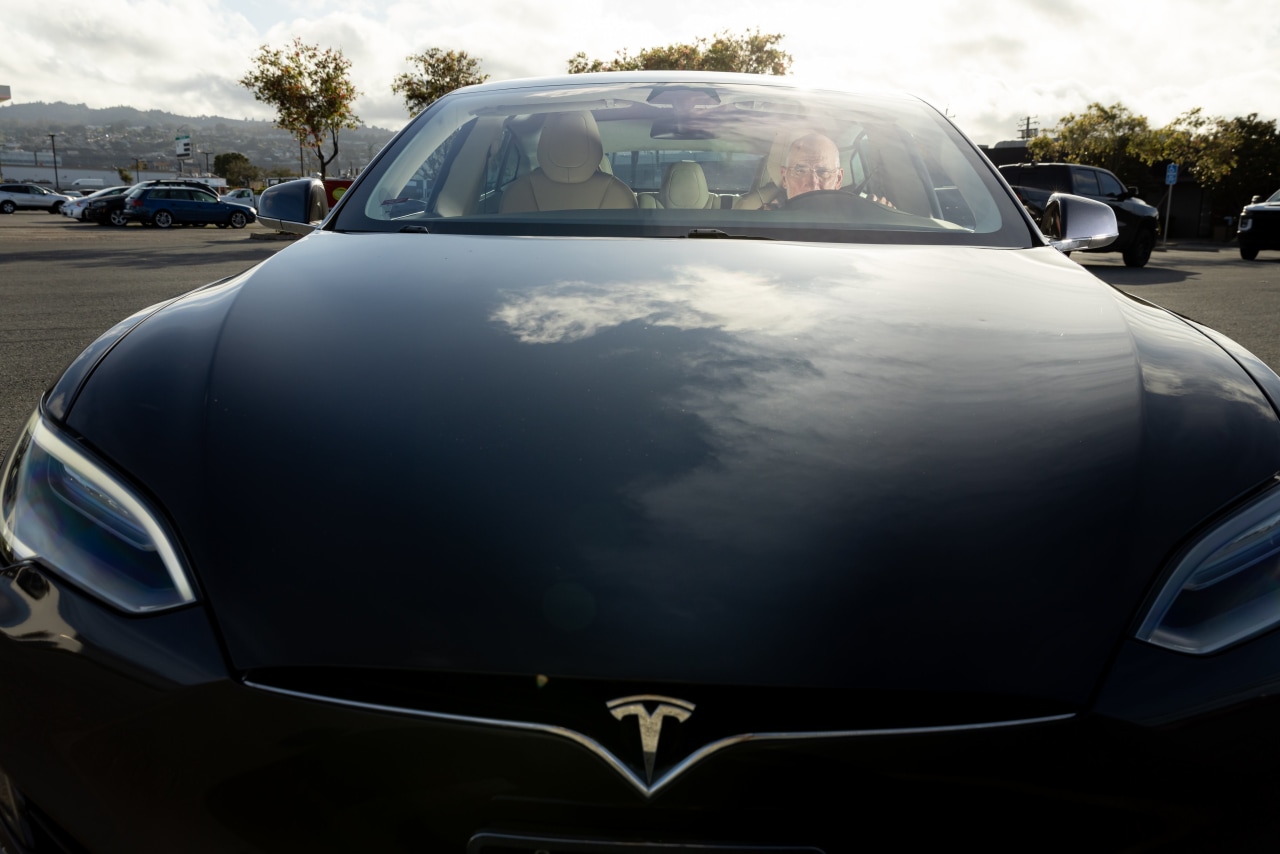
The company has faced pushback from customers who said Tesla misled them about the timeline for autonomy. Tom LoSavio, a retired lawyer in California, told the Journal that he paid $100,000 for his car in 2019, including an $8,000 upgrade for lifetime access to FSD, expecting that full autonomy was just around the corner.
LoSavio is the lead plaintiff in a class-action lawsuit seeking a refund and damages from Tesla for false advertising. Tesla has appealed the lawsuit’s class-action status.
The company also faces a class action in Australia, as well as a campaign to organize Tesla owners in Europe who paid for FSD but never got it because of regulatory restrictions and technology updates.
Still, Tesla executives continue to promote the technology as just around the corner.
Tesla has rolled out a small number of fully autonomous vehicles as part of its Robotaxi ride-hailing app in Austin, Houston and Dallas. Musk said on Wednesday that everyday customers could have access to the unsupervised version of Tesla’s software by the end of the year.
He added that once the older Hardware 3 car owners get the promised upgrades, they too will be able “to enter the Robotaxi fleet and have unsupervised FSD.”
Write to becky.peterson@wsj.com