
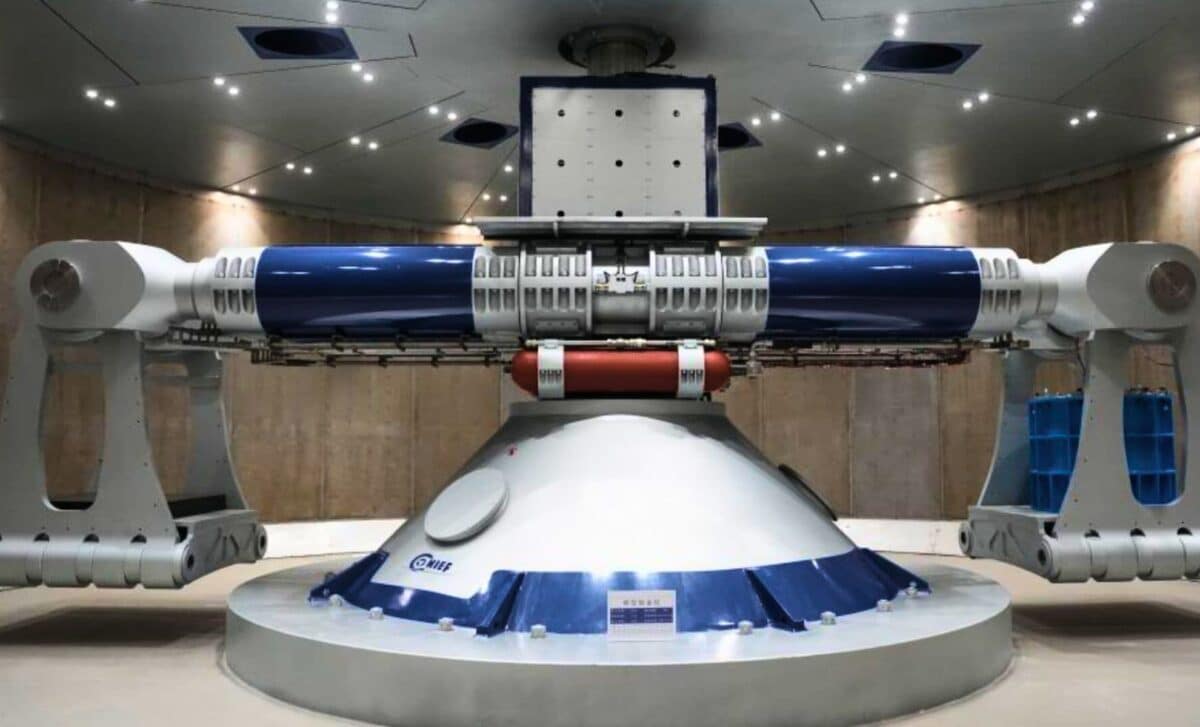
Deep beneath the city of Hangzhou, engineers recently completed the installation of a massive rotating machine. The device sits inside a 230-square-meter circular subterranean chamber positioned 15 meters below the surface. The deep underground placement shields the surrounding environment from the extreme vibrations the machine produces during operation.
The equipment functions similarly to an oversized industrial spin cycle. It rotates heavy physical models at high velocities with a giant arm that has a radius of 6.4 meters. Scientists use this setup to subject physical materials to extreme physical stress and observe the resulting degradation in a controlled setting.
When researchers rotate these physical scale models at high speeds, they accelerate natural processes that usually require centuries to unfold. The machine shrinks the timeline of natural geological events down to a matter of days.
Surpassing the Previous G-Tonnes Capacity Limit
The machine, designated CHIEF1900, operates at the Centrifugal Hypergravity and Interdisciplinary Experiment Facility at Zhejiang University. Built by the Shanghai Electric Nuclear Power Group, the device generates up to 1,900 g-tonnes of force. A standard household washing machine produces about 2g of force during a spin cycle. The CHIEF1900 subjects multi-tonne samples to forces almost two thousand times the regular pull of Earth.
This new installation surpasses the previous global record holder for a hypergravity centrifuge as reported byInteresting Engineering. For years, the highest capacity machine was a 1,200 g-tonnes unit operated by the US Army Corps of Engineers in Vicksburg, Mississippi. The CHIEF1900 also replaces its direct predecessor, the CHIEF1300, which came online earlier at the Centrifugal Hypergravity and Interdisciplinary Experiment Facility.
The extreme friction and mechanical movement required to reach 1,900 g-tonnes generate massive amounts of heat. To prevent internal components from melting, engineers designed a vacuum-based cooling system combined with forced air ventilation. The system incorporates the largest flange diameter ever constructed for this specific application to combine vacuum pumping with glacier coolant lines.
“CHIEF1300 was placed below ground level, and was equipped with vacuum and wall-cooling setups to mitigate the adverse influences of air resistance and machine heating,” said Ling Daosheng, the chief engineer of the facility at Zhejiang University.
The engineering team applied identical cooling principles to construct the newer, larger machine. The faster the 6.4-meter arm spins, the higher the centrifugal acceleration becomes. This dynamic requires strict temperature controls to maintain system stability.
Compressing Physical Time Through Extreme Force
The primary application of the CHIEF1900 machine involves shrinking both time and physical scale in laboratory experiments. When researchers place a three-meter scale model of a dam into the spinning chamber at 100g, the model experiences the exact same internal stress levels as a 300-meter full-scale structure in the real world. This scale manipulation allows engineers to observe potential failure points in massive infrastructure projects like deep-sea platforms and high-head hydroelectric dams before construction begins.
The hypergravity environment also accelerates slow geological movements. Engineers plan to use the extreme forces to test how high-speed rail tracks resonate with the surrounding ground. The extreme rotational speeds allow scientists to pinpoint exactly when and where the ground will fail under the constant vibration of heavy trains passing overhead.
Without the machine, tracking how deep-soil pollutants migrate into groundwater requires observation periods that span hundreds or tens of thousands of years. Inside the spinning chamber, researchers condense the journey of those pollutants into just 3.65 days.
Chen Yunmin, the chief scientist of the facility at Zhejiang University, said the results suggest the team can create experimental environments that span milliseconds to tens of thousands of years under normal or extreme temperatures. By creating these exact conditions, the team expects to gather new physical data instead of relying entirely on computer simulations.
Future Operations in Hangzhou
The construction of the machine required developers to build many components entirely from scratch. The extreme operational speeds, combined with the extended length of the mechanical arms, pushed the structural integrity of standard industrial parts beyond their breaking points.
The underground site represents a $285 million investment into physical science infrastructure. Approved by the National Development and Reform Commission in 2021, the Centrifugal Hypergravity and Interdisciplinary Experiment Facility houses six specialized experimental cabins. These cabins focus on distinct research areas such as slope and dam engineering, seismic geotechnics, deep-sea engineering, and geological processes.
The developers intend for the hypergravity lab to function as a shared global platform. Domestic and international research teams will book operational time on the CHIEF1900 machine similarly to how astronomers reserve time on large telescopes. The complete facility features three main units and 18 in-flight devices that support the testing cabins. Two additional units remain under construction at the site.
Prior pilot tests at the facility with the CHIEF1300 successfully simulated strong earthquakes to verify the seismic performance of a hydropower dam foundation. Researchers also reproduced 2,000-meter deep sea water pressure to evaluate the safety of methane hydrate extraction from the ocean floor. They synthesized metal alloys that proved low in defects and high in physical strength.
“It gives us the chance to discover entirely new phenomena or theories,” Chen Yunmin said.
Enjoyed this article? Subscribe to our free newsletter for engaging stories, exclusive content, and the latest news.