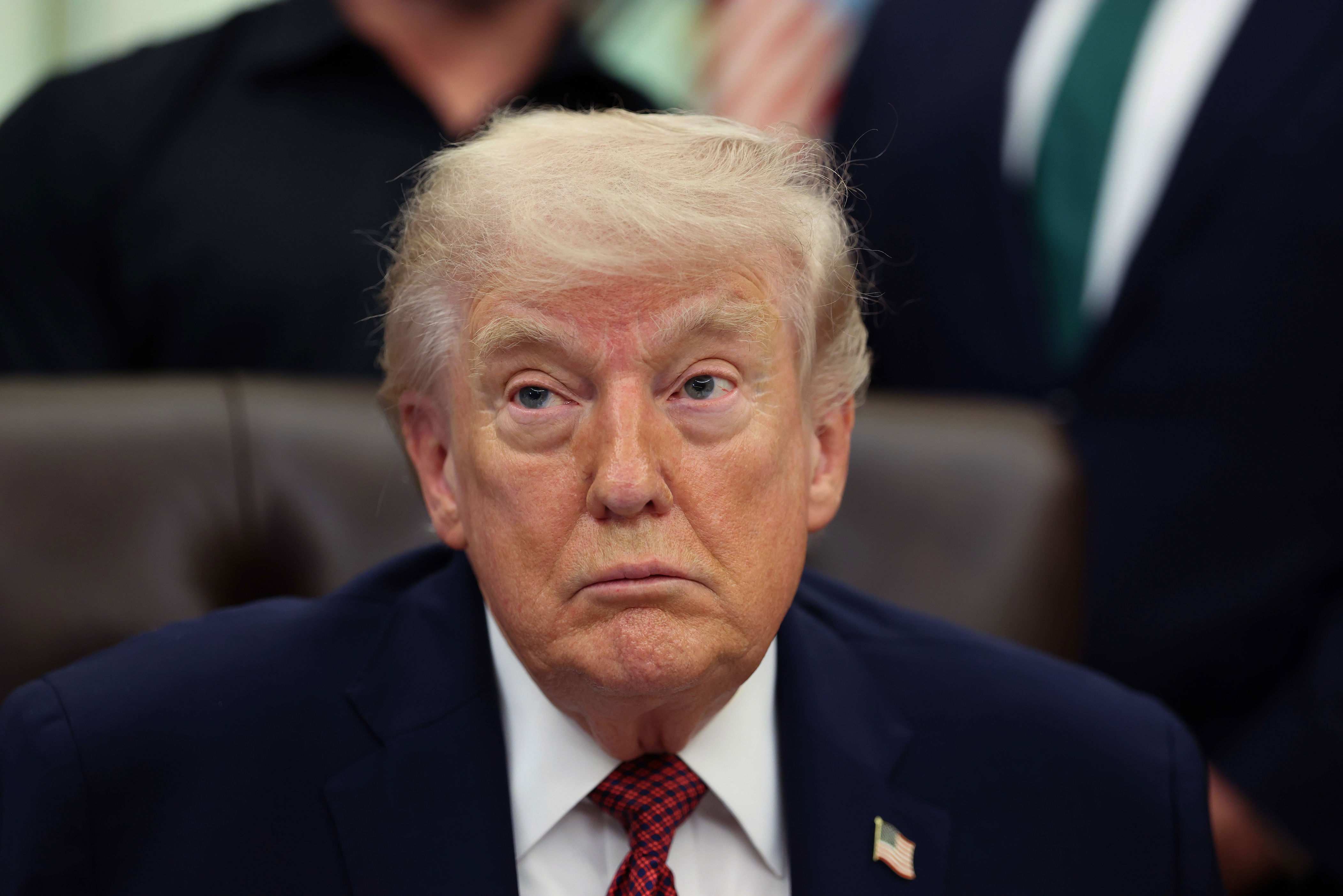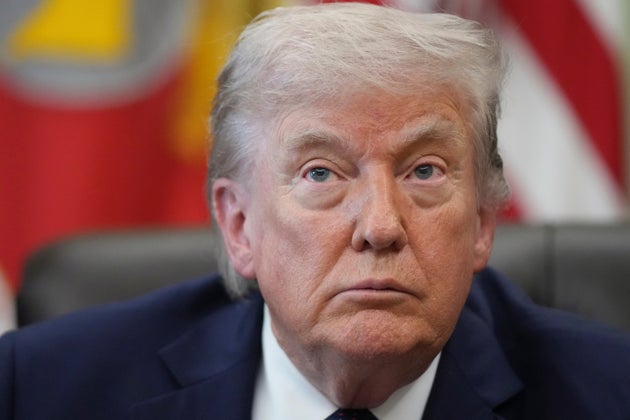
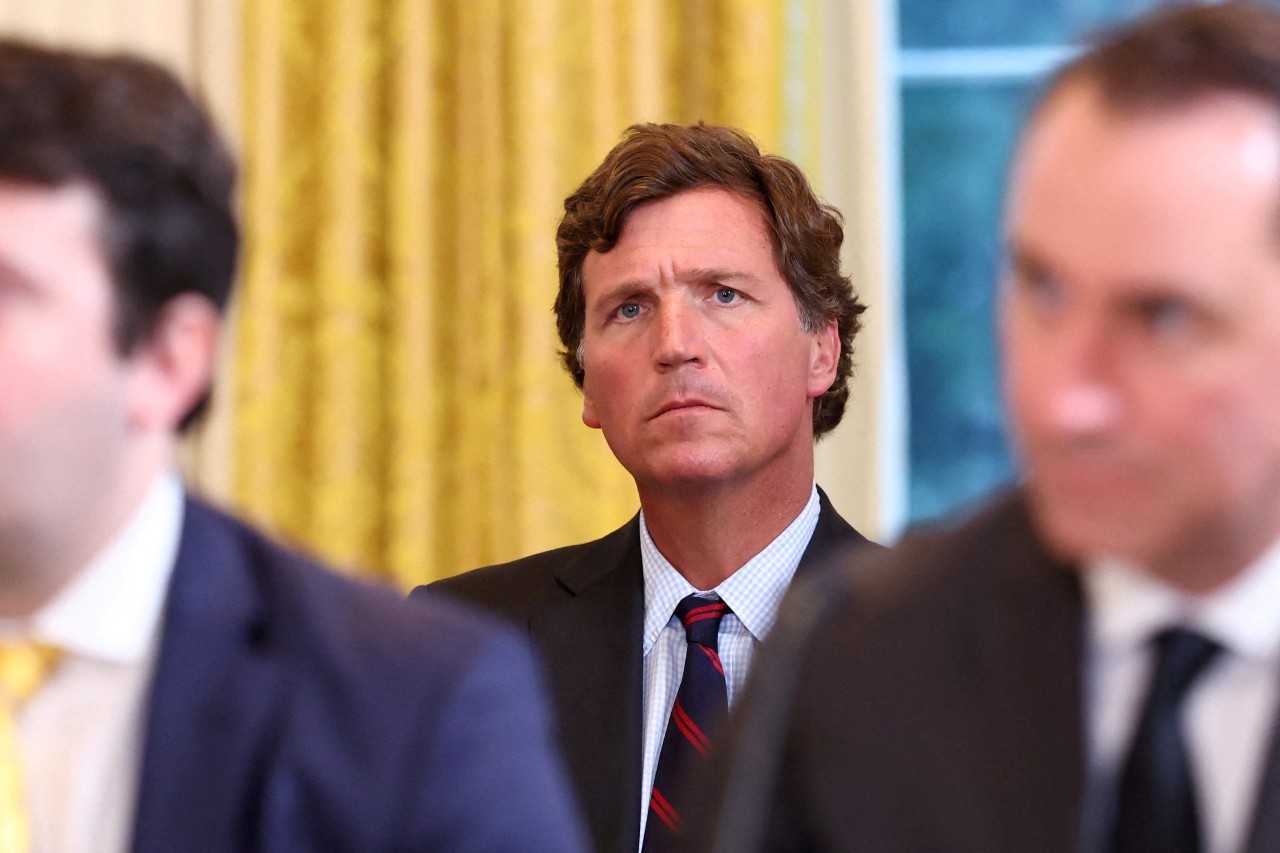
President Trump made an unexpected introduction at the White House last January, directing the attention of more than a dozen oil executives to a friend—an uncomfortable-looking man wedged between the staff seated at the back of the East Room. “Tucker Carlson is here,” the president said, according to a source in the room. “He’s a very famous conservative and famous WASP.”
The former Fox News host is, indeed, a white Anglo-Saxon Protestant. He was also once a close adviser and confidant of the president. It was the reason Trump had invited him into the Oval Office that day, where the populist firebrand sat in on a meeting to discuss plans for rebuilding the Venezuelan energy industry just days after the U.S. capture of strongman Nicolás Maduro.
Carlson opposed that conflict. And Carlson opposes the one that followed it. He is now the most prominent opponent of the Iran war and a potential problem for a president who demands total loyalty. A friendship that lasted nearly a decade, remaking the modern conservative movement in the process, seems shattered.
“I don’t hate Trump. I hate this war and the direction that the U.S. government is taking,” he said in an interview with The Wall Street Journal. “I feel betrayed.”
When candidate Trump promised “no new wars,” particularly foreign entanglements in the Middle East, Carlson took him both seriously and literally. In his view, the president has subsequently been captured by neoconservatives and Israel, abandoning a core tenet of his political platform.
“Why can’t the U.S. government act on behalf of its own citizens?” he asked before adding, “This is a generational problem that didn’t start with Trump” and concluding, “If anything, Trump just proved the system was stronger than him.”
Carlson isn’t without his own critics. He hosted a Holocaust denier, Nick Fuentes, on his eponymous podcast last October and accused U.S. politicians who support Israel of falling under undue foreign influence and suffering from “a brain virus.” The episode elicited allegations of antisemitism and demands from some conservatives to banish Carlson from the right.
Carlson had lobbied Trump for months, both publicly and privately, against another war in the Middle East, traveling three times to the White House to meet with the president and fielding calls from him at all hours.
He failed. The exact time of the split: “February 28th,” Carlson said, referring to the day the U.S. and Israel launched airstrikes on Iran that killed Ayatollah Ali Khamenei and alienated conservatives who believed that “America First” meant no new wars.
Carlson described the man he helped make president a second time as charming, intelligent and an existential threat to self-government. “Trump has proven his own point, unfortunately, which is that the people running your government are only about themselves,” he said. With rhetoric more familiar to liberal circles, he added, “You can run an authoritarian system that way. You cannot run a liberal democracy that way.”
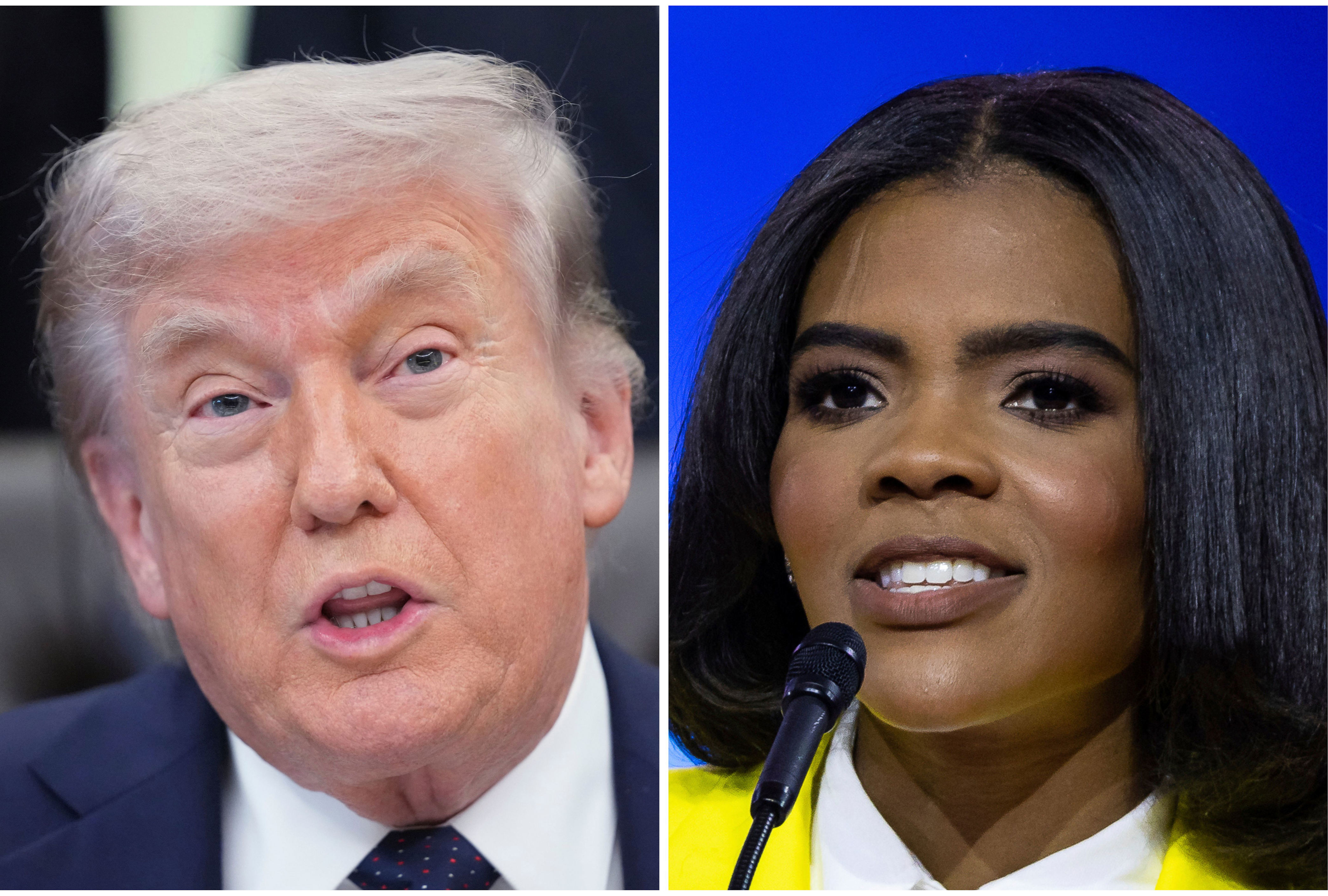
Trump faced little lasting opposition as he remade the right in his image. After dispatching the GOP old guard, his control of the party is largely complete. Carlson, the country’s most popular conservative pundit, is now the face of an antiwar faction that is fracturing the MAGA movement. He is signaling that defiance, particularly when it comes to a core issue, is now acceptable. For this, Trump has called him “low IQ.” Carlson replied that Trump has become “the slave” of the neoconservatives.
Now an exile in Trump World, Carlson increasingly questions MAGA and the president who launched the entire America First project and then admitted, in an interview with the Atlantic last year, that he is “the one that decides” its meaning. If America First is the gut instinct of the president, instead of a set of principles, Carlson said, “then of course every decent person has to reject it because we don’t worship men. We can’t. That is idolatry.”
Trump allies accuse Carlson of both antisemitism and opportunism. Laura Loomer has called him “mentally ill” and speculated that Carlson had been bought off by foreign powers. Mark Levin, his former Fox News colleague, dubbed him “a Marxist-Islamist leftist.” Carlson rejects all the charges. “I am not pro-mullah,” he quipped, “I am an Episcopalian.”
The disunion became official during an episode of Carlson’s podcast released Monday. Joined by his brother, Buckley, a former speechwriter for Trump, he told his nearly six million subscribers that he was wrestling with his conscience, predicted that he would be tormented by his support for the wartime president, and said that he wanted to say, “I’m sorry for misleading people.”
The White House pushed back by noting that both of Trump’s successful presidential campaigns included explicit promises to keep Iran from obtaining a nuclear weapon. “Anyone who claims to be a conservative and says they regret voting for President Trump over Kamala Harris,” said White House press secretary Karoline Leavitt, “is either a fool or a fraud.”
Carlson said he could never have voted for Harris, citing his longstanding opposition to abortion, whereas she supports abortion rights. His rejection of Trump, nevertheless, remains as dramatic of a reversal as it is surprising.
He stumped on stage for the president, then played a hand behind the scenes in helping build his administration. It was Carlson, along with Donald Trump Jr. and the late Charlie Kirk, who together successfully lobbied Trump to pick a freshman senator from Ohio, JD Vance, as his running mate. Of particular appeal to Carlson: Vance’s trademark anti-interventionism. “I assumed he was sincere, and by the way, he may have been,” Carlson said of the president, but after the election, “from my perspective, Trump changed dramatically.”
After the U.S. bombed Iran last June to dismantle its nuclear program, Carlson and Kirk tried to convince Trump not to escalate airstrikes against Iranian nuclear facilities into a full-scale war. Carlson resumed that effort early this year. “Charlie was not around,” Carlson said of the murdered political activist, “so I felt a moral obligation to do it myself.”
Carlson still regrets his support as a cable news pundit for the Iraq War two decades ago and believes Israel drew the U.S. into what would become a quagmire. Initially a skeptic of Trump, he warmed to the populist because of Trump’s skepticism of military intervention, what Carlson called “the one thread that connects every part of his public career.”
Nearly a decade ago, Carlson identified in Trump what he called “a deep resentment toward the established order,” namely the neoconservatives who populated the Bush administration. His opposition to regime change shouldn’t be confused with sympathy for the Iranian regime, the conservative commentator said. His object, he said, is instead defending American interests.
The breakup occurred gradually, then suddenly. Carlson walked into the Oval Office for the last time in February, shortly after wrapping a contentious interview in Israel with U.S. Ambassador Mike Huckabee. A letter from the evangelist Franklin Graham was lying on the Resolute Desk. “He says you are an antisemite,” the president told him, according to Carlson, who denies the charge. Trump listened as his old friend argued against another war in the Middle East. Trump didn’t counter but looked “sad and resigned,” according to Carlson, who said the two men haven’t spoken since.
Carlson recalled the exact moment he lost the argument with Trump. It was around 10 p.m. on Feb. 27 when he was preparing for bed. “Someone texted me, ‘We’re going,’” Carlson said, before pausing to clarify that neither Trump nor Vance had leaked the news. He didn’t text back, returning instead to his reading that night, the New Testament book of John.
“I couldn’t really believe that this is actually going to happen,” he said.
Write to Philip Wegmann at philip.wegmann@wsj.com