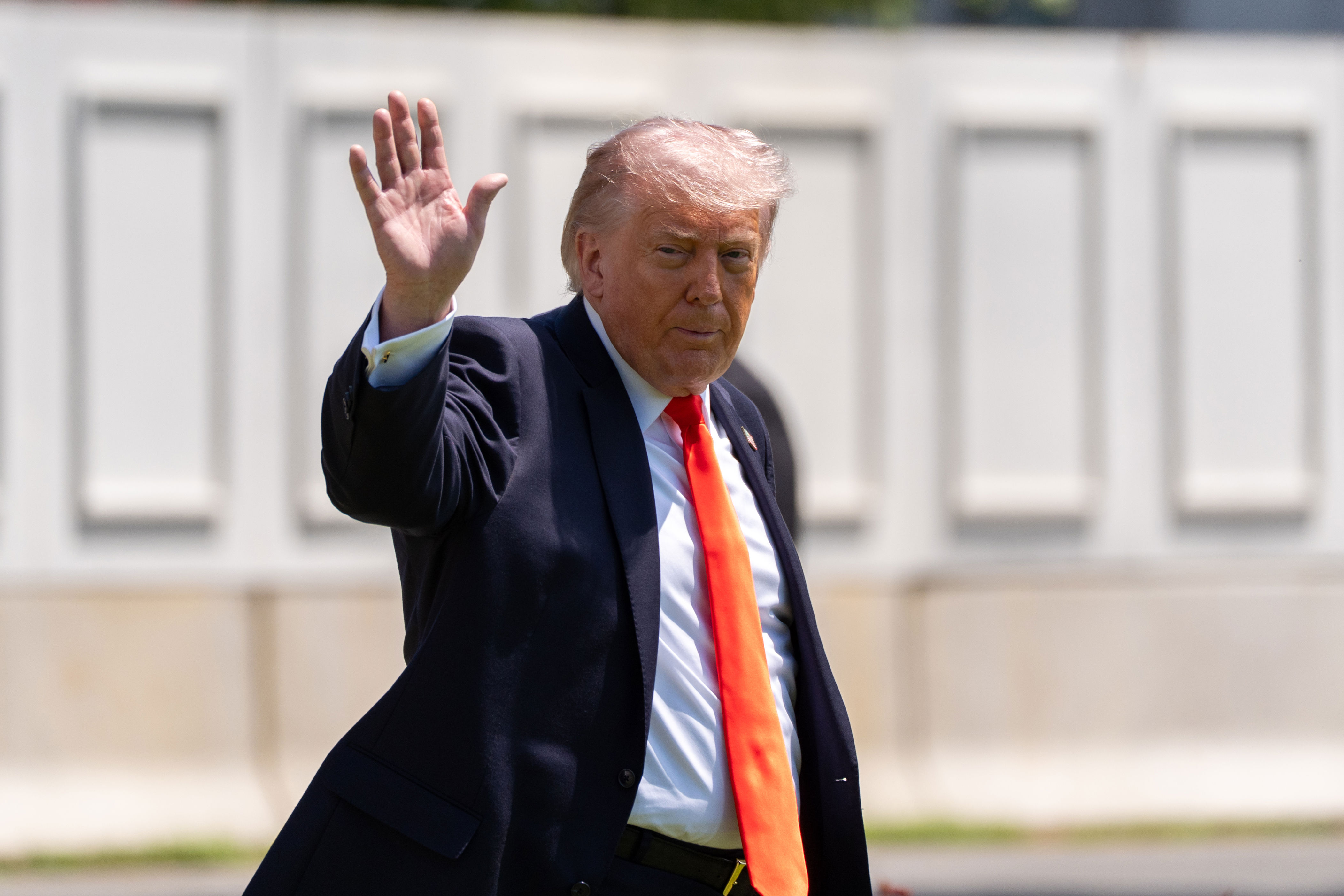
President Donald Trump claimed in a letter to Congress on Friday that hostilities with Iran have “terminated” as he reached a legal deadline that requires military operations to halt unless lawmakers authorize force.
Trump’s claim came as the United States continues to enforce a naval blockade of Iran and as he declined to rule out additional strikes on the country.
The War Powers Resolution of 1973 requires presidents to remove U.S. forces from any conflict that Congress has not authorized within 60 days of the White House notifying Congress of hostilities — a deadline that Trump hit on Friday.
Trump wrote in his letter to lawmakers Friday that the conflict has been effectively over since the United States and Iran agreed last month to a ceasefire.
“There has been no exchange of fire between United States Forces and Iran since April 7, 2026,” Trump wrote in the letter, obtained by The Washington Post. “The hostilities that began on February 28, 2026, have terminated.”
The president’s argument echoed what Defense Secretary Pete Hegseth said Thursday in testimony before the Senate Armed Services Committee. Trump also suggested Friday that he believes the requirement to withdraw U.S. forces within 60 days is unconstitutional.
“Most people consider it totally unconstitutional,” Trump told reporters. “Also, we had a ceasefire, so that gives you additional time.”
Democrats immediately pushed back. Senate Minority Leader Charles E. Schumer (D-New York) described Trump’s argument in a post on X as “bullshit.”
“President Trump declaring the war with Iran ‘terminated’ doesn’t reflect the reality that tens of thousands of U.S. service members in the region are still in harm’s way, that the Administration continually threatens to escalate hostilities or that the Strait of Hormuz remains closed and prices are skyrocketing at home,” Sen. Jeanne Shaheen (New Hampshire), the top Democrat on the Senate Foreign Relations Committee, said in a statement. “President Trump entered this war without a strategy and without legal authorization and today’s announcement doesn’t change either fact.”
Trump is not the first president to argue that he is not bound by the 60-day deadline. President Barack Obama bombed Libya for more than 60 days without seeking authorization from Congress, and President Bill Clinton did the same in Kosovo. (Clinton’s administration argued that Congress implicitly authorized the strikes by passing legislation to fund them within 60 days.)
The War Powers Resolution gives presidents an additional 30 days to remove U.S. forces from hostilities if they certify that it is an “unavoidable military necessity,” but the administration does not appear to have sought such an extension.
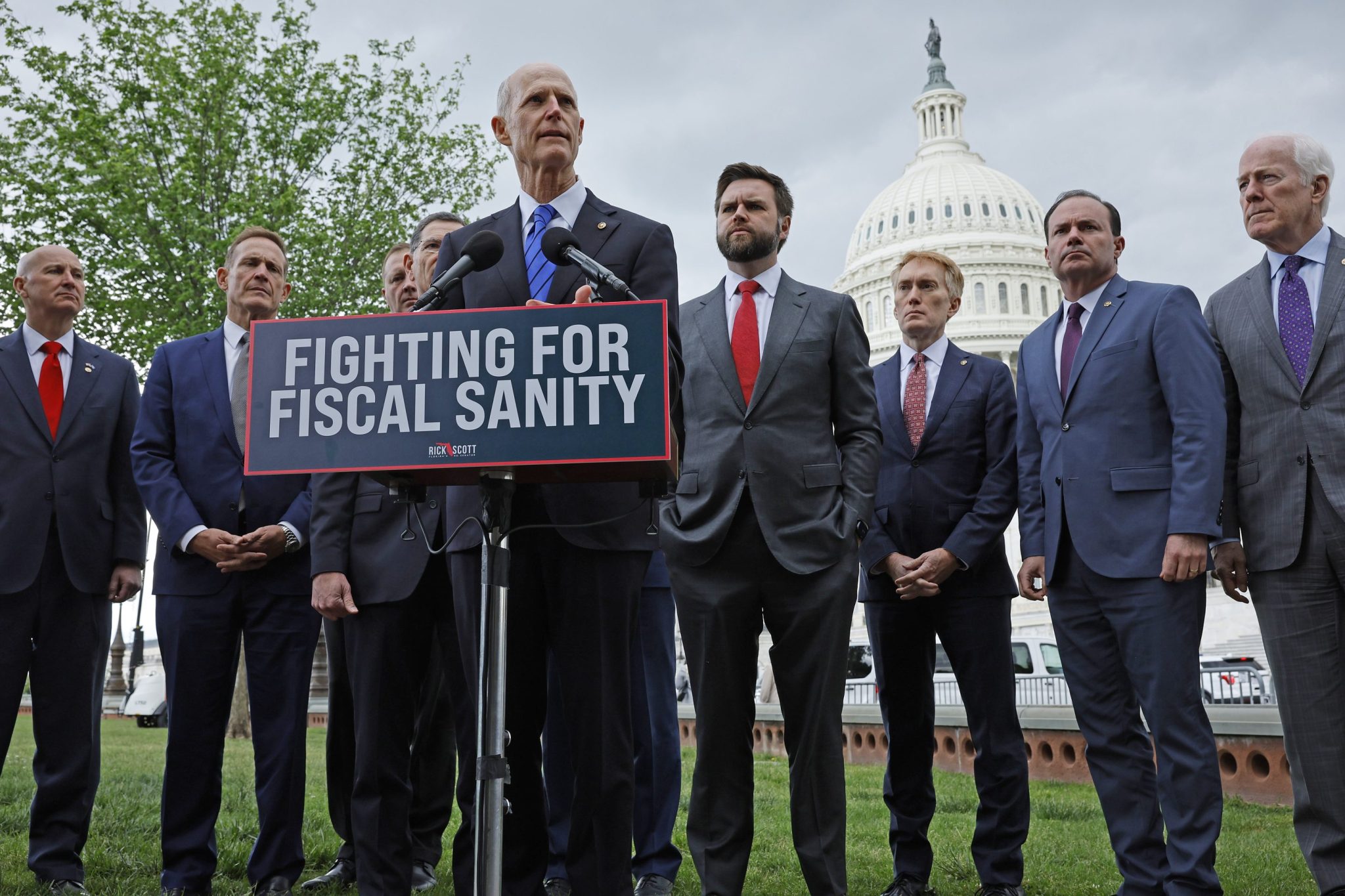
Some Senate Republicans have said in recent weeks that they view the 60-day mark as an important deadline.
Sen. John Curtis (R-Utah) said he would not support more funding for military operations against Iran unless Congress declared war. Sen. Susan Collins (R-Maine) said Congress would need to authorize the war if it exceeded 60 days.
Senate Majority Leader John Thune (South Dakota) and other Republicans called on the administration to articulate how it plans to end the war as the 60-day deadline approached.
“I’d hope they’d be able to come to us by the end of the week — or when [Congress returns May 11] — and certify that this is on a path to being done, that they’re taking the following steps and the conflict will soon be over,” Sen. Josh Hawley (R-Missouri) told reporters this week.
Collins joined Democrats and Sen. Rand Paul (R-Kentucky) in voting Thursday to advance a war powers resolution directing Trump to withdraw U.S. forces. The Senate rejected the resolution — the sixth on which Democrats have forced a vote in the chamber since the start of the war — on a 50-47 vote.
“The Constitution gives Congress an essential role in decisions of war and peace, and the War Powers Act establishes a clear 60-day deadline for Congress to either authorize or end U.S. involvement in foreign hostilities,” Collins said in a statement on her vote. “That deadline is not a suggestion; it is a requirement.”
Sen. Lisa Murkowski (R-Alaska) voted against the resolution on Thursday but said she is concerned that Congress has not voted to authorize the war. Congress passed similar authorizations for the use of military force before the wars in Afghanistan and Iraq, but Trump did not ask lawmakers to do so before striking Iran in February.
Murkowski said Thursday that she planned to introduce legislation to authorize the war if the 60-day deadline passed without “a credible plan and information from the administration.”
“Congress has a role. Congress has to step up and fulfill that role, that obligation that the Constitution assigns to us,” she said on the Senate floor. “We owe it to the men and women who are serving our great nation.”
Most Read From The Washington Post
- Medicare portal database exposed health providers’ Social Security numbers
- Where emergency visits for tick bites are highest in the United States
- Trump drops MAHA favorite for surgeon general pick who has critiqued RFK Jr.
- Brain scans reveal 3 ADHD subtypes, including a more extreme form
- FDA expands access to a promising drug for one of the worst cancers