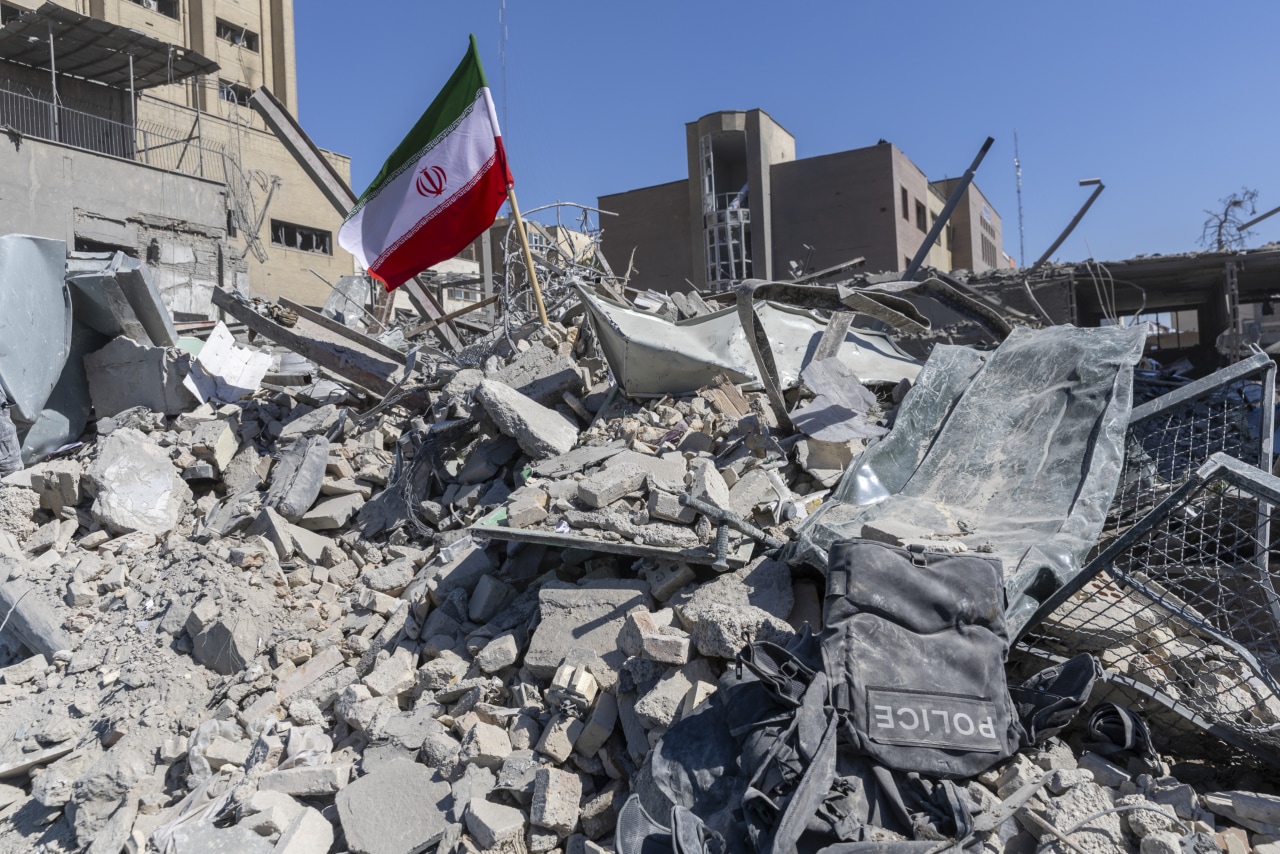
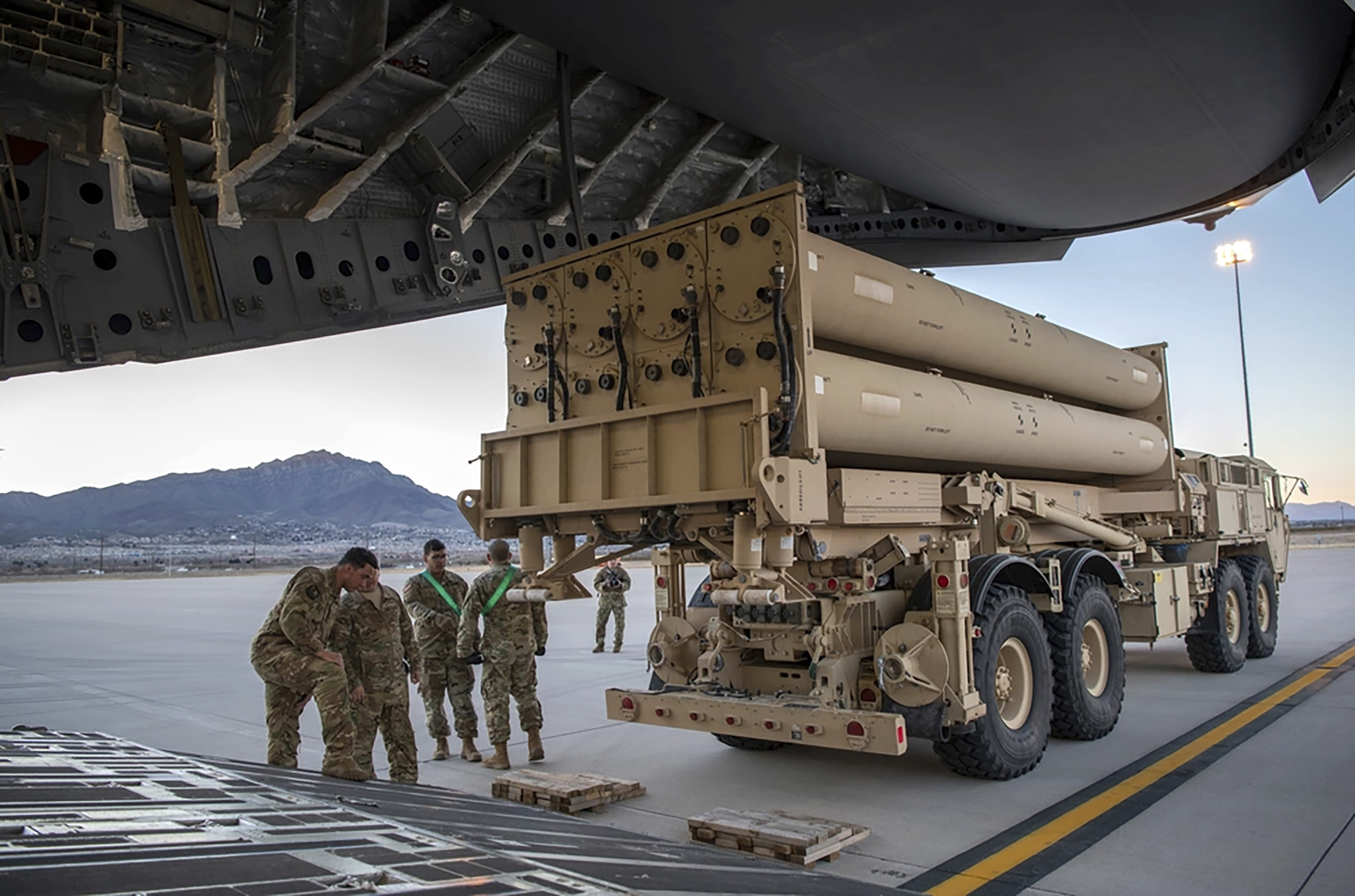
The Pentagon is rapidly burning through its stocks of precision weapons less than a week into the massive campaign of airstrikes against Iran, while also expending sophisticated air defense missiles at a rate that puts the U.S. military potentially “days away” from having to prioritize which targets to intercept, according to three people familiar with the matter.
The scope of “Operation Epic Fury,” which U.S. Central Command’s Adm. Brad Cooper says has hit more than 2,000 targets so far, is forcing U.S. military commanders to make difficult calculations about how quickly their Iranian adversaries will burn through their own munitions — even as President Donald Trump says the war may last four to five weeks.
Top Pentagon leaders dedicated considerable time at a news briefing Wednesday morning to addressing worries the military is reaching too deeply into its inventory at the cost of readiness. “We have sufficient precision munitions for the task at hand, both on the offense and defense,” said Gen. Dan Caine, chairman of the Joint Chiefs of Staff, without offering specifics or numbers.
The United States will rely on its larger stores of less-sophisticated weapons as Iranian defenses are degraded in the coming days, allowing American forces to get closer for their attacks, he said.
“The hardest hits are yet to come from the U.S. military,” Secretary of State Marco Rubio told reporters Monday before a classified briefing with select lawmakers.
In retaliation, Iran has launched thousands of one-way attack drones and hundreds of missiles at an array of U.S. military installations and civilian targets across the region, including in Bahrain, Kuwait, Iraq, Israel and the United Arab Emirates. At least six U.S. troops were killed in a drone attack in Kuwait, and U.S. Embassies in Riyadh, Saudi Arabia, and Kuwait City have come under Iranian fire.
So far, the U.S. military has expended hundreds of its most sophisticated munitions, including Patriot and Terminal High Altitude Area Defense (THAAD) interceptors — considered the world’s premier missile defense systems — and Tomahawk cruise missiles aimed at Iranian leaders and ballistic missile sites, four people familiar with Pentagon assessments said, speaking on the condition of anonymity to discuss the highly sensitive numbers.
Late Monday night, Trump posted on social media that the U.S. inventories of “medium and upper medium grade” munitions are “virtually unlimited” and could sustain the pace of attacks in Iran indefinitely. He also wrote that weapons at “the highest end” are in “good supply, but are not where we want to be.”
A spokesman with U.S. Central Command, which oversees operations in the Middle East, referred questions to the Pentagon.
A Pentagon spokesman, Sean Parnell, said in a statement Tuesday that the military “has everything it needs to execute any mission at any time and place of the President’s choosing and on any timeline.” Trump and Defense Secretary Pete Hegseth, Parnell added, “have made restoring American military dominance their top priority from day one, and American dominance has been proved again and again following every major military operation under this administration.”
Behnam Ben Taleblu, who tracks Tehran’s weapons programs at the Foundation for Defense of Democracies, a think tank, said Iran had more than 2,000 ballistic missiles before the conflict began and “many more-fold” drones.
“It is very apparent it has learned lessons from the 12-day war” in June and is trying to use its weaponry more efficiently, Taleblu said.
Iran, he said, is targeting the United States’ Gulf allies with low-cost drones to terrorize and exhaust limited air defenses, while focusing its ballistic missile attacks on Israel.
“Iran is firing smaller volleys of missiles, signaling an interest in preserving their stocks while still testing and attriting Israel’s air and missile defenses,” Taleblu said. “The goal over time is to make Israel focus its dwindling interceptor stocks on defending smaller patches of terrain.”
“Iran is conscious of missile math, perhaps more so than ever before,” he said.
For the U.S., the trends underscore the urgency of an “effective defanging operation” that aggressively destroys Iran’s missile caches and infrastructure, he added.
The rate at which the U.S. military is expending its most sophisticated munitions has slowed since the first day of the conflict, in which Iran fired many of its highest-end weapons, a U.S. official said, noting that the pace hasn’t fallen “dramatically.”
In the days since, the U.S. and Israel have established air superiority, allowing fighter jets to soon fly closer to targets and use less expensive munitions such as precision-guided glide bombs, the official said, speaking on the condition of anonymity to describe ongoing operations.
Hegseth said Wednesday that the Pentagon would increasingly rely on massive GPS-guided gravity bombs, “of which we have a nearly unlimited stockpile,” and that the military would “no longer need” to dip into its inventory of more sophisticated weapons.
“Iran cannot outlast us,” Hegseth said.
U.S. munitions stocks have been depleted by years of trade-offs in the defense budget, aid to countries such as Ukraine, and more recently the Trump administration’s vast use of the military to carry out its foreign policy. After little more than a year in office, Trump has launched attacks in seven countries — Iraq, Iran, Nigeria, Somalia, Syria, Venezuela and Yemen — and fired dozens of missiles in more than 40 strikes on alleged drug traffickers at sea around Latin America.
“When you combine the amount of munitions that we have spent over the last year attacking the Houthis, the amount of munitions that are spent on … the seven different military conflicts the president has put America into, our munitions are low,” Sen. Mark R. Warner (Virginia), the ranking Democrat on the Senate Intelligence Committee, said after attending the briefing with Rubio and other top Trump officials Monday.
The Washington Post previously reported that Caine warned Trump ahead of the operation that an extended campaign posed acute risks for the U.S. military, including a drain on its limited stores of precision weapons, according to multiple people familiar with the discussions.
Following classified briefings before each chamber of Congress on Tuesday, Sen. Andy Kim (D-New Jersey) said he asked Caine about the number of munitions the U.S. has depleted compared with Iran. The general, Kim said, did not provide specifics but was not “raising alarms himself” while speaking with lawmakers.
Still, the scarcity could intensify a long-term problem for America’s ability to deter a conflict with China, particularly around the self-governing island of Taiwan, where Beijing has hosted increasingly complex and aggressive military drills in recent years.
Two of the people familiar with the U.S. inventories said that an extended conflict in the Middle East could require drawing down munitions stocks in the Indo-Pacific region. A separate U.S. official, speaking on the condition of anonymity to describe the sensitive state of munitions, said that inventories were so thin that a lengthy campaign against Iran wouldn’t leave enough munitions for other threats, especially China.
The first U.S. official said that senior U.S. military leaders around the world are making decisions now about where to reallocate munitions, based on assessments of how far they can dip into stockpiles.
Warner and House Speaker Mike Johnson (R-Louisiana) said that the operation will almost certainly require Congress to pass supplemental money for the Defense Department to replace stocks spent during the attack, though the specific dollar figure would depend on the length of the ongoing campaign in Iran.
Sen. Chris Coons (Delaware), the top Democrat on the Senate Appropriations defense subcommittee, has asked the administration to provide the cost of munitions expended in the war, and said he expects the supplemental funding request to be “in the billions” of dollars.
Alex Horton contributed to this report.