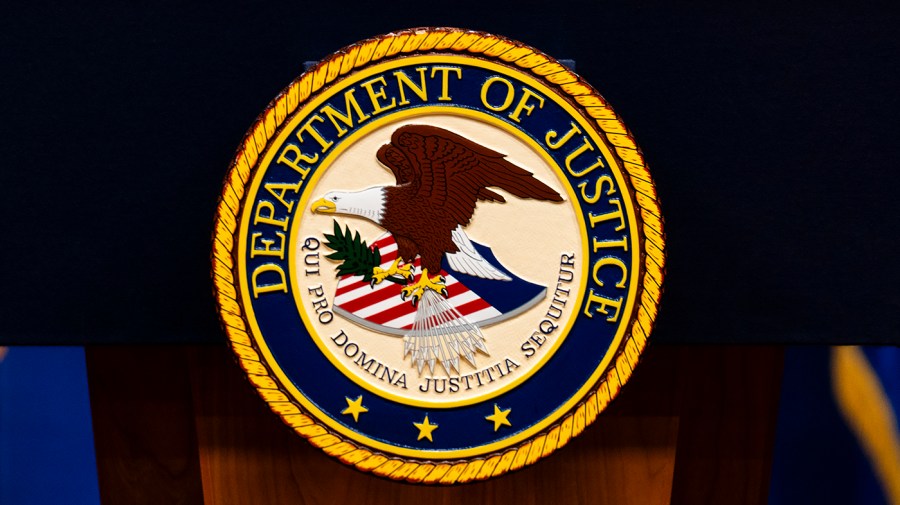
The Department of Justice (DOJ) announced Friday it is seeking to denaturalize a dozen people from various parts of the country who are accused of fraudulently obtaining U.S. citizenship.
Federal prosecutors filed denaturalization actions in U.S. District Courts across the country this week against 12 people, alleging they lied during the naturalization process, including about previous criminal behavior.
The DOJ said these people — ranging in age from 28 to 75 years — concealed serious offenses while seeking legal status, including providing material support to a terrorist group, war crimes and sexual abuse of a minor.
Among them is former U.S. Ambassador to Bolivia Victor Manuel Rocha, a native of Colombia who is serving a 15-year federal prison sentence after pleading guilty to charges related to his work as a covert spy for the Cuban government.
Others facing the possible revocation of their citizenship include five natives of African countries, three from Asia and two from South America, according to the DOJ.
The Trump administration claims these people never should have qualified to become American citizens, and therefore their status should be revoked because it was “illegally procured or procured by concealment of a material fact or by willful misrepresentation.”
“The Trump administration is taking action to correct these egregious violations of our immigration system,” acting Attorney General Todd Blanche said. “Those who intentionally concealed their criminal histories or misrepresented themselves during the naturalization process will face the fullest extent of the law.”
This week’s actions mark the latest move in the Trump administration’s push to strip citizenship from naturalized immigrants.
Employees in the DOJ’s civil division were directed in a memo in June to “maximally pursue denaturalization proceedings,” outlining 10 categories of people who should be prioritized, including those who pose a national security concern and people with pending criminal charges.
The Department of Homeland Security was subsequently directed in December to make as many as 200 referrals for potential denaturalization.
The process can only occur in federal court, unlike other immigration proceedings, which are handled in an administrative setting. The government holds a “high burden of proof” when attempting to revoke a person’s naturalization, with civil actions requiring “clear, convincing, and unequivocal evidence which does not leave the issue in doubt,” according to U.S. Citizenship and Immigration Services.
Such actions have been historically rare. Research shows the U.S. government opened an average of 11 denaturalization cases per year between 1990 and 2017, with a slight uptick to 25 cases per year during the first Trump administration.
Copyright 2026 Nexstar Media, Inc. All rights reserved. This material may not be published, broadcast, rewritten, or redistributed.For the latest news, weather, sports, and streaming video, head to The Hill.