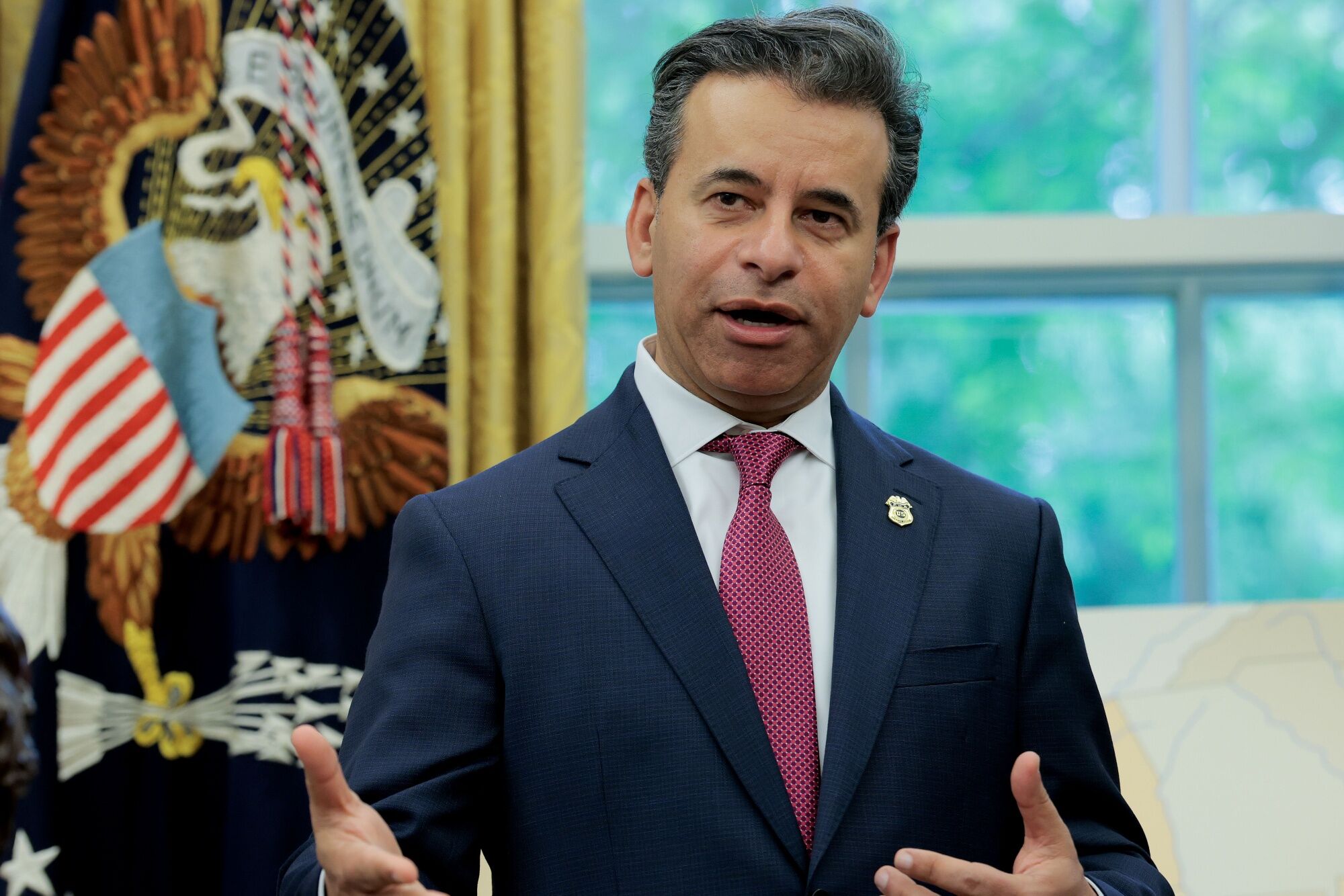
Federal Reserve Chair Jerome Powell's decision to stay as a governor after May 15 violates all norms, and it would be appropriate if he moved on in the short term, according to Fed Governor Stephen Miran.
Powell had said at his post-FOMC rate decision press conference that he'll continue to serve as governor for a time after his chair term ends in May.
"I'll say, from my own experience as the incoming Chairman of the Council of Economic Advisors that transitions are important," said Miran, noting that Powell should help with the transition.
Miran was speaking in an interview with Fox Business Network's Mornings with Maria with Maria Bartiromo.
The Fed governor thinks that cutting rates as well as reducing the balance sheet are important priorities, and to an extent, complementary. He sees shrinking the balance sheet as important in terms of reducing the Fed's footprint in the markets. In terms of the interest rates, he thinks the policy is still modestly restrictive.
In April, the Federal Open Market Committee kept its policy rate unchanged at 3.50%-3.75% for a third straight meeting, citing the uncertainty over the U.S. economic and global macro outlooks.
There was an unusual split in the voting during this meeting, which saw four dissenting votes, the highest level of dissent since 1992. Three were against the 'easing bias' in the statement, and Miran was for a cut.
"My view is that the labor market is being held back by the Federal Reserve policy being modestly restrictive," Miran told Fox Business.
"Other than some bumps that we've had recently, I don't see a reason for why 12 to 18 months from now, inflation is going to be running higher than it is now," he remarked.
Additionally, he thinks tariff revenue will be a significant driver of lowering the primary deficit over the near term. He also sees better GDP growth from technological improvements (AI-related) and deregulation. "And we all know that better growth reduces the deficit."
When asked where he sees GDP going this year, Miran said, "in the mid-twos". For 2025, GDP had increased at a rate of 2.1%.
When asked his thoughts on the need for less forward guidance from the Fed in the future, Miran said he would be supportive.
"It's difficult to make those types of predictions, and the more types of forward guidance you get, the more difficult in a situation you can get yourself," he noted.
He also said that it incentivizes a lack of updating views. "I think it can incentivize people to sort of say, OK, well, I said something, and now I have to stand by it, because changing my mind can be difficult, and so I think you have more flexibility intellectually if you don't give as much guidance about where you're going in the future."