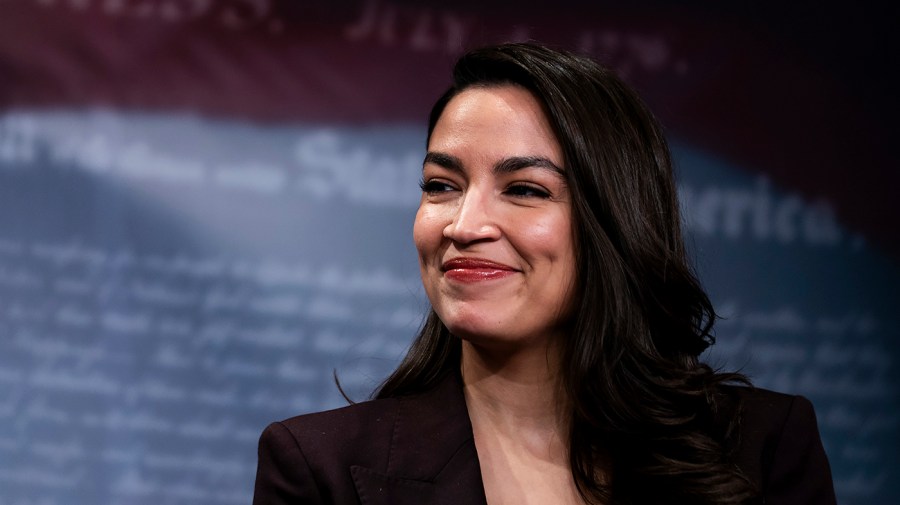
Representative Alexandria Ocasio-Cortez surged to first place in the latest 2028 Democratic presidential primary poll by AtlasIntel, the first to show the New York progressive leading her potential rivals.
The 2028 presidential field is coming into view, with candidates potentially announcing their campaigns as early as 2027, after the midterms. On the Democratic side, prospective candidates are already testing their messages and heading to key primary states to build up their name recognition and make inroads with voters. The new poll suggests Ocasio-Cortez has sizable support among Democratic voters, though other polls have not so far shown her with a lead.
Newsweek reached out to leading Democrats in the poll for comment via email.
Why It Matters
Early polls are not always predictive of final outcomes, but they do have major implications for candidates. Donors and voters use polls to gauge whether a candidate is viable, so the numbers matter to a candidate’s ability to fundraise and garner media attention. They also measure initial name recognition among potential candidates.
This poll is especially notable because AtlasIntel was ranked the most accurate polling company of the 2024 election by survey veteran Nate Silver and was previously named the most accurate pollster of the 2020 election by 538.
Ocasio-Cortez Leads Her First 2028 Poll: What to Know
The new AtlasIntel poll found Ocasio-Cortez leading among a crowded field of potential Democratic candidates, with 26 percent of respondents saying they would vote for her in the primary.
Former Secretary of Transportation Pete Buttigieg followed with 22.4 percent, while California Governor Gavin Newsom received 21.2 percent of support in the poll. Former Vice President Kamala Harris received the backing of 12.9 percent of respondents.
No other candidates received double-digit support in the poll, which surveyed 2,069 U.S. adults from May 4-7, 2025, and had a margin of error of plus or minus 2 percentage points.
Is AOC Running for President?
The poll comes just days after Ocasio-Cortez addressed presidential speculation in a conversation with David Axelrod, a former adviser to former President Barack Obama.
She said, in part, that she does not want to make decisions as a lawmaker, with the idea of one day becoming a senator or president weighing in the back of her mind.
“My ambition is to change this country,” she said. “Presidents come and go. Senate, House seats, elected officials come and go. But single-payer healthcare is forever. A living wage is forever, workers’ rights are forever, women’s rights, all of that, and so anyways…to a finer point to your question is that when you aren’t attached, right, when you haven’t been like fantasizing about being this or that since the time you were 7 years old, um, it is tremendously liberating.”
She has not confirmed plans to run for president and has also been named as a potential Senate candidate, as Senate Democratic Leader Chuck Schumer is up for reelection. He could retire, but some on the left have said Ocasio-Cortez should challenge him in a primary if he chooses to run again.
Ocasio-Cortez is a favorite among progressive voters, who view her as perhaps the most viable left-wing option to secure the White House in 2028, as other polls show more centrist candidates like Harris or Newsom with a lead.
She brings significant energy to the primary among younger voters, but some in the Democratic Party establishment believe her progressive policies could alienate swing voters in the general election. Many believe Harris lost in 2024 because voters viewed her as too progressive, and that Ocasio-Cortez could face the same problem.
Her supporters, however, believe she could mobilize lower propensity young voters, a group Harris struggled with against President Donald Trump in 2024.
She has also, however, drawn scrutiny from others on the left from time to time, including recently when she rejected calls from fellow progressives to work alongside former Representative Marjorie Taylor Greene on Gaza policy. While Greene has become more critical of Israel, Ocasio-Cortez recently said she does not trust Greene, describing her as a “proven bigot and antisemite.”
What Do Prediction Markets Show?
Prediction markets still favor other candidates over Ocasio-Cortez. On Kalshi, she had an 8.2 percent chance of winning the Democratic primary, compared to Newsom’s 25 percent and Harris’ 9.1 percent chances. Polymarket told a similar story, giving Newsom a 24 percent chance, Harris a 9 percent chance and Ocasio-Cortez an 8 percent chance.
Prediction markets allow traders to buy and sell contracts tied to political outcomes and current events, aggregating real‑money wagers into probability estimates.
Prices fluctuate as traders react to polling, fundraising, candidate developments and broader political trends. They measure trader sentiment at a given moment but do not always accurately predict the future.
What Do Other Recent Polls Show?
Other polls have shown other Democrats with a lead.
A recent Harvard/Harris poll released in April showed Harris with support from 50 percent of Democrats in the primary race, up from 41 percent in March and 39 percent in January and February.
Newsom followed Harris with 22 percent support, while Pennsylvania Governor Josh Shapiro received 9 percent. Ocasio-Cortez received 8 percent, while Illinois Governor JB Pritzker received 6 percent. Five percent said they would vote for someone else.
The poll surveyed 2,745 registered voters April 23-26 and had a margin of error of plus or minus 1.87 percentage points.
A YouGov poll also showed Harris in the lead with 24 percent support, followed by Newsom at 12 percent. Ocasio-Cortez and Buttigieg both received 9 percent, while independent Vermont Senator Bernie Sanders was at 7 percent and Arizona Senator Mark Kelly at 5 percent. It surveyed 2,189 adults April 8-13 and had a margin of error of plus or minus 2.8 percentage points.
Related Articles