In 2010, marine biologists hit the jackpot. While exploring the frigid depths of the ocean around Antarctica, they stumbled across the giant skeleton of a whale that had been stripped clean by a medley of deep-sea organisms over many years. Not only did the chance discovery lead to the identification of new species, it also gave scientists an unprecedented glimpse into how deep-sea ecosystems manage to thrive against the odds.
The deep sea isn’t a good place to be if you’re hungry. This is especially true in the Southern Ocean around Antarctica, an empty expanse where temperatures hover around freezing point. Photosynthetic plants are the base of most food webs, but in the absence of light, organisms must find other sources of nutrition. One of these ways is marine snow, the shower of organic detritus that falls from the upper ocean to the deep sea. Another is whale fall, the sunken remains of a giant animal that can serve as a bountiful banquet, often lasting for many months, if not years and even decades.
However, finding and studying whale falls in the depths of the ocean isn’t easy. The few that have been discovered were found below temperate or tropical waters, but none had been found in Antarctica until a UK expedition aboard the RRS James Cook in January 2010
“At the moment, the only way to find a whale fall is to navigate right over one with an underwater vehicle,” Jon Copley, professor of ocean exploration and science communication at the University of Southampton in the UK said in a 2013 statement.
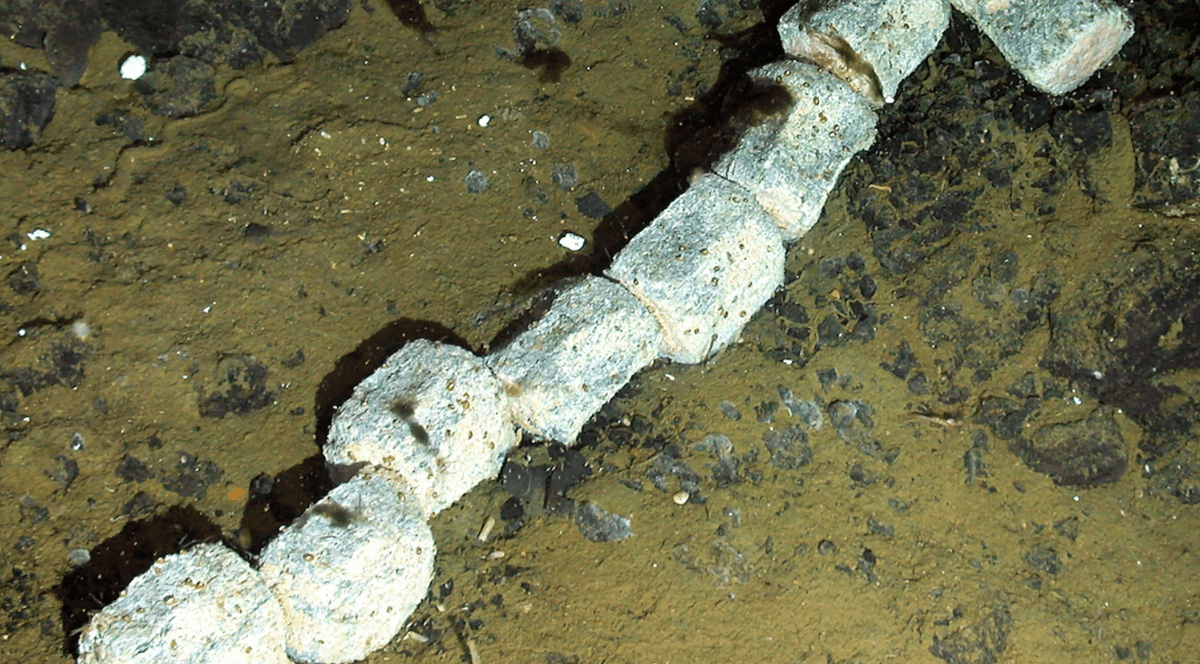
“We were just finishing a dive with the UK's remotely operated vehicle, Isis, when we glimpsed a row of pale-coloured blocks in the distance, which turned out to be whale vertebrae on the seabed,” he continued.
The 10.7-meter-long skeleton was located along an undersea crater near the South Sandwich Islands at a depth of 1,444 meters (4,737 feet). Using DNA evidence, it was later identified as an Antarctic minke whale (Balaenoptera bonaerensis), the most abundant baleen whale in the world’s oceans.
By the time of its discovery, the body had entered an advanced stage of decomposition, with scarcely a scrap of meat or blubber remaining. In this final phase, bacteria break down the lipids stored within the whale's bones, releasing chemical energy that in turn sustains a host of marine life.
Thanks to this chemosynthetic process, the bones were still teeming with scavenging organisms. Among those feasting on the remains were at least nine species new to science, including a new species of isopod crustacean resembling an underwater woodlouse and a previously undescribed species of Lepetodrilus, a type of sea snail. Researchers also identified the remarkable "bone-eating zombie worm" known as Osedax that can dissolve whale bones with acid to access the nutrients within.
In the immensity of the Southern Ocean, it is something of a wonder that any of these creatures managed to locate such a solitary carcass.
“One of the great remaining mysteries of deep ocean biology is how these tiny invertebrates can spread between the isolated habitats these whale carcasses provide on the seafloor,” added Adrian Glover at the Natural History Museum, London.
However, it's a slight shame the researchers were unable to catch the whale fall in an earlier state of decomposition. If they had been fortunate enough to do so, they might have seen all manner of spectacular deep-sea life, from the large mobile scavengers like hagfish and sleeper sharks that first strip the carcass of its soft tissue, to the bristle worms and crustaceans that swarm the skeleton in the weeks that follow.
To have the opportunity to witness this part of the process in Antarctic waters, scientists need patience and a shipload of luck.
The study was published in the journal Deep-Sea Research II: Topical Studies in Oceanography in 2013.