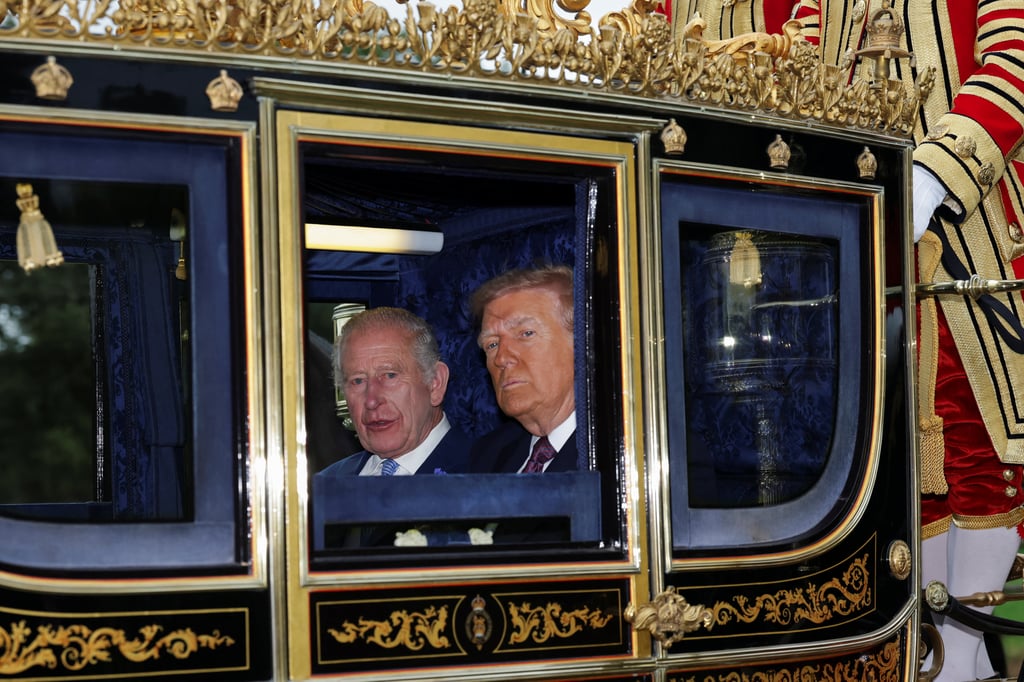
King Charles III’s upcoming state visit to D.C. has been heralded by President Donald Trump as a chance to repair frayed U.K.-U.S. relations, but some British lawmakers are calling for it to be canceled.
Set to start on April 27, the four-day trip will see Charles and Camilla enjoy a state dinner at the White House while also traveling to Virginia and New York as they honor the 250th anniversary of American independence.
It’s the first U.S. state visit made by a British Monarch since Queen Elizabeth II was hosted by President George Bush in 2007, but the backdrop of the trip is wrought with geopolitical tensions.
The fallout of the Iran war has splintered U.K.-U.S. relations and fractured the once-prosperous alliance between Trump and British Prime Minister Keir Starmer.
Trump has directed a series of complaints and warnings toward the U.K. on account of Starmer refusing to get actively involved in the conflict. This week, he threatened to impose a “big tariff” on the U.K. if it doesn't drop its digital services tax on U.S. tech companies.
The threat renewed the unease many British lawmakers have expressed over the timing of Charles’ visit.
Ed Davey, leader of the Liberal Democrats, on Friday said: “Why is Keir Starmer rewarding this bullying behaviour with a state visit from the King?”
He previously appealed for Starmer, the leader of the ruling Labour Party, to recall the trip, citing the Iran war and the resulting increase in energy prices impacting U.K. homes.
“Keir Starmer should advise the King that the state visit to the U.S. scheduled for April should be called off. At a time when Trump has launched an illegal war that is devastating the Middle East and pushing up energy bills for British families, it’s clear this visit should not go ahead,” Davey urged in March.
He argued that a state visit from Charles “would be seen as yet another huge diplomatic coup for President Trump” and that such a reward “should not be given to someone who repeatedly insults and damages our country.”
Davey renewed his efforts to have the trip reconsidered last week, after Trump, while referring to the “sad” state of London and Washington relations, warned that the U.K.-U.S. trade deal reached in 2025—which was celebrated at the time for its “reciprocity and fairness”—could be changed.
“This must be the last straw. Surely the Prime Minister can't send our King to meet a man who treats our country like a mafia boss running a protection racket,” Davey said in an address to parliament.
Starmer, in response, reaffirmed the broader significance of the U.S.-U.K. relationship and expressed the importance of the King’s trip.
"The purpose of the visit is to mark the 250th anniversary of relations and independence of the U.S.,” he said. “The monarchy is an important reminder of the long-standing bonds and enduring relationship between our two countries which are far greater than anyone who occupies any particular office at any particular time.”
Still, Davey is far from the only British lawmaker to raise issue with Charles' trip.
With the U.K.-U.S. relationship under increasing strain, here’s what else to know about the state visit, its purpose, and the lawmakers who are opposed to it going ahead.
What is the purpose of King Charles' state visit?
The visit will mark the King’s first state visit to the U.S. since he ascended the throne in 2022 and is intended to commemorate the 250th anniversary of American independence.
It’s “an opportunity to recognize the shared history of our two Nations,” Buckingham Palace said.
Trump, a long-time admirer of the royal family, described the trip as a “momentous occasion” and said he plans to host a “beautiful” banquet dinner at the White House.
The King is also expected to address a joint session of Congress on April 28—the second time a British monarch has done so, following Queen Elizabeth II’s address in 1991.
Evie Aspinall, director of the British Foreign Policy Group, tells TIME that “given Trump has a kind of strong affinity for the royal family” the visit represents “a unique opportunity to strengthen the bilateral relationship at a moment where it is fracturing.”
Trump echoed this sentiment when asked recently if the royal visit could help repair the historically strong relationship, answering: “Absolutely, the answer is yes.”
"I know him well, I've known him for years," Trump said of the King. "He's a brave man, and he's a great man.”
The trip will also include a visit to New York where Charles is expected to attend a wreath laying at the 9/11 memorial, as well as a stop in Virginia, where the royals are set to meet Appalachian and Indigenous communities.
Why are some lawmakers concerned about King Charles' trip—and what have they said?
Against the backdrop of the Iran war and Trump’s continued criticism of the U.K., some lawmakers have argued the visit poses more risks than benefits.
Members of the Liberal Democrats have been the most vocal, with 29 MPs calling on Starmer to cancel the visit “given President Trump’s ongoing war and disparaging remarks about the U.K. and other allies who were not consulted on the decision to go to war.”
Green Party leader Zack Polanski has also raised grave concerns.
“The King should be going nowhere near Donald Trump at this time. The truth is, Keir Starmer has waved this visit through because he’s scared to stand up to this rogue President,” he argued
Emily Thornberry, a senior figure in Starmer’s Labour party, is quoted as telling BBC Radio 4 that, given the war, it was worth questioning whether it would be appropriate to proceed with the visit or to “delay it.”
"If it was to go ahead, it would go ahead against a backdrop of a war and that, I think, is quite difficult—and the last thing that we want to do is to have their majesties embarrassed," she said in March.
Aspinall acknowledges that Trump is “a very volatile character,” but warns that canceling the visit could have had broader consequences.
“It would be devastating for the U.K.-U.S. relationship if King Charles were to pull out,” she tells TIME. “Whilst other leaders might deal with it differently, almost certainly you would see very volatile comments about the U.K., threats around tariffs, and undermining U.K. security.”
Public opinion, meanwhile, remains divided.
A YouGov poll published in late March found that 49% of Britons oppose the visit, compared with 33% in favor.
How the Iran war has strained relations between the U.K. and U.S.
Relations between the U.K. and the U.S. began to deteriorate following Starmer’s initial refusal to allow U.S. forces to access British bases for their initial strikes against Iran.
While the U.K. later permitted the use of bases for defensive purposes, Starmer maintained that Britain would not be actively involved in the war.
Those decisions have drawn the wrath of Trump, who described Starmer as “no Winston Churchill” and accused him of wanting to “join wars after we've already won.”
Starmer, in turn, has stepped up his criticism of Trump, saying he is “fed up” with the global economic instability caused by his decisions, while other senior U.K. officials have accused the Administration of entering the Iran war without a “clear exit plan.”
The British Prime Minister also emphasized this week that, despite Trump’s critical remarks, he will not be "diverted or deflected" from acting in, what he believes to be, the “best national interest" of the U.K.