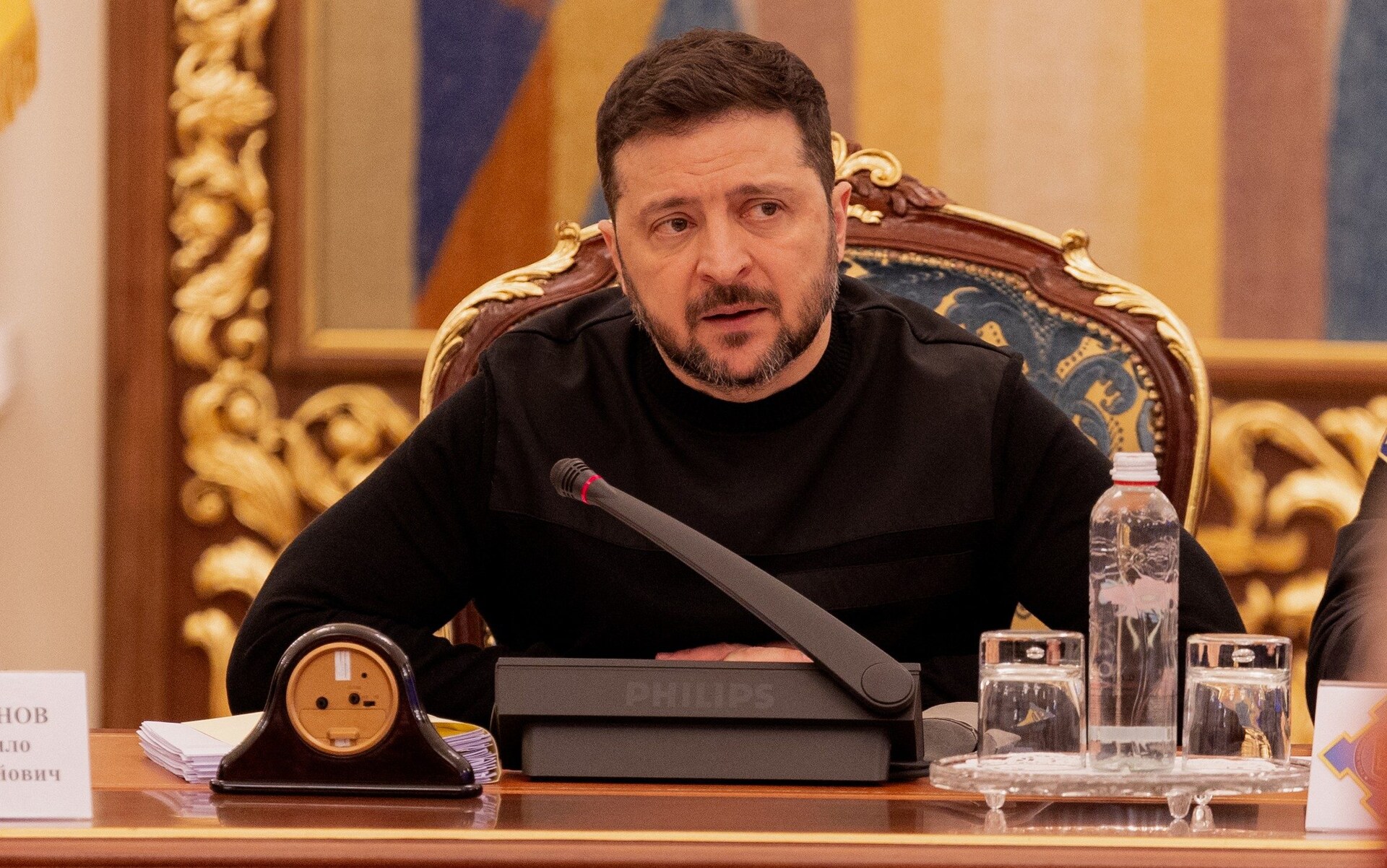
This is not the first time Volodymyr Zelensky has had to contend with a war in the Middle East.
And with the US and Israeli assault on Iran showing no signs of slowing, the Ukrainian president will have to carefully assess the ramifications for his own military campaign.
European officials may fear they are about to lose Donald Trump’s interest in Russia’s invasion, with the conflict having entered its fifth year and the US president’s efforts to broker a peace having no success.
But it is not just America’s attention Kyiv will need to fight for. Military bases belonging to the UK and France, two of Mr Zelensky’s most ardent backers, have come under attack during Iran’s region-wide retaliatory strikes.
This has led to fears that European countries, as well as the US, may decide to keep their weapons to protect their own interests, rather than supporting Kyiv. The Ukrainian president will be hoping for a swift and decisive American victory in Iran, with good reason.
Mr Zelensky said. “Everyone understands that for us, this is our life ... the appropriate weapons. If there are long-term hostilities in the Middle East, this will certainly affect the supply.”
If Mr Trump’s push for regime change in Tehran drags on for four or five weeks, as he has predicted, this could put a crunch on the supply of crucial air-defence missiles to Ukraine.
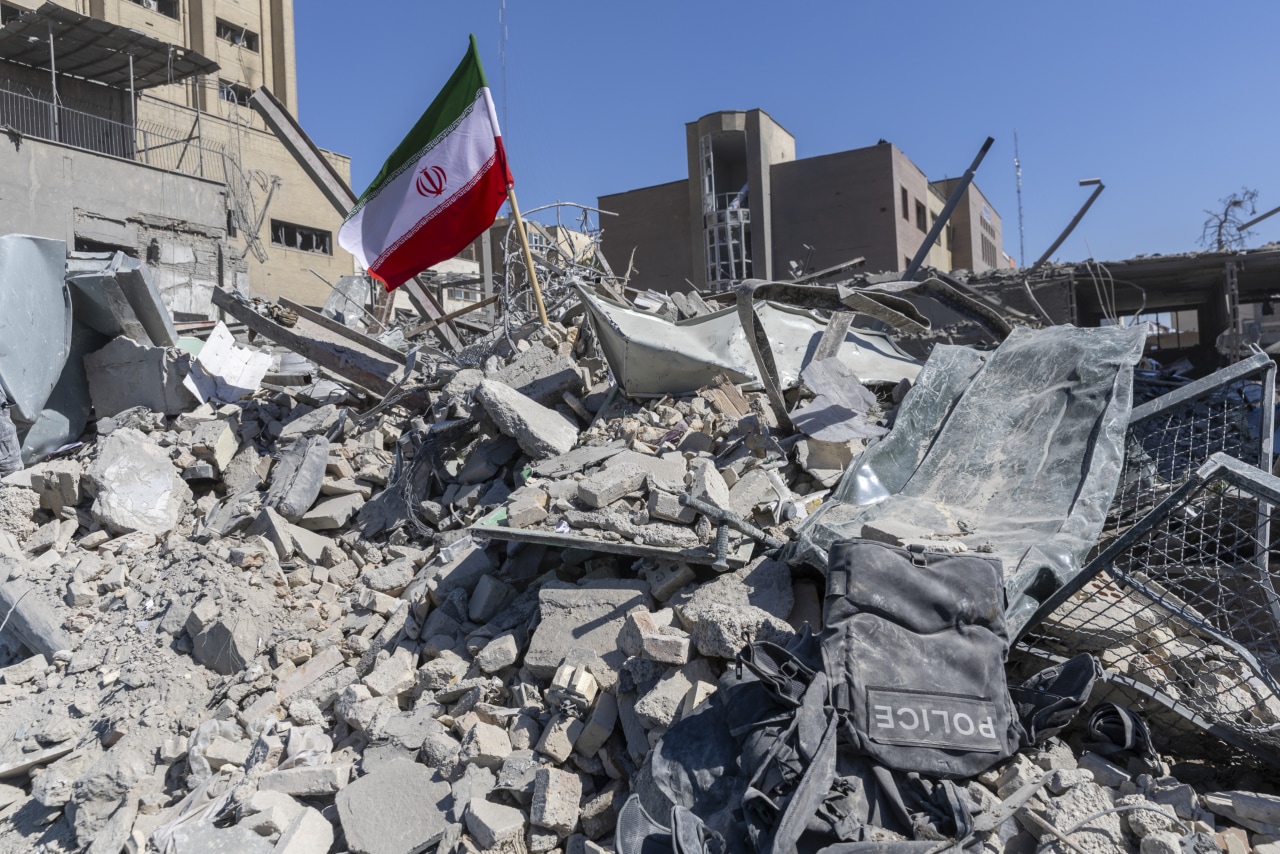
Iran’s response to US and Israeli strikes has been to fire hundreds of ballistic missiles and drones towards its neighbours. American and allied interests in Iraq, Kuwait, Bahrain, Qatar, the United Arab Emirates, Saudi Arabia, Jordan and Cyprus have all been targeted, as well as Israel.
While there are a number of ground-based air-defence systems capable of intercepting ballistic missiles, the American-made Patriot is one of the most combat-tested surface-to-air batteries.
Ukraine operates a number of Patriots, acquired from allies, to protect critical infrastructure from Russian barrages. At times this winter, some of Kyiv’s Patriot batteries have sat on the ground empty of the Pac-3 interceptors they fire due to shortages.
Serhii Kuzan, chairman of the Ukrainian Security and Cooperation Centre, told The Telegraph: “The most negative factor for Ukraine is the possible problems with the supply of missiles for air defence, in particular Patriot, if the US and its allies reorient their resources to the Middle East.
“It is in Ukraine’s interest that the operation in Iran does not drag on and ends with the punishment of the Iranian dictatorship.”
Another fear is that a mounting crisis in the Middle East could interrupt the peace talks between Ukraine, Russia and the US. While the negotiations have not shown any signs of significant progress, they grind on.
Natia Seskuria, an international security expert at the Royal United Services Institute (Rusi) think tank, said: “I think it’s very much obvious that [Mr Trump] was looking for that kind of quick victory when it comes to the Russia-Ukraine war.”
Instead, the US president has secured a quick victory by seizing Nicolás Maduro, the former president of Venezuela, and could be about to deliver a second in Iran.
Ms Seskuria added: “I think the most negative scenario for Ukraine would be Trump withdrawing himself from these negotiations.
“I think Trump no longer prioritises this issue because the Middle East is much more important for him right now, and it might be that this priority no longer shifts back to Ukraine because he no longer sees the possibility of him having the victory of portraying himself a peacemaker.”
Even in the short term, it appears that a round of talks due to be held in Abu Dhabi this week have been cancelled because of security threats in the Middle East. Despite the negatives, officials and analysts in Kyiv have identified a number of positives that could come from the Iran war.
Mr Kuzan said: “First and foremost, the war in Iran is an opportunity to sever ties between the Kremlin and Tehran.”
The biggest potential prize for Mr Zelensky could be in the embarrassment of one of Russia’s most important allies. This is the second time Ukrainians have watched US and Israeli fighter jets operating over the Iran with impunity after knocking out its air defences, mainly based on Russian systems.
A lesser prize is the fact that Iran’s production of drones and missiles has been one of the main targets taken out by US and Israeli forces. Iranian weapons have been invaluable for Moscow’s war effort.
When Russian forces desperately needed a long-range strike capability, Iran delivered scores of its Shahed attack drones.
Ballistic missiles and artillery shells also readily flowed across the Caspian Sea between Tehran and Moscow as the two capitals signed a defence partnership. Russia has since taken Iranian blueprints and expertise and begun producing drones in its Alabuga Special Economic Zone.
While Vladimir Putin has eased his reliance on Iran, the alliance does provide Mr Zelensky with an opportunity to secure diplomatic support from those in the firing line.
Recommended
The calculus of cheap drones against expensive missiles has changed
There isn’t a military on Earth with more experience of intercepting Iranian drones than Ukraine – Russia literally bombards Ukrainian cities with hundreds of them every night. Now hundreds of Shahed-type drones are being fired at targets across the Middle East by a defiant Iran.
Sensing an opportunity, Mr Zelensky has offered air-defence expertise to countries in the region, most of which have not been fully supportive of Kyiv, if they can help secure a truce with Russia.
He told Bloomberg: “I would suggest the following: leaders of the Middle East have great relations with Russians. They can ask Russians to implement a month-long ceasefire. We will send our best operators of drone interceptors to the Middle East countries [if Moscow agrees to the ceasefire].”
For Ms Seskuria, a moment like this presents itself as a “diplomatic opportunity” for the Ukrainian president. The likes of Saudi Arabia and the UAE have never fully supported Ukraine’s cause, instead choosing to act as impartial mediators between Kyiv and Moscow.
On one hand, Mr Zelensky could use this line of communication to try to secure a ceasefire. On the other, offering to assist in defending US allies could curry favour with Mr Trump.
Ms Seskuria said: “Zelensky has been trying his best to somehow turn Trump towards Ukraine since his presidency. So any potential help that Ukraine can provide during this time, in terms of the experience that Ukrainians have had with drone warfare, can be an added value with Ukraine.”
For now, Mr Zelensky has said it is too early to judge how the war in Iran will impact his country’s own fight for survival. But the longer the Iran conflict goes, the more Kyiv’s problems will mount.
Ms Seskuria concluded: “It’s something that worries me. I see more threats, rather than a positive side to this escalation.
Recommended
The death of Ali Khamenei exposes the truth about Putin's 'diabolical genius'