President Donald Trump’s latest clash with a female reporter has renewed scrutiny of a series of public confrontations between the president and female journalists during his second term.
Critics and press freedom groups have argued that several of the exchanges go beyond disputes over coverage and instead involve personal attacks on female reporters’ intelligence, appearance or demeanor.
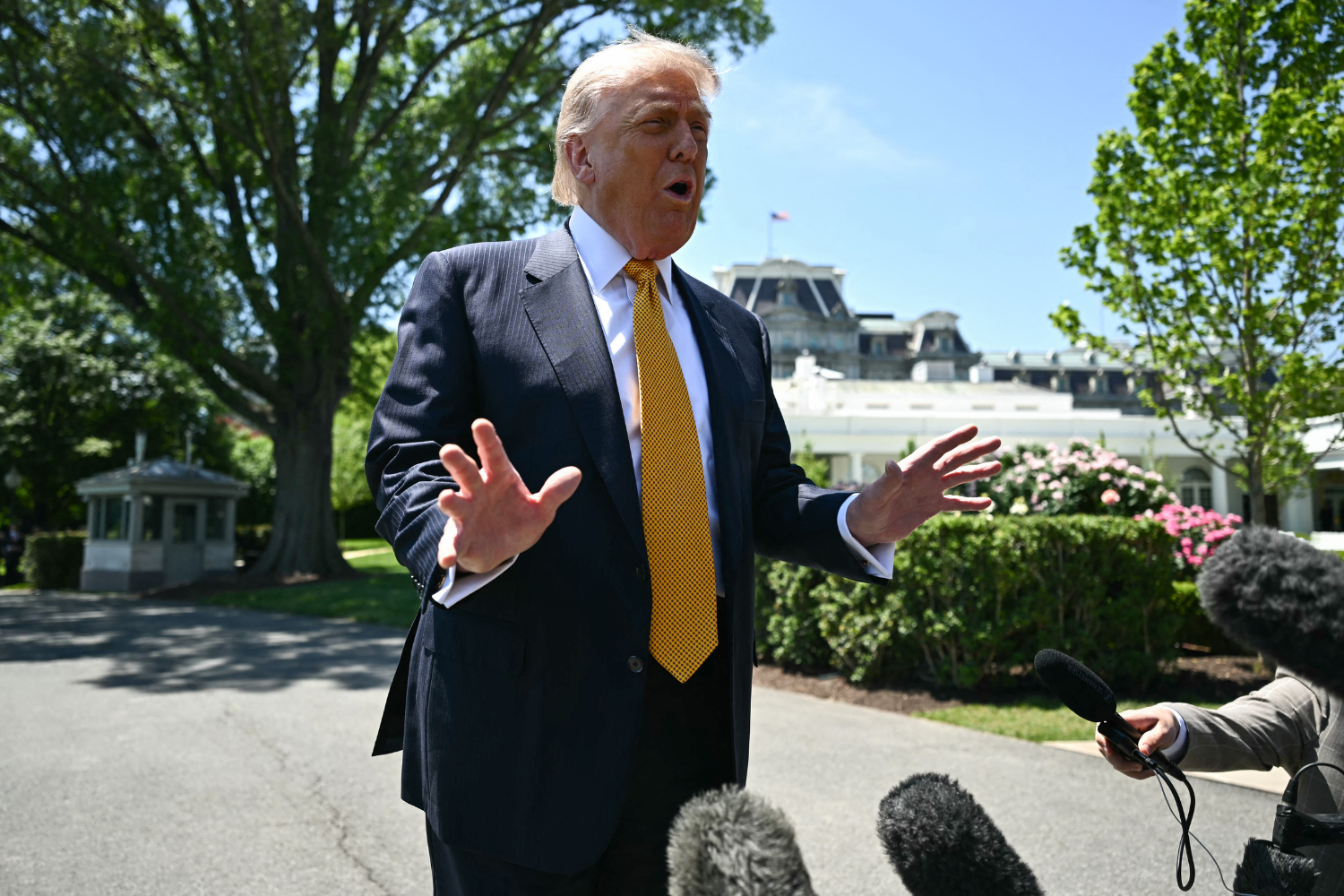
On May 12, Trump insulted a female reporter during a White House South Lawn press exchange after she questioned the rising cost of his planned ballroom project.
As the president explained that he had doubled the size of the ballroom, the reporter asked about the budget increase, prompting Trump to respond: “I doubled the size of it you dumb person. You are not a smart person.”
In the same exchange, Trump also told another female reporter she was “a stupid person,” with both moments captured on video and widely shared online.
Newsweek has reached out to the White House via email for comment.
When previously asked about the president’s exchanges with female journalists, White House spokesperson Taylor Rogers told Newsweek in a statement that Trump “answers unrestricted questions nearly every single day” and “holds the press accountable” when outlets “peddle fake news.”
A Growing Pattern
The latest confrontation is part of a broader series of clashes between Trump and female reporters across press briefings, Oval Office appearances and social media posts since the start of 2025.
While the exchanges vary in subject matter, many follow a similar pattern: Trump responding to questions on politically sensitive topics with personal criticism directed at the reporter.
The incidents, many of them captured on camera or posted publicly online, have drawn criticism from press freedom groups and media analysts.
On May 7, Trump lashed out at ABC News correspondent Rachel Scott during a visit to the Lincoln Memorial, calling her question “stupid” and describing her as “one of the worst reporters” after she asked why he was focusing on renovation projects amid the Iran war and rising gas prices.
In February, Trump clashed with CNN’s Kaitlan Collins during a White House exchange, telling her: “You are the worst reporter… I don’t think I’ve ever seen you smile,” remarks critics described as focusing on her demeanor rather than the substance of her question.
The following month, during a press gaggle aboard Air Force One, Trump called a female reporter a “very obnoxious person” during another exchange.
When asked about this exchange, White House spokesperson Anna Kelly told Newsweek, “Americans appreciate that President Trump tells it like it is—and obnoxious is obnoxious, no matter what gender you are.”
The pattern was also visible in late 2025. During an Oval Office exchange in November, Trump told ABC News correspondent Mary Bruce she was a “terrible person and a terrible reporter” after she asked a series of questions referencing Saudi Arabia.
Days later, while traveling on Air Force One, Trump interrupted Bloomberg reporter Catherine Lucey with: “Quiet, quiet piggy,” after she attempted to ask a follow-up question, in a moment captured on video.
Later that month, Trump targeted New York Times reporter Katie Rogers in a Truth Social post, calling her “a third rate reporter” who is “ugly, both inside and out” after coverage about his health and fatigue.
The next day, CBS News correspondent Nancy Cordes was similarly confronted when she questioned Trump at Mar-a-Lago, prompting him to respond: “Are you stupid? Are you a stupid person?”
The International Women’s Media Foundation warned in late 2025 that Trump’s remarks point to a “pattern of targeting and harassing women journalists,” noting that public attacks can trigger online abuse and place reporters under additional pressure.
Dr. Amy Tatum, a lecturer in communication and media at The Bournemouth Media School in England, previously told Newsweek, “President Trump may feel emboldened to speak this way about women as there has been little outcry or backlash to such comments he has made, or those made by other politicians or people in power.”
Are Men Treated Differently?
Trump’s confrontations with the press are not limited to female reporters.
He has long clashed with journalists more broadly, frequently labeling coverage “fake news” and attacking reporters from a range of outlets regardless of gender.
Observers have noted that some exchanges with female reporters have included comments about appearance, personality or demeanor, though Trump has also repeatedly clashed with male journalists and media outlets more broadly.
Related Articles