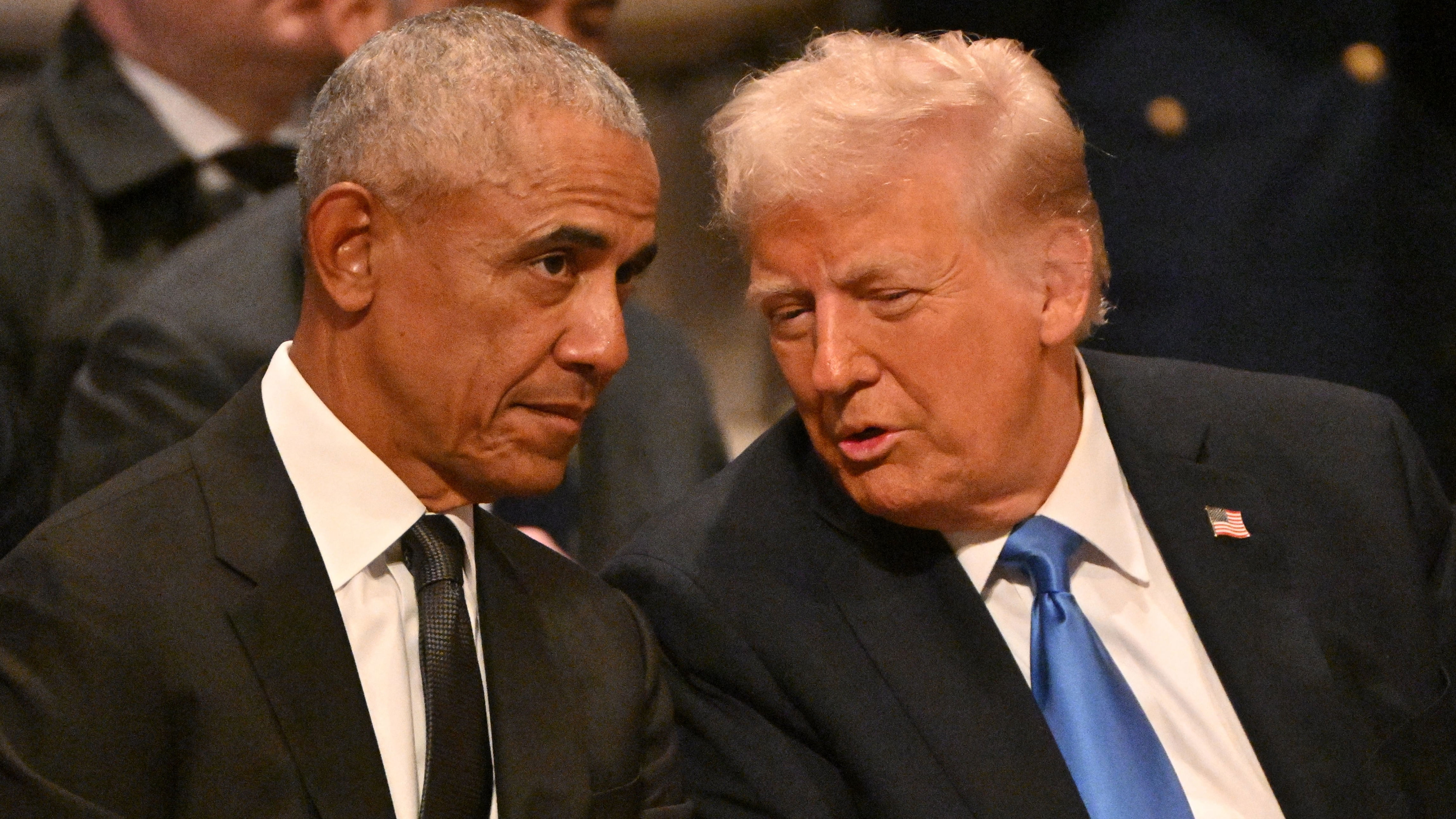
Barack Obama has revealed that speaking out against Donald Trump has caused “genuine tension” in his marriage.
Obama, 64, admitted that Trump’s actions have pulled him back into politics “more than I would have preferred.”
But his compulsion to get involved in politics after spending eight years in the hot seat has come at a cost.
“She wants to see her husband easing up and spending more time with her, enjoying what remains of our lives,” Obama said of his wife, Michelle, in an interview with the New Yorker.
“It does create a genuine tension in our household, and it frustrates her. I’m more forgiving of it, in the sense that I understand why people feel that way, because people aren’t looking at me in historical comparison to other presidents. They don’t care about the fact that no other ex-president was the main surrogate for the Party for four election cycles after they left office.”
Obama insists he has held back from calling out the current president since Trump took office in 2017, despite the fact that he has repeatedly made inflammatory claims about his predecessor, including conspiracy theories and accusations of “treason,” and even posting a fake video of Obama being arrested.
Most recently, Obama called out Trump after he posted a racist video on Truth Social depicting him and former First Lady Michelle Obama as apes.
“There doesn’t seem to be any shame about this among people who used to feel like you had to have some sort of decorum and a sense of propriety and respect for the office,” Obama said.
Obama says he has a clear reason for holding back.
“For me to function like Jon Stewart, even once a week, just going off, just ripping what was happening—which, by the way, I’m glad Jon’s doing it—then I’m not a political leader, I’m a commentator,” he told the New Yorker.
But the former president said he is doing more behind the scenes than what is shown in the legacy media.
“The media environment is so difficult that people don’t even know all the stuff I am doing, right?” he said. “And, I think, when they do see me, then the sense is, well, why isn’t he doing that every day instead of just during a midterm election, or during a referendum campaign around gerrymandering, or what have you?”
Obama has emerged as a leading voice in his party since leaving office, joining campaign trails across the country in every major election.
He has also gotten involved in gerrymandering campaigns, urging voters in Virginia to approve a new redistricting plan that could give Democrats four additional House seats following November’s critical midterm elections, where the Democrats hope to take back control of the House and the Senate.
In a previous interview on Marc Maron’s WTF podcast last year, the former president described why he has continued campaigning.
“I leave office, and there’s no obvious person who’s now the shadow prime minister, the leader of the party for the Democrats,” he said.
“There were a lot of terrific people who were doing good work, but, you know, we have this weird situation where you don’t have a designated person who’s speaking on behalf of the whole party.”
But the former president insists that his impact is most felt outside the world of traditional political campaigning.
Beyond traditional politics, Obama has also partnered with Netflix, recorded dozens of podcast appearances, and collaborated with influencers with millions of followers, including Eduardo Espina and VicBlends.
For that reason, he argues that his impact should be measured not just by how often he speaks out, but by the audiences he is reaching.
Obama strategist David Plouffe summed up that impact. “People who are going to be decisive in elections going forward do not seek out information about politics—they encounter it,” Plouffe told the New Yorker. “Obama will talk about things, and there will be video clips that are interesting to people, because it’s not like a droning on in a political speech.”
Still, the former president sees it as a positive thing that people want him to stay involved in politics.
“The fact that people want me to be ‘doing more’ is a good sign,” he told the New Yorker, adding that it shows that “there has not been as decided a shift in American attitudes as we are making out.
“And that’s part of the reason people are frustrated. Sometimes it’s directed toward me, which is fine because they kind of sense, Wait, how can we be doing this when I know that’s not who we were? And I don’t think it’s really who we are now.”