The United Arab Emirates’ decision to withdraw from OPEC did more than deliver a shock to the cartel that has long ruled the global oil market. It also rang the opening bell for the new geopolitical order that the war with Iran is ushering in across the Middle East.
The new alignment is redrawing political fault lines between the Arab world and Israel that defined the region for decades. Instead, the U.A.E.—the financial nerve center of the Gulf and a potent military power—is strengthening security cooperation with Israel as both states work to change the region’s strategic balance through force of arms if necessary.
Israel recently sent its Iron Dome missile-defense technology and troops to operate it to the Gulf state, people familiar with the matter said, something that would be unthinkable elsewhere in the Arab world.
The war has given the U.A.E., a small and fantastically wealthy federation of monarchies, an opportunity to emerge from the shadow of its larger neighbor Saudi Arabia and make a statement about its aspirations for regional power.
The U.A.E. pointedly signaled its new priorities by announcing its exit from the Organization of the Petroleum Exporting Countries, the one body the Arab world has ever been able to use to throw around its collective clout, at the exact moment Gulf leaders were meeting in Saudi Arabia in an attempted show of unity.
The decision was timed to deliver a shock and to make a statement that the U.A.E.’s national interest comes first, Emirati officials familiar with the decision said. The U.A.E. is also rethinking its ties to organizations including the Arab League and the Organization of Islamic Cooperation, according to officials familiar with the discussions. Asked for comment, a U.A.E. official said no further withdrawals are planned for now.
The U.A.E. has practical reasons to pull out of OPEC. Production quotas have bottled up around 30% of its output capacity at a time when it could use the revenue to offset war-related pressure on its earnings from tourism and business. Leaving OPEC gives it the flexibility to aggressively ramp up its oil production on its own terms and direct capital toward securing its export routes by investing more in pipelines designed to bypass the Strait of Hormuz, which Iran has all but shut down in the wake of attacks by the U.S. and Israel.
But the war has also shifted the U.A.E.’s thinking around the threats it faces and the reliability of its friends. Iran fired around 2,800 drones and missiles at the U.A.E., more than at any other target including Israel. While the U.A.E. was ready to respond aggressively, much of the rest of the Gulf dragged its feet.
Confronted with Iranian attacks that imperiled its economic model and frustrated with what its leaders saw as a lack of support from its Arab neighbors, the Emirates doubled down on its partnership with the U.S. and its half-decade-old relationship with Israel—in spite of Arab unease with the instability flowing from the conflicts in Gaza, Lebanon and Iran.
“It came as a result of some deep thinking, in light of the 40 days of drones and missiles,” said Abdulkhaleq Abdulla, a prominent Emirati political scientist. “One result of this review of things, taking stock of things, is that OPEC does not fit with this bold, assertive, independent U.A.E. anymore.”
The Emirates said it withdrew from OPEC based on its national interest and a commitment to meet the market’s need for oil.
Speaking in the Oval Office on Wednesday, President Trump welcomed the U.A.E.’s decision, saying, “I think ultimately it’s a good thing for getting the price of gas down, getting oil down, getting everything down.” He called the Emirates’ president “a great leader.”
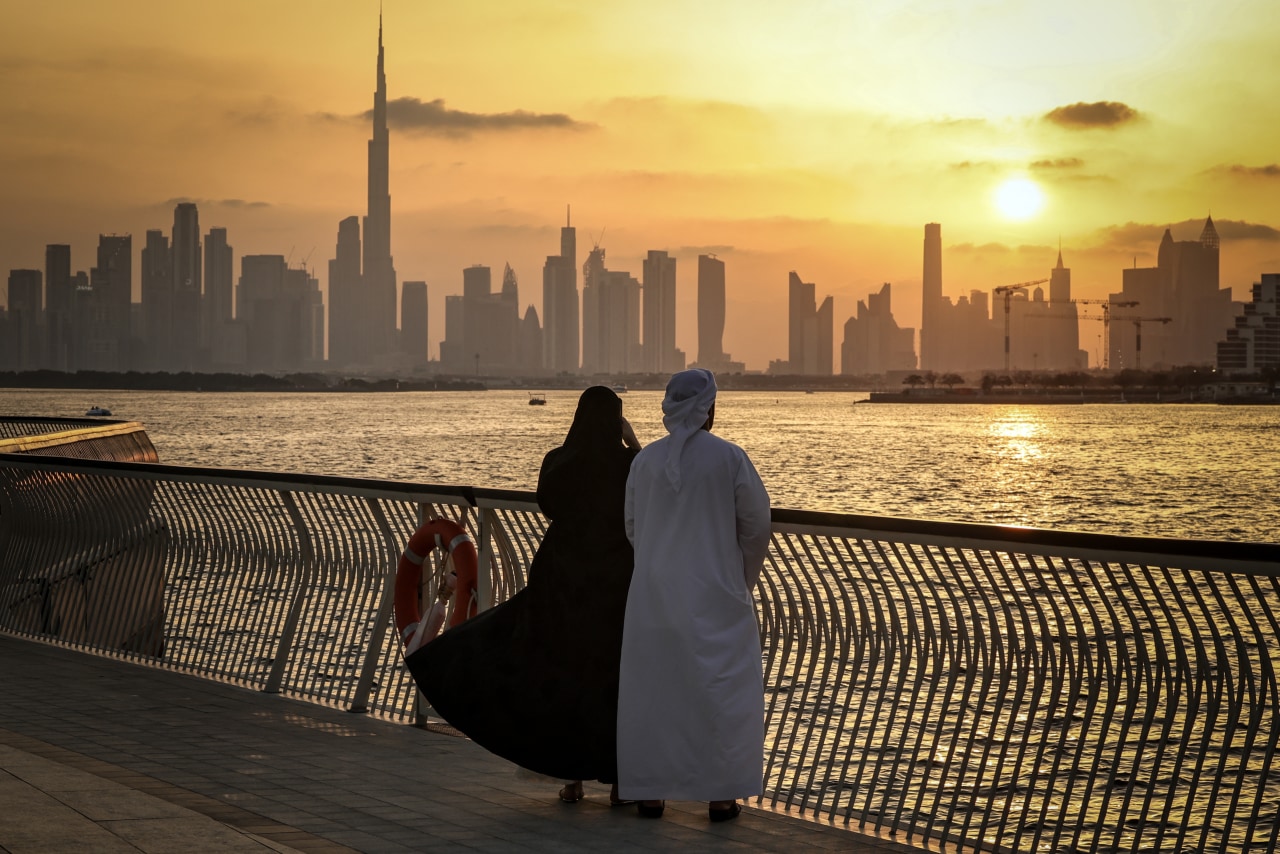
The Emirates was just a cluster of small princedoms along the eastern shores of the Arabian Peninsula when oil was discovered there in the 1950s. After statehood in 1971, it used that petroleum wealth to transform itself into a global center of finance, tourism, and tech built around the cities of Dubai and Abu Dhabi.
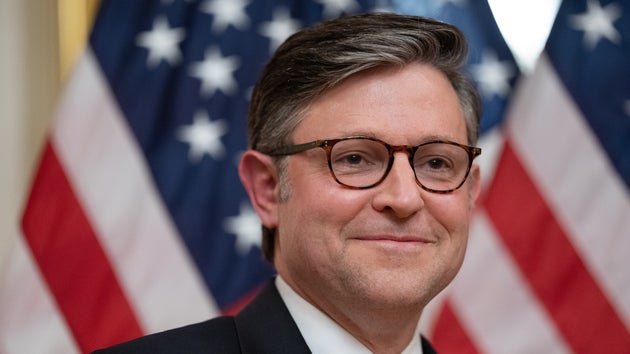
In recent years the country’s leader, Sheikh Mohammed bin Zayed—who is known by his initials MBZ— has also positioned his country as a center of military power unafraid to use its weapons and employ mercenaries to spread its influence and try to reshape the region to its advantage.
Though it has only the 10th largest military force in the Middle East with 63,000 active-duty personnel, the Emirates projects outsized power through advanced arms purchases, arms exports and the use of mercenaries that it has deployed in Yemen and other conflicts. Its armed forces are also seen as some of the best trained in the Gulf countries.
Former Defense Secretary Jim Mattis nicknamed the country “Little Sparta.”
In Egypt, the Emirates backed a military coup that overthrew the country’s elected Islamist president in 2013, resulting in a government crackdown that killed about a thousand people in a single day. In Libya, the Emirates airlifted weapons for years to a Russian-backed militia leader whose attempt to seize power sparked a civil war in 2019.
The Emirates has explained its interventions as efforts to push back extremism in the region, particularly the Muslim Brotherhood, the Islamist movement that won an election in Egypt after the Arab Spring and which gave birth to Hamas.
The Emirates opened diplomatic relations with Israel in a deal brokered by the Trump administration near the end of the president’s first term. The move, initially joined by Morocco and Bahrain, was the most significant break in Israel’s regional isolation since Egypt made peace half a century ago.
The decision opened new lanes for military and technological cooperation. Just months after the Abraham Accords were signed, Elbit Systems, one of Israel’s largest defense firms, opened a subsidiary in the U.A.E. A year later, after the Gulf country was attacked by the Iranian-backed Houthi militia in Yemen, Israel supplied its SPYDER air defense system, a mobile platform that can defend against short and medium range missiles and drones, according to the Stockholm International Peace Research Institute.
Israel sent the Iron Dome battery to the U.A.E. at the start of the current war, in a move first reported by Axios. It was the first time the joint U.S.-Israel-developed system had been sent to another country. Dozens of Israeli troops are on the ground to operate it, a person familiar with the matter said.
The Israeli Defense Ministry declined to comment, and the foreign ministry for the U.A.E. didn’t respond to a request for comment.
Flight-tracking websites show military transports have shuttled between the Israeli base of Nevatim and the U.A.E. throughout the conflict.
“The cooperation between the two countries is dramatic and deepening,” said Yoel Guzansky, a senior fellow at the Institute for National Security Studies, a think tank based in Tel Aviv. “It’s the first time an Israeli system has defended an Arab country during war.”
The relationship has widened the divide between the Emirates and its neighbors. Saudi Arabia was close to joining the Abraham Accords before Hamas attacked Israel on Oct. 7, 2023, sparking a war that left Gaza in ruins. Israel’s 2025 strike on a Hamas office in Qatar inflamed the Gulf’s anxieties about unchecked Israeli military action.
The Emirates has long chafed at its position in the shadow of Saudi Arabia, its larger neighbor and the dominant player in global oil markets. They got on the wrong foot right from the start, with the Saudi king refusing to recognize the U.A.E. for years after statehood in 1971 over territorial disputes.
The two countries are ostensibly allies but are fighting for influence over the Red Sea on opposite sides of conflicts in Sudan and Yemen. They increasingly are economic competitors as well.
Saudi Arabian Crown Prince Mohammed bin Salman—known as MBS—is trying to reduce the kingdom’s reliance on oil and hopes to challenge Dubai as a regional hub. MBS is pushing companies to move their regional headquarters to the Saudi capital, Riyadh, and is competing for tourists and projects like data centers for AI.
MBZ and MBS bonded early in their respective rises a decade ago on an overnight camping trip in the vast Saudi desert, accompanied by trained falcons and a small entourage, The Wall Street Journal has reported. The Emirati royal mentored the younger Saudi crown prince as the two climbed to the top. But their private disputes grew and spilled into the open in 2023, when they stopped talking to each other for more than six months.
Much of the tension stemmed from Saudi Arabia’s domination of OPEC and its interest in restraining production to keep prices high. The Emirates has lifted its production capacity to nearly five million barrels a day, but is only allowed under OPEC policy to pump 3.4 million.
Iran sought to exploit the tensions between the U.A.E. and its neighbors in the run up to the war, telling Saudi and Omani officials that its retaliatory strikes in response to a U.S. attack would heavily target the Emirates, Arab officials said.
In one exchange with Saudi officials, Iranian officials specifically mentioned the Gulf rivalry, effectively vowing to bring down the Emiratis. Saudi officials say they didn’t approve of the message.
Once the war began, Iran set in motion its strategy of internationalizing the conflict to raise the global economic cost and put pressure on the stronger U.S. and Israeli militaries to back down. It launched barrages of missiles and drones at the Gulf countries and Israel, and shut down the Strait of Hormuz, causing the largest oil-supply shock in history.
Iran singled out the U.A.E. for some of the worst punishment, launching wave upon wave of drones and missiles at the country’s oil facilities, seaports and luxury hotels. Traffic through the main Dubai airport, once the world’s busiest for international travelers, was throttled for weeks.
As the war went on, further divisions opened between the U.A.E. and countries like Saudi Arabia and Oman that have favored a diplomatic off-ramp to the crisis.
Asked about its clashes with the U.A.E., a Saudi official said the kingdom’s foreign policy approach differs from Abu Dhabi’s, saying Riyadh favors peace, stability and growth.
The U.A.E. closed Iranian institutions in the country, canceled visas for some Iranian residents and threatened to freeze Iranian assets, crimping what had been Tehran’s most important link to global finance and commerce. It also urged tougher military action.
Saudi Arabia, which has faced fewer and less damaging attacks from Iran, has publicly condemned the Iranian attacks but stopped short of severing economic ties and didn’t publicly support a U.N. Security Council resolution backed by the U.A.E. that would have authorized the use of force to reopen the strait.
“You’re getting a stress test for this relationship that may show some further divisions over exactly how to respond to what has been a horrendous series of attacks on both countries,” said Robert Jordan, a former U.S. ambassador to Saudi Arabia from the George W. Bush administration.
The Gulf states long pursued a strategy of containment with Iran, trying to manage their uneasy relationship with the power across the Persian Gulf while depending on the U.S. to protect them in the event of war. Arab monarchies viewed Iran with suspicion after the 1979 revolution that replaced the shah with the Islamic Republic. Iran in recent years has worked to expand its influence in the region by arming and training mostly Shiite militia groups, while the Sunni-led Gulf Arab states remained allied with the U.S.
In recent years, the Gulf states have promised to set up systems of mutual defense, but have little to show for it. The war, rather than bringing them together, drove them farther apart.
Since President Trump declared a cease-fire in the war earlier in April, Emirati officials have vented their frustration with their neighbors for what they see as a lack of support.
Anwar Gargash, a diplomatic adviser to the Emirates’ ruler, lashed out this week at the Gulf Cooperation Council, saying the position of the group representing the Arabian Peninsula’s monarchies “is the weakest in history.”
“National defense is very important, but we must also say that Gulf solidarity was not up to the task,” he said.
Gregory Gause, an associate fellow at the Middle East Institute in Washington, said as a result the moment when Gulf cohesion should be peaking in the face of a common threat has instead become an opening for the U.A.E. to break out.
“Mohammed bin Zayed clearly wants to play an important, big and independent role in regional and even international politics,” he said. “He has that ambition.”
Write to Summer Said at summer.said@wsj.com, Jared Malsin at jared.malsin@wsj.com and Dov Lieber at dov.lieber@wsj.com
Corrections & AmplificationsPresident Trump called United Arab Emirates President Mohammed bin Zayed a great leader. An earlier version of this article incorrectly said Trump directed his praise at the Emirates’ crown prince. (Corrected on April 30)