President Trump’s promise to protect the Strait of Hormuz with naval escorts and provide government-backed marine insurance underscores the urgent need to restore flows of energy from the Middle East before soaring prices rip through the world economy.
As of Wednesday, day five of the war on Iran, several thousand ships were stuck inside and outside the Persian Gulf, trapping roughly a fifth of the oil and liquefied natural gas the world consumes each day. The blockage is cascading through the region’s industry as storage tanks fill up with oil that can’t set sail, forcing producers to slash output.
The problem is most acute in Iraq, the world’s fifth-biggest producer. Output has more than halved, oil officials in the country said, with cutbacks at the southern Rumaila and West Qurna 2 fields.
“Others are poised to follow if the blockage of the Strait continues,” said Antoine Halff, co-founder of data-provider Kayrros.
In Fujairah, part of the United Arab Emirates, several shipping-fuel suppliers suspended deliveries on Wednesday after an attempted Iranian drone attack, said Gulf energy officials. Its port is where many vessels stop off to load up on the marine fuel that powers their voyages.
Oil prices are at about $82 a barrel, 13% higher than where the oil benchmark traded on the eve of the war. The cost of chartering tankers to transport oil from the Persian Gulf has rocketed and now equates to 20% of the price of a crude cargo, compared with 3% in normal times, according to Argus Media analysts.
Cutbacks prompted by dwindling storage compound disruptions from Iranian attacks on regional energy infrastructure, which prompted Qatar’s national producer to stop making liquefied natural gas.
Saudi Arabia’s Defense Ministry said Iran targeted its Ras Tanura loading terminal and refinery complex again Wednesday, though the attack didn’t do any damage, unlike one on Monday that lit a small fire.
To unblock the Strait and prevent a spiraling energy crisis, Trump said Tuesday that the U.S. Navy would escort tankers through the Strait, and that the U.S. International Development Finance Corp. would insure ships.
In another sign of U.S. concern, the Navy sent a message to tankers Wednesday morning saying they could ask for assistance if they wanted to sail through the Strait, said shipping executives with tankers stuck in the Gulf.
Traders questioned whether the U.S. would be willing to put expensive naval ships in harm’s way. They are currently positioned outside the Gulf, distanced from Iranian missiles. Even if U.S. ships conducted escorts, the market wouldn’t return to normal, possibly functioning in daylight hours only.
There are precedents. U.S. Navy ships escorted tankers through the Strait of Hormuz as part of Operation Earnest Will for more than a year in the late 1980s, when Iran and Iraq were at war and attacking merchant vessels. Transit through the Strait remained slow.
During World War II, the U.S., Canadian and British navies escorted cargoes from North America to the U.K. and Soviet Union. The U.S. was churning out hundreds of vessels to replace lost warships, which it wouldn’t be able to do today.
Industry players say insurance is less of an issue holding back ships. Though several insurers sent notices canceling policies covering war-related risks in the region this week, they did so to renegotiate at higher prices. More costly insurance will ultimately feed through to the price of oil, but nowhere near as much as curtailed Iraqi production.
“What is closing the Straits is the fear of attack, not the inability to get insurance cover,” said Simon Lockwood, head of shipowners at a unit of insurance group Willis Towers Watson in London.
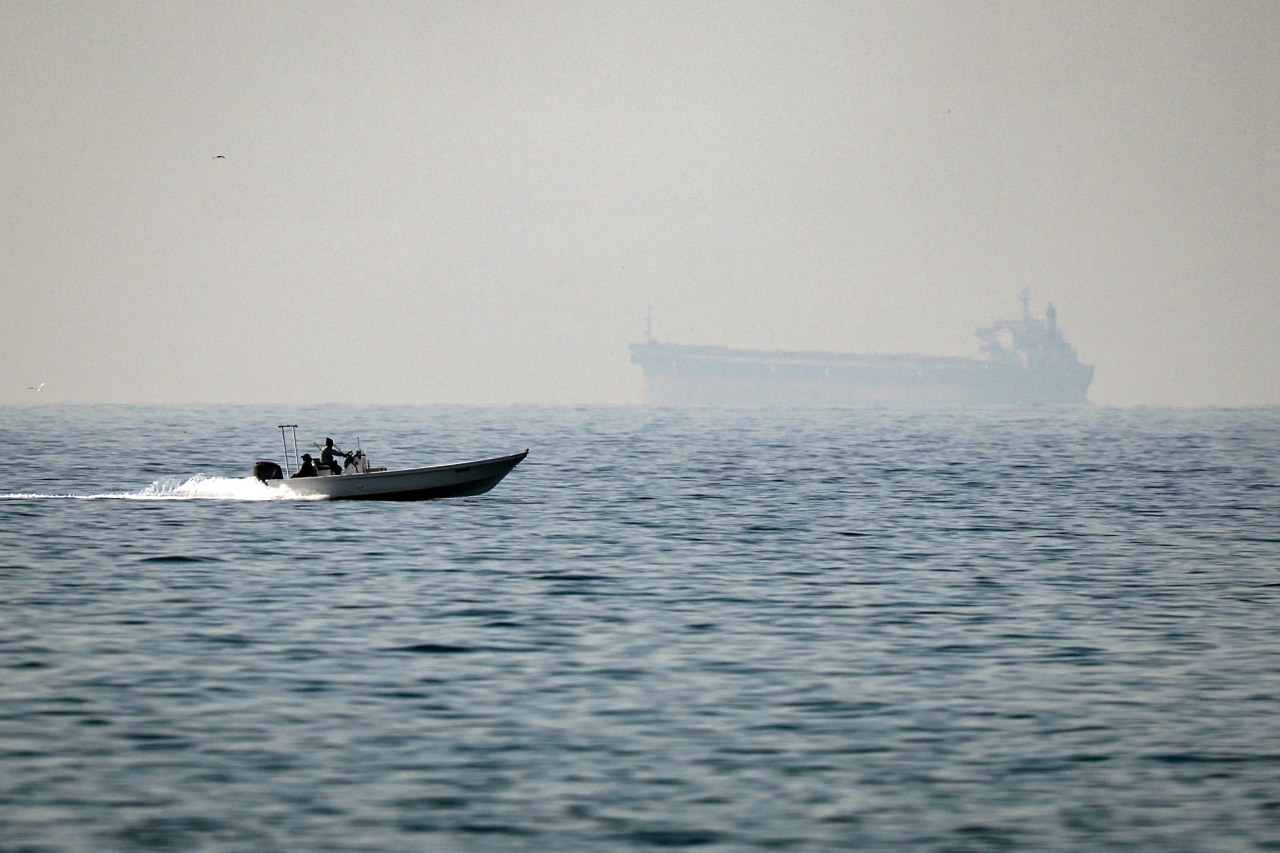
Some tankers have sailed through, but several owners said they aren’t willing to run the gantlet. Eight ships have been attacked near the Strait, including three on Tuesday night near Oman and the Fujairah shipping hub in the United Arab Emirates. An earlier attack on an oil tanker by a remote-controlled boat killed one Indian sailor.
“Practically, it is very difficult for any navy to escort ships through that narrow strait,” said Ellis Morley, specialist in cargo and commodities at Howden, an insurance broker. “That horseshoe shape of the Strait keeps ships in the most dangerous area for a long time.”
Workarounds to the Strait of Hormuz are kicking in.
Saudi Aramco is offering crude from the Red Sea instead of the Persian Gulf, a spokesman said. The national producer operates a pipeline connecting its Abqaiq oil-processing center in the east of Saudi Arabia to Yanbu port on the Red Sea.
However, analysts at consulting firm Rystad Energy said up to 10 million barrels of oil would stay stuck in the Persian Gulf daily even if Saudi and Emirati pipelines that bypass the Strait pumped at full capacity.
Saudi Arabia has abundant storage capacity, as does the U.A.E. Elsewhere, however, tanks are filling up.
By Tuesday, Iraq had enough space to store the volume of oil it typically exports through the Strait every three days, according to JPMorgan Chase analyst Natasha Kaneva. Unless the Strait opens, 3.3 million barrels of daily production in the region could be lost by early next week, she calculates—roughly enough to supply Japan.
“If Hormuz remains effectively closed, supply losses would accelerate,” Kaneva said.
Write to Joe Wallace at joe.wallace@wsj.com, Rebecca Feng at rebecca.feng@wsj.com and Summer Said at summer.said@wsj.com