A federal jury convicted a U.S. citizen on Wednesday of acting as an unregistered foreign agent for his part in establishing a police station in New York on behalf of Chinese authorities, the government’s second win this week alleging Americans secretly worked for Beijing.
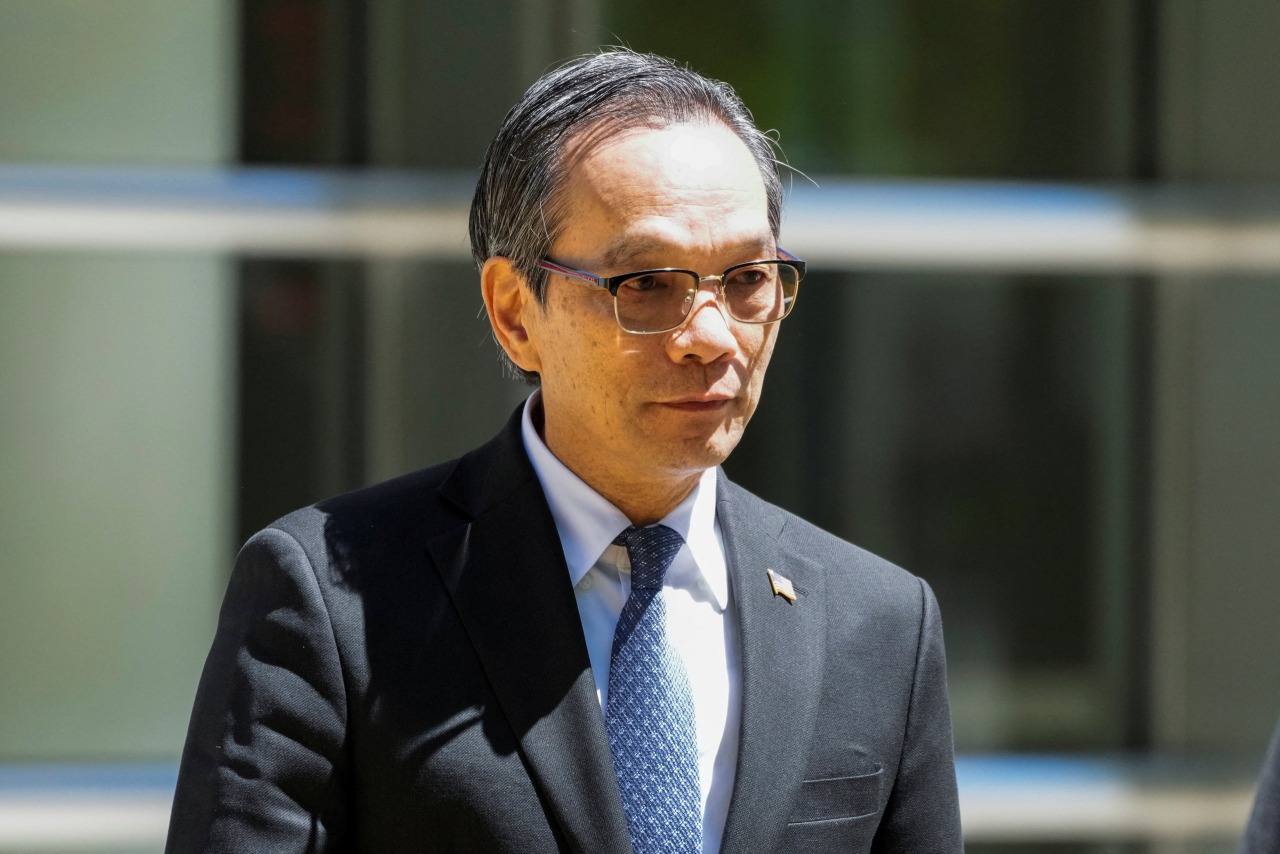
The Brooklyn jury found Lu Jianwang guilty on one of two federal counts related to acting as an unregistered foreign agent of China and one count of obstructing justice by destroying evidence.
Prosecutors said Lu conspired with officials in China’s Ministry of Public Security to open a police station in a Manhattan Chinatown community center where he held a leadership role. The outpost allowed people to interface with police officers in the eastern Chinese city of Fuzhou to handle bureaucratic tasks like renewing driver’s licenses, though the jury also heard allegations from prosecutors that Chinese authorities piggybacked on it to achieve their political goals on American soil.
In denying the charges, Lu’s lawyers emphasized that the outpost he established almost exclusively helped Chinese citizens renew their driver’s licenses when travel to China was made difficult by the Covid pandemic. The defense compared the setup to an American department of vehicles.
The Justice Department argued that to satisfy the foreign-agent charges, it didn’t matter what services Lu might have provided.
The government showed how in early 2022, Lu attended a ceremony in eastern China’s Fujian province hosted by the regional police to launch a global network of police service centers and received an award for piloting the effort.
Once the New York branch was established, a leading officer in China requested that Lu assist her in pursuing a Chinese political dissident who was in California. The government said Lu had a lengthy history of working alongside Chinese law enforcement, for instance in helping halt anti-China protests by Falun Gong practitioners in the U.S.
The jury saw photographs and text messages, plus heard the testimony of Federal Bureau of Investigation agents and the California man Lu helped track down.
The case marks a significant win for Justice Department efforts to prosecute allegations of Chinese influence in the U.S., which were particularly active during the Biden administration when the FBI said it was opening a China-related case more than daily.
It also comes as President Trump is in Beijing to attend a summit with China’s President Xi Jinping.
Few such prosecutions get to trial. Lu was charged along with another man, Chen Jinping, who earlier accepted a plea deal to admit guilt in acting as a Chinese agent for his role with the police station and is now awaiting sentencing.
In a separate case earlier in the week, the Justice Department said that the mayor of the California city of Arcadia, Eileen Wang, agreed to plead guilty to one count of acting as an illegal agent of China for actions before she held public office.
In the police-station case, Lu faces up to 30 years in prison. The 64-year-old, who is also known as Harry Lu, didn’t testify at his trial.
His lawyer, John Carman, told the jury that instead of a traditional police station, the Chinatown operation was a service outlet for New York’s ethnic Chinese community that operated like a department of motor vehicles when travel was restricted by the Covid pandemic. “Whatever it is, it’s a computer, monitor and banner,” said Carman, who described Lu as a community volunteer rather than a spy.
Carman said U.S. authorities came down hard on Lu after being shocked and embarrassed when in 2022 a human-rights group, Madrid-based Safeguard Defenders, published findings that a Chinese police post was located just a stone’s throw from the FBI’s New York offices. Carman said the government’s evidence against Lu was flimsy and likened the prosecution to Beijing-style judicial overreach as he told the jury, “Welcome to China.”
Write to James T. Areddy at James.Areddy@wsj.com