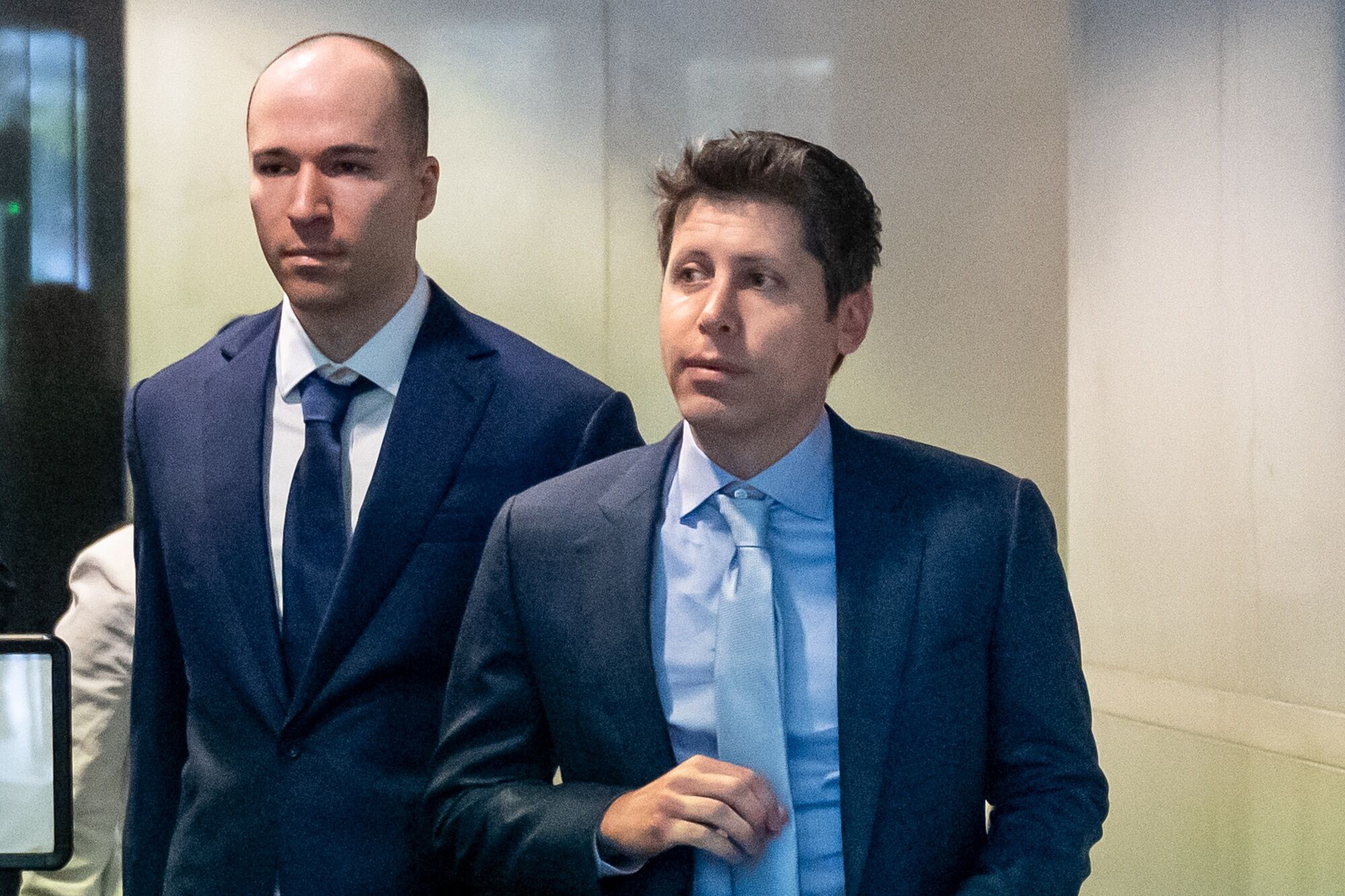
(Bloomberg) -- OpenAI President Greg Brockman says Elon Musk messaged him just before they faced off in a trial to talk about settling their fight — and then vowed to ruin his reputation.
In response to Musk’s outreach, Brockman suggested that both sides drop their respective claims, according to a court filing late Sunday. Musk allegedly fired back: “By the end of this week, you and Sam will be the most hated men in America,” the world’s richest man wrote, referring to OpenAI’s Sam Altman. “If you insist, so it will be.”
US District Judge Yvonne Gonzalez Rogers denied a request by OpenAI’s lawyer to allow the message to be used as evidence in the trial. Typically, communications about possible settlement negotiations are not admissible. OpenAI’s lawyers had argued that the message shows “that Mr. Musk’s motivation in pursuing this lawsuit is to attack a competitor and its principals.”
Gonzalez Rogers said the lawyers waited too long to make their request, telling them Monday that they should have asked about Musk’s motives while he was on the witness stand last week. “If you wanted to question his motives, that was the time to do it,” she said.
Brockman is now expected to testify Monday, marking one of the most high-profile appearances in the trial so far. He is likely to face probing questions about his personal digital journal from Musk’s lawyers. The private notes from almost a decade ago have been presented by Musk’s legal team as evidence that Brockman and Altman planned to abandon the company’s nonprofit mission before Musk left the board in 2018.
The trial that’s headed into its second week in federal court in Oakland, California, carries high stakes for OpenAI because Musk is seeking tens of billions of dollar in damages, the removal of Altman and Brockman from their leadership roles and the unwinding of the ChatGPT maker’s for-profit conversion that was completed in October.
Altman Versus Musk: How the Biggest Feud In Tech Landed in Court
In his own testimony last week, Musk spent hours recalling how a rift grew with his fellow OpenAI co-founders over differing visions of who should lead the company and how to structure it to keep pace with Google and other well-heeled rivals in the AI race.
In a September 2017 email, Shivon Zilis — then an OpenAI board member and close confidant to Musk — communicated that Altman and Brockman intended to maintain the organization’s nonprofit structure.
But Brockman wrote in an entry in his journal that making a commitment to Musk to keep the nonprofit model while planning a for-profit pivot would be “a lie.” He noted that if he and Altman converted OpenAI later, Musk’s story would “correctly be that we weren’t honest with him.”
In another entry, Brockman asked himself, “Financially, what will take me to $1B?” Musk’s lawyers claim this shows that OpenAI leaders were motivated by personal greed rather than a charitable mission.
Gonzalez Rogers cited the journal entries when she rejected OpenAI’s request for dismissal of the case in January. She wrote that the “notes could be read to suggest that Brockman intended to deceive.”
OpenAI’s legal team has argued that Musk’s lawyers plucked isolated sentences out of context. The snippets from Brockman’s personal files were “staged for maximum misrepresentation — with no dates revealed, critical context excised, and artful ellipses deployed to make disparate sentences look linked.”
The lawyers for OpenAI contend Brockman was simply brainstorming and weighing options at a time when the startup was desperate for massive capital.
(Updates with judge rejecting request to allow Musk message used as evidence in trial.)
Most Read from Bloomberg
- China’s Unprecedented Defiance of US Sanctions Triggers Showdown
- Beijing Tells China Firms to Ignore US Sanctions on Refiners
- Former NYC Mayor Giuliani in Critical Condition, Trump Says
- Supertanker Appears to Have Crossed the Strait of Hormuz
- World’s Largest Container Carrier Plans Route Avoiding Hormuz
©2026 Bloomberg L.P.