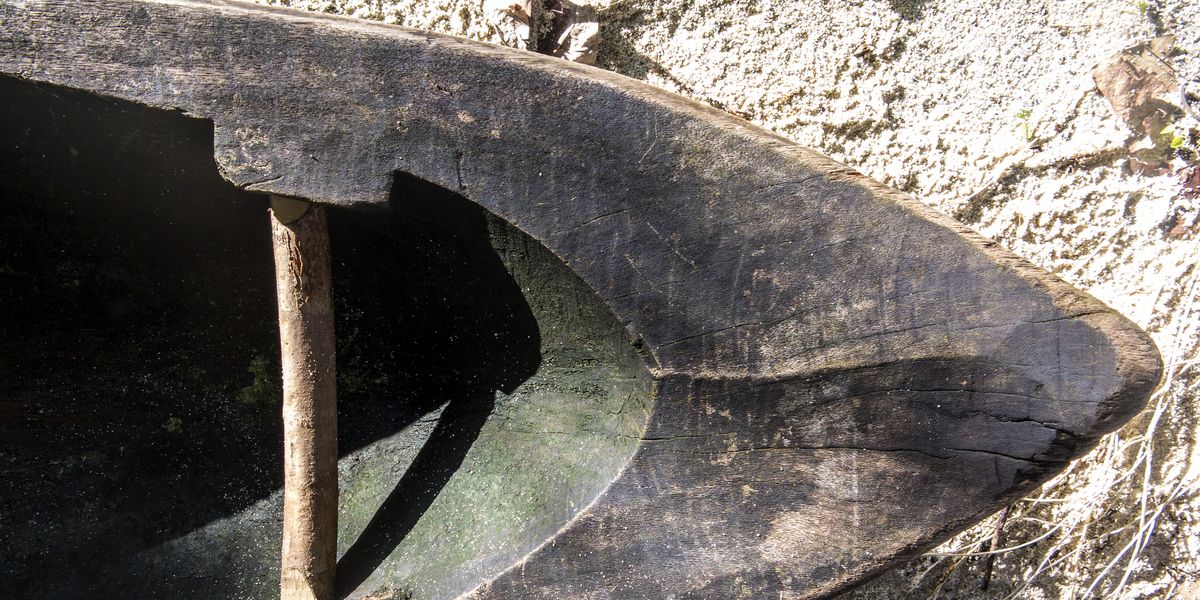
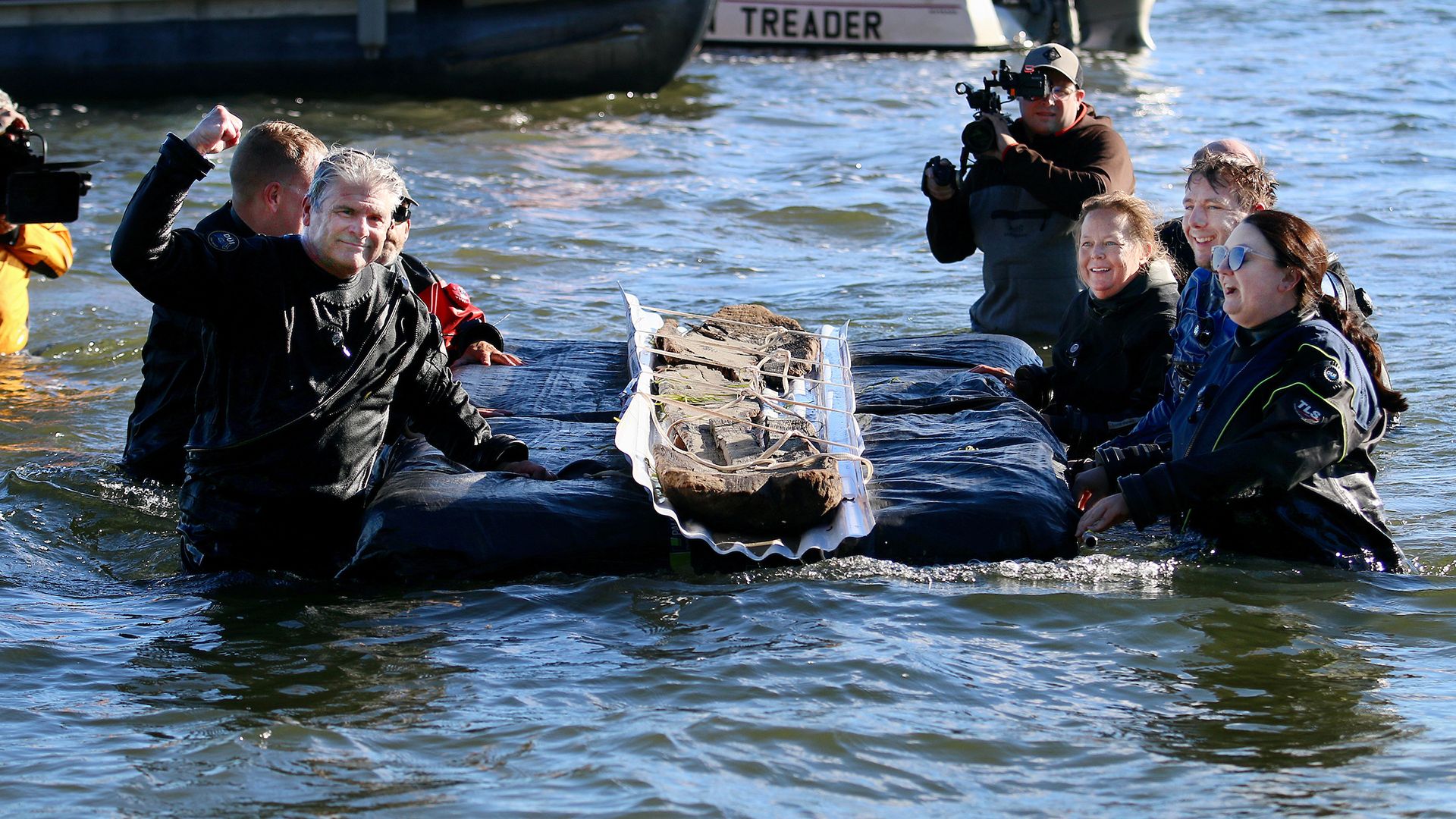
Researchers at the Wisconsin Historical Society have uncovered 16 ancient canoes at the bottom of Lake Mendota, and they believe the oldest was crafted before the Great Pyramid of Giza was built in Egypt.
The first of the dugout canoes, which is thought to be 1,200 years old, was found in 2021. Then a 3,000-year-old canoe was found in 2022. Since then, 14 more have been identified in Lake Mendota—six of which were found in the spring of 2025.
Why It Matters
The findings indicate that a civilization may have been thriving in the Great Lakes region for thousands of years, and that they had the skills and knowledge to build durable watercraft.
The researchers also believe that the canoes were used to gain access to natural resources in the lake—such as fish, as net sinkers were found in some of the canoes—and also for travel.
What To Know
Through the use of carbon dating, which provides a probable age range for each of the canoes found, researchers believe the oldest canoe is about 5,200 years old while the most recent is about 700 years old.
The oldest Lake Mendota canoe found so far was therefore likely crafted sometime around 3000 BCE, before the Great Pyramid of Giza was built in Egypt, and around the time of the invention of writing in Sumer.
That canoe is the oldest dugout canoe on record in the Great Lakes region and the third oldest in eastern North America.
Of the 16 canoes found, half were made of either red or white oak, which prompted further investigation. Red oak in particular is not typically used for watercraft as it has a tendency to absorb water.
The current theories on why this type of wood was used for building include that oak is known to form tyloses—outgrowths of cells that can block water movement—when the tree encounters a kind of stress, such as wounding or infection, or even through aging.
In blocking the movement of water, these tyloses therefore not only prevent the spread of fungi and bacteria but also increase the wood’s water resistance, buoyancy and protection against rot.
“It’s entirely possible that the canoe builders were intentionally selecting trees that had been damaged from weather or purposefully wounding them during their growth cycle to induce tyloses,” Tamara Thomsen, a Wisconsin Historical Society maritime archaeologist, said in a news release.
“We think of bioengineering as a modern practice, but the samples we have suggest this may have been taking place long before the term was coined in the mid-20th century,” Thomsen added.
The canoes were also found in two distinctive groupings, and the researchers believe this suggests there was a strategic placement of the canoes for ease of travel, enabling them to journey between points of interest as well as access natural resources.
The researchers also believe these canoes were not owned by individuals but shared among members of communities and stored at designated points, similar to modern community bike-sharing programs.
“The canoes give us insight into a sophisticated travel network and interconnected communities who used their incredible skills and knowledge to live and thrive on lands where we still live and thrive today,” said Larry Plucinski, the tribal historic preservation officer for the Bad River Band of Lake Superior Chippewa.
What People Are Saying
Tamara Thomsen, a Wisconsin Historical Society maritime archaeologist, said in a news release: “Archaeology is kind of like putting together pieces of a puzzle, and the more pieces you can find, the better you can start to form a picture of what was going on and why during a period of history. We can’t go back in time to get answers to our questions, but we can examine the available data alongside knowledge from First Nations and cultural history to form theories to answer our questions.”
Related Articles