
A federal judge on Tuesday dismissed a Department of Justice (DOJ) lawsuit seeking access to Arizona’s detailed voter registration records, dealing another blow to the Trump administration’s national effort to obtain expansive voter data.
The ruling underscores growing judicial resistance to the administration’s election‑oversight strategy, which has repeatedly been blocked over privacy and statutory concerns. The Arizona decision could further complicate the DOJ’s similar lawsuits pending across the country.
U.S. District Judge Susan Brnovich, a Trump appointee, ruled that Arizona’s statewide voter registration list is “not a document subject to request by the Attorney General” under federal law and dismissed the case with prejudice, writing that any attempt to amend the lawsuit would be “legally futile.” Brnovich was appointed by Trump in 2018 during his first term.
Newsweek reached out to the DOJ via email on Tuesday night after hours for comment.
Arizona AG Adrian Fontes Responds to Ruling
The Justice Department sued Arizona Secretary of State Adrian Fontes in January, arguing the state failed to comply with a federal request for detailed voter data. That information includes voters’ dates of birth, home addresses, driver’s license numbers and partial Social Security numbers.
Fontes welcomed the ruling, calling it a victory for voter privacy.
“This moment is a win for voter privacy,” Fontes said in a statement. “I will never comply with illegal requests that put Arizona voters in harm’s way.”
DOJ Faces Nationwide Legal Pushback Over Voter Data
Tuesday’s ruling in Arizona follows a series of court losses for the Justice Department as it seeks access to detailed voter registration records nationwide. Judges have rejected similar DOJ lawsuits in Rhode Island, California, Massachusetts, Michigan and Oregon. In Georgia, a judge dismissed the federal government’s case on procedural grounds after it was filed in the wrong city, prompting the department to refile the lawsuit elsewhere.
The DOJ has sued at least 30 states and the District of Columbia in an effort to compel the release of expanded voter data, according to reporting by the Associated Press and the Brennan Center for Justice. Federal officials say the information is needed to ensure states are complying with federal election laws requiring regular maintenance of voter rolls, including removing ineligible voters.
Opponents argue the requests violate state and federal privacy protections and unnecessarily expose sensitive personal information. That concern was underscored in a related Rhode Island case, where a Justice Department attorney acknowledged in court that the department sought unredacted voter rolls so the data could be shared with the Department of Homeland Security to help verify voters’ citizenship status.
Despite repeated court setbacks, some states have agreed to cooperate. At least 13 states have either provided or pledged to provide detailed voter registration data to the Justice Department: Alaska, Arkansas, Indiana, Louisiana, Mississippi, Nebraska, Ohio, Oklahoma, South Carolina, South Dakota, Tennessee, Texas and Wyoming.
Trump’s Comment on Elections and Save America Act
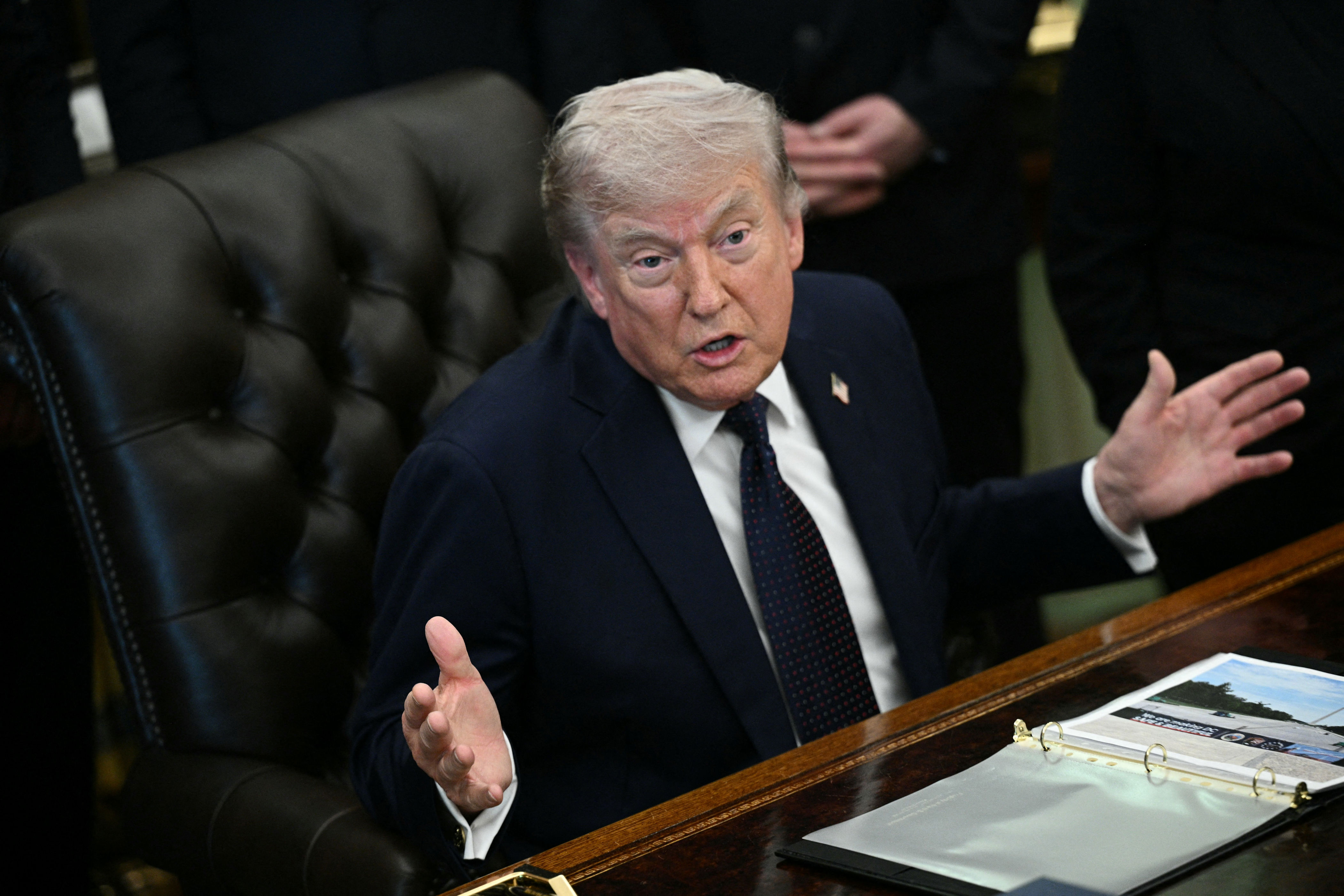
Trump commented about elections on Monday in a post to Truth Social, saying, “America’s Elections are Rigged, Stolen, and a Laughingstock all over the World. We are either going to fix them, or we won’t have a Country any longer.”
He continued, “I am asking all Republicans to fight for the following:
SAVE AMERICA ACT!
1. ALL VOTERS MUST SHOW VOTER I.D. (IDENTIFICATION!).
2. ALL VOTERS MUST SHOW PROOF OF CITIZENSHIP IN ORDER TO VOTE.
3. NO MAIL-IN BALLOTS (EXCEPT FOR ILLNESS, DISABILITY, MILITARY, OR TRAVEL!).”
Trump’s remark comes as midterm elections ramp up. As they approach, Democrats and Republicans are vying for control of not only governor’s mansions, but the Senate and the House. The GOP holds a narrow lead in the House, 217-212, and a 53-47 edge in the Senate.
This article includes reporting by the Associated Press.
Related Articles