For almost five decades, Iran’s Islamic government has survived financial pressure from the U.S. by selling oil to China. It confronted American military might with guerrilla tactics. But with the U.S. Navy’s blockade, that strategy might have met its match, analysts said.
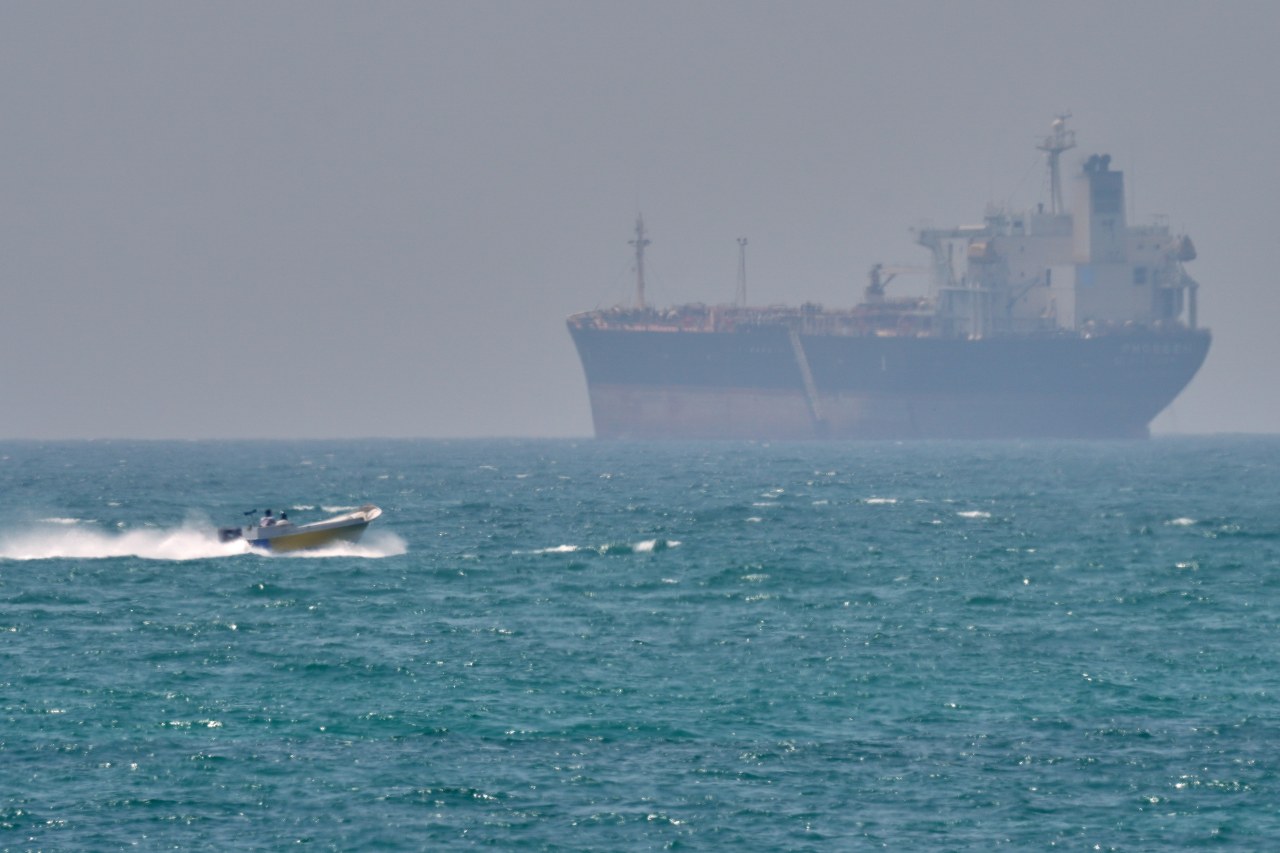
Tehran thought it was gaining the upper hand after the war started in February when it attacked ships navigating the Strait of Hormuz, shutting down commercial traffic and blocking a fifth of the world’s oil and liquefied natural gas supplies. Six weeks into the conflict, the U.S. responded by blockading shipments from all Iranian ports.
That shut down Iran’s network of shadow ships, which for years defied U.S. sanctions on Iran’s substantial oil exports by going dark at sea before clandestinely transferring their cargoes to China. Tehran’s tankers have been unable to breach a cordon of U.S. warships that have chased them all the way to the Indian Ocean.
In Hormuz, “Iran was able to create a crisis of market confidence. But disruption is not control,” said David Des Roches, a former director responsible for Persian Gulf policy at the Defense Department. “With the U.S. blockade, it’s facing a reckoning.”
Alternative trade routes won’t be sufficient. Iran has been working to send some of its oil by rail to China and to import foodstuff by road from the Caucasus and Pakistan. Only 40% of Iran’s trade can be redirected away from blockaded ports, the Iranian Shipping Association said Thursday via the Fars news agency, which is affiliated with Iran’s security services.
The risk of a spiraling crisis has split Iran’s political system between moderates such as President Masoud Pezeshkian and hard-liners including Saeed Jalili, a former presidential candidate who leads Iran’s most conservative faction.
The moderates believe in holding fire and negotiating a favorable deal with President Trump, whom they view as eager to get out of the messy war as soon as possible. They worry Iranians are growing tired of the conflict after an initial nationalist uptick.
“The regime has to do something to break this deadlock,” Saeid Golkar, who studies Iran at the University of Tennessee at Chattanooga. “Moderates want a deal because they think more destruction is political suicide,” he said.
A growing camp of hard-liners believe Iran has to take the military initiative and start a shooting war again to send oil prices soaring higher and increase the pressure on Trump. They argue that the blockade goes beyond the sanctions Iran has faced down in the past and amounts to an act of war that must have a military response.
On Thursday, Iranian Supreme Leader Mojtaba Khamenei issued a new threat to the U.S. “Foreigners who commit evil belong in the depths of water,” he said in a written statement read by a presenter on state television. Khamenei hasn’t been seen in public since he succeeded his father, Ali Khamenei, who was killed on Feb. 28 in an Israeli strike.
“The blockade is increasingly viewed in Tehran not as a substitute for war, but as a different manifestation of it,” said Hamidreza Azizi, a visiting fellow specializing in the Middle East at SWP, a Berlin-based research institute. “As a result, Iranian decision makers may soon come to see renewed conflict as less costly than continuing to endure a prolonged blockade.”
Iranian officials said Tehran could use previously unused weapons to attack U.S. warships, from submarines to mine-carrying dolphins. The Islamic Revolutionary Guard Corps has threatened to step up escalation by cutting phone cables in the Strait of Hormuz, which would disrupt internet traffic globally.
The Revolutionary Guard-linked Tasnim news agency recently published a map of undersea internet cables crossing the Strait of Hormuz in a veiled warning that the region’s telecommunications infrastructure could be targeted.
This past weekend, Tehran presented regional mediators with an offer to stop its attacks in the strait in exchange for a full end to the war, a lifting of the U.S. blockade of Iranian ports and postponement of nuclear talks.
Trump on Monday told aides to prepare for an extended blockade that could remain in place until Iran accedes to his nuclear demands. “The blockade is genius, OK, the blockade has been 100% foolproof,” he told reporters later this week.
Some 44 commercial vessels working for Iran have been ordered to turn around or return to port, U.S. Central Command, which oversees American military operations in the Middle East, said Thursday. There is no evidence any Iranian oil cargo has crossed the U.S. blockade and reached Chinese customers or other buyers, according to Kpler, a commodities-data company.
Iranian Foreign Minister Abbas Araghchi recently said Tehran would find ways to “neutralize restrictions” on the shipping restrictions. Up to 90% of Iran’s conventional navy was thought to be destroyed by American bombings, making it unable to confront U.S. warships.
Iran is betting the U.S. will crack first and end its blockade of Iranian ports to calm global markets and bring down American gasoline prices. U.S. officials are betting that Iran will instead relent because of the deepening economic crisis.
The war has imposed a heavy cost on Iran’s economy, with more than a million people out of work, soaring food prices and a prolonged internet shutdown that has slammed online businesses. Its crisis-hit economy is now facing the risk of collapse.
The value of Iran’s currency has more than halved since a year ago, and the exchange rate with the U.S. dollar recently surged to 1.81 million rials as the blockade showed no sign of ending.
Write to Benoit Faucon at benoit.faucon@wsj.com