The Trump administration has repeatedly framed the war in Iran as a quick, winnable fight, vowing to defeat the Islamic Republic "totally and decisively" — incomparable to the "dumb" wars in Iraq and Afghanistan.
But from China's perspective, the parallels are clear.
"You can blow everything up — destroy it all," one Chinese official told The Times, describing the Americans, "but you don't have a strategy."
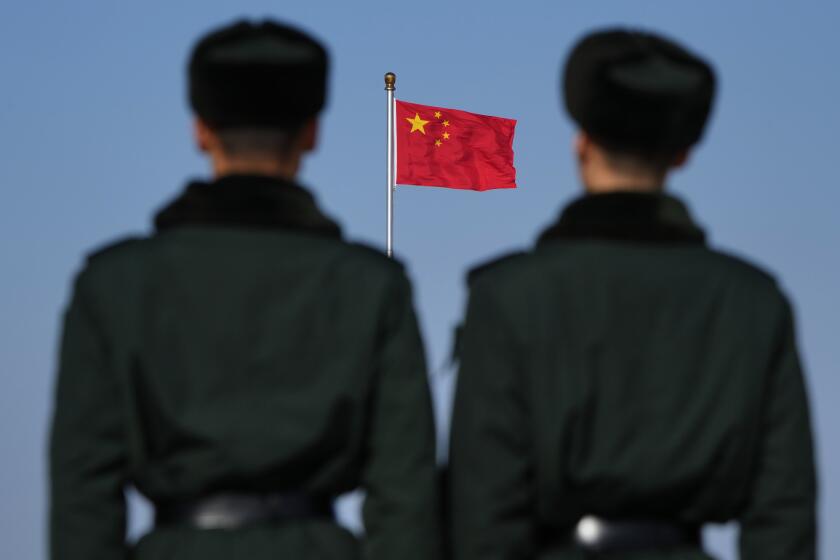
President Trump arrives in Beijing this week for talks with a Chinese government that is confident as ever in its ascendance on the world stage, taking stock of its leverage and still baffled the U.S. administration chose yet another costly war in the Middle East.
China has watched as the United States, over seven weeks of fighting an outmatched enemy, has depleted nearly half of its stockpiles of high-end munitions — including its THAAD and Patriot batteries — and fired its Army chief of staff, among other Pentagon leaders, who had warned of critical shortages.
Marco Rubio, Trump's national security advisor and secretary of State, has said the military operation that started the war known as Operation Epic Fury "is over."
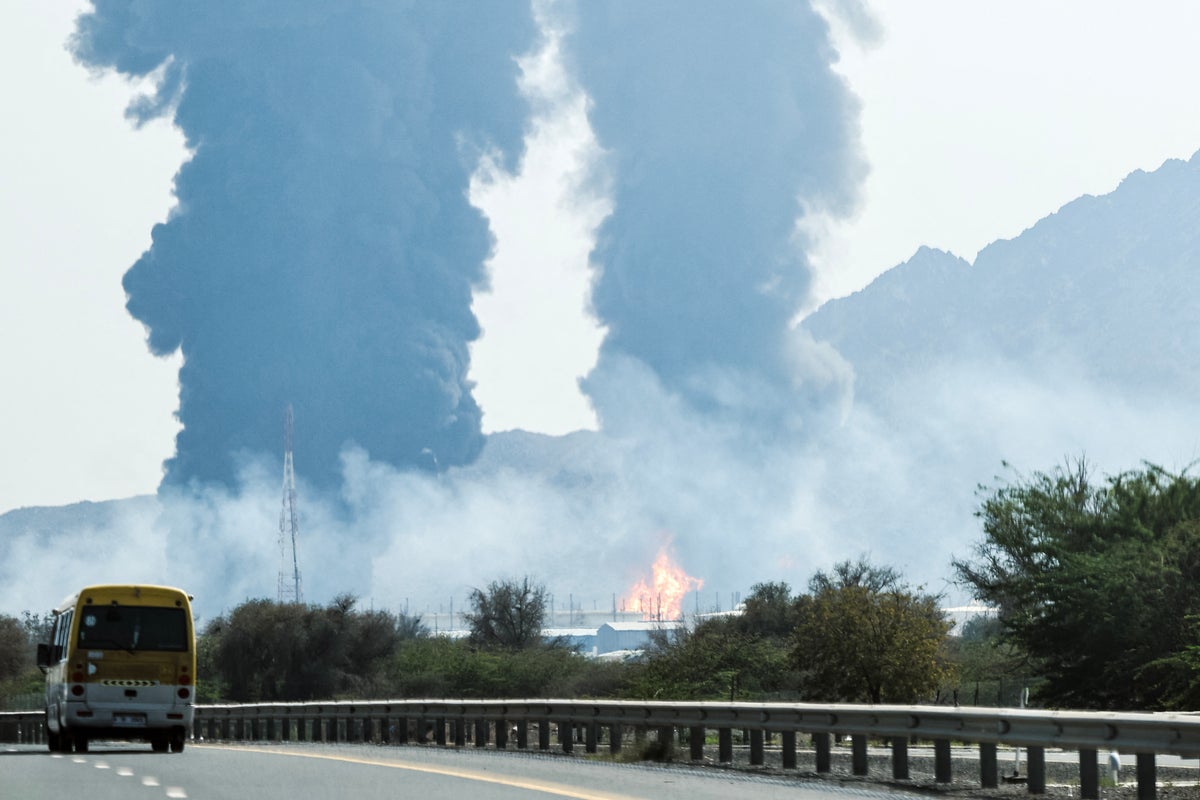
But the Strait of Hormuz, one of the world's most vital commercial waterways, remains effectively shuttered. Iranian attacks in the region continue. And talks between Washington and Tehran have failed to reach a diplomatic agreement to bring a definitive end to the conflict.
"The Chinese have high regard for the operational proficiency of U.S. forces, but they recognize that, thus far at least, the Trump administration has not achieved its core objectives in going to war with Iran," said David Ochmanek, a former deputy assistant secretary of Defense now with the Rand Corp.
The war has given Beijing an opportunity, Ochmanek said, "to double down on the claim they have made for the past year and a half that the [People's Republic of China], not the U.S., is a force for global stability."
The war has allowed China to demonstrate some diplomatic prowess. An initial ceasefire reached between the United States and Iran last month was only clinched after Beijing pressured Tehran to agree. And China's advocacy for an open strait — rejecting Iranian attempts to impose a toll system — while opposing the U.S. war itself has allowed Beijing to maintain leverage with both sides.
It has also inflicted costs. Allies of Beijing noticed when the government did not leap to the defense of Tehran at the start of the war. And China has its own vested interest in a free and open waterway, where nearly 50% of the country's crude oil imports pass through each day.
Building up to the start of the war and throughout its initial weeks, Washington diverted significant military assets from Asia — where Trump's own national security strategy says they are needed most — to the Middle East.
The USS Abraham Lincoln was redirected from the South China Sea, along with scores of advanced missile interceptors from South Korea and Japan and nearly the entire U.S. inventory of long-range air-to-surface missiles in the Pacific.
Policy experts at the Pentagon were brought in to discuss a potential invasion of Kharg Island, the jewel of Iran's oil industry, to draw lessons from planning a defense of Taiwan, according to a Defense official, who was granted anonymity to speak candidly. A Marine expeditionary unit was sent from Okinawa to the region for the potential operation.
Chinese officials and analysts have been candid in their assessments of U.S. hard power, impressed by a military they acknowledge remains the best in the world.
But Beijing sees a persistent flaw in U.S. strategy: the belief that military strength alone can reshape political realities, a view further weakened by the pressures on a democratic government whose public grows impatient with wars that drag on beyond days or weeks.
China's autocracy is free from accountability to the public — and anyway has confidence that Chinese public opinion would be on its side if it were to launch a major military operation against its main target, Taiwan.
But there are lessons of caution to be learned from the Americans, as well.
Over the last year, the Taiwanese Navy has been practicing the rapid deployment of cheap and domestically produced smart mines for the sea — a potential bulwark against enemy blockades of ports and hostile invasion forces.
It is the type of asymmetric warfare that has so far frustrated the U.S. military in the Strait of Hormuz, protracting a war that Trump vowed would last a month or less.
Taiwan, too, would confront Beijing with political realities that military force cannot erase. Nearly 90% of the Taiwanese people oppose a Chinese takeover, and about 60% say they would resist it at all costs.
"Chinese analysts see two things at once," said Craig Singleton, senior director of the China program at the Foundation for Defense of Democracies. "They are impressed by U.S. military reach, precision and operational capability, but they also see a familiar pattern of American power struggling to translate battlefield success into a durable political outcome."
That matters for Taiwan, Singleton said, "because China’s own military modernization has borrowed heavily from the American model, relying heavily on joint operations, high-tech precision strikes, decapitation concepts and information dominance.
"If the world’s most experienced military can still struggle to convert military pressure into political success," he added, "Beijing has to ask whether the [People's Liberation Army] could do better in a far more complex Taiwan scenario."
This story originally appeared in Los Angeles Times.