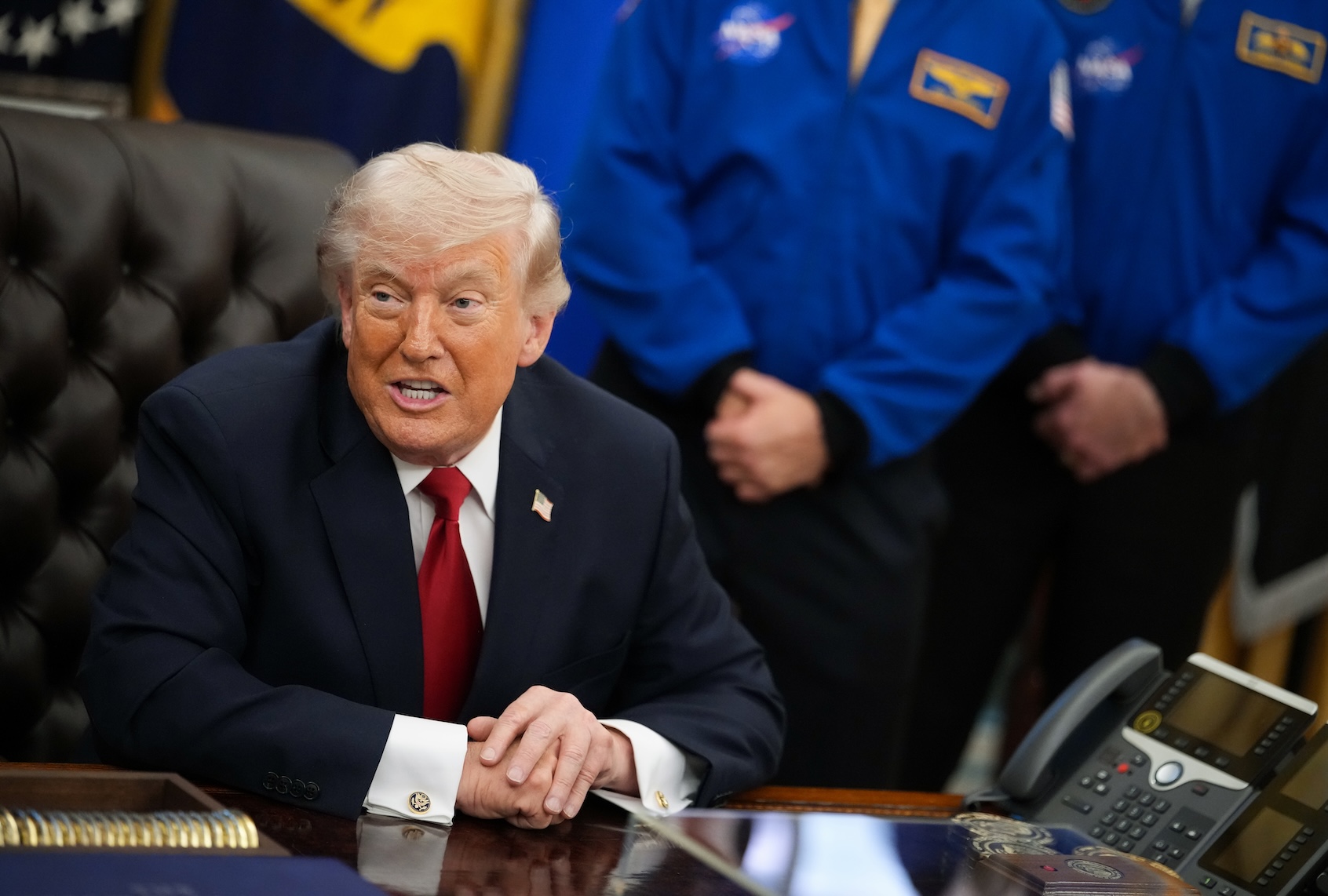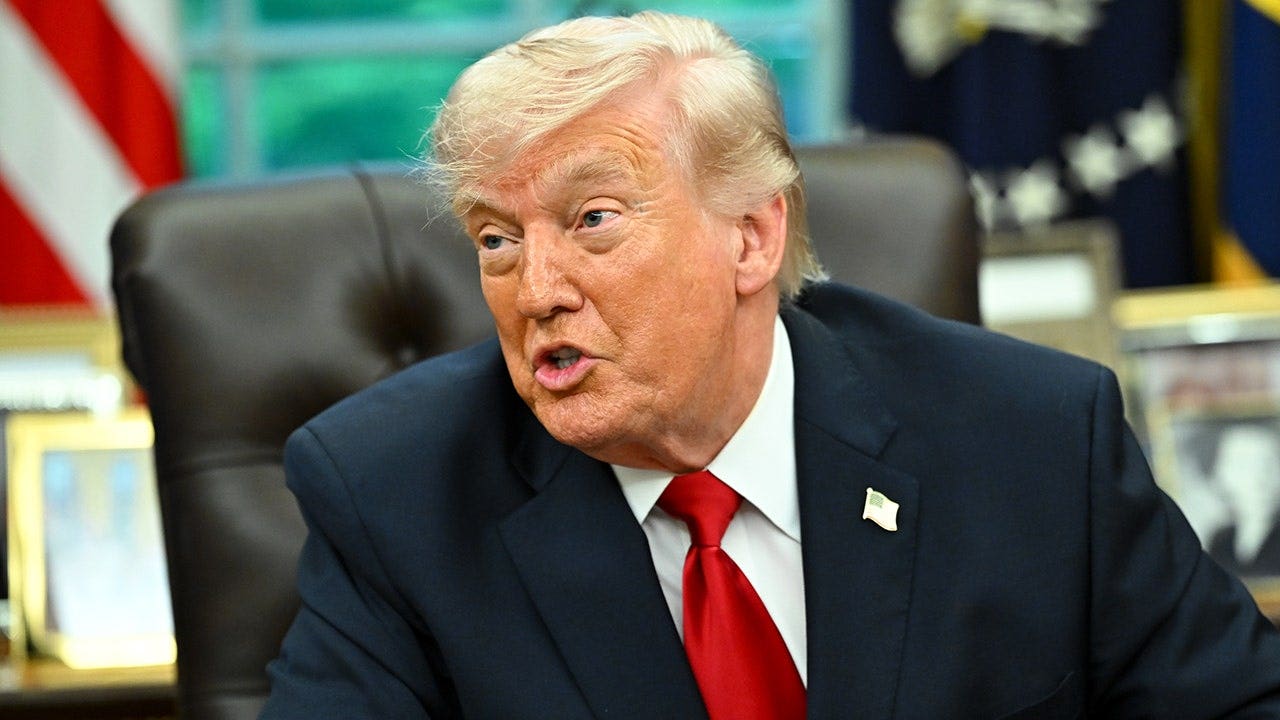
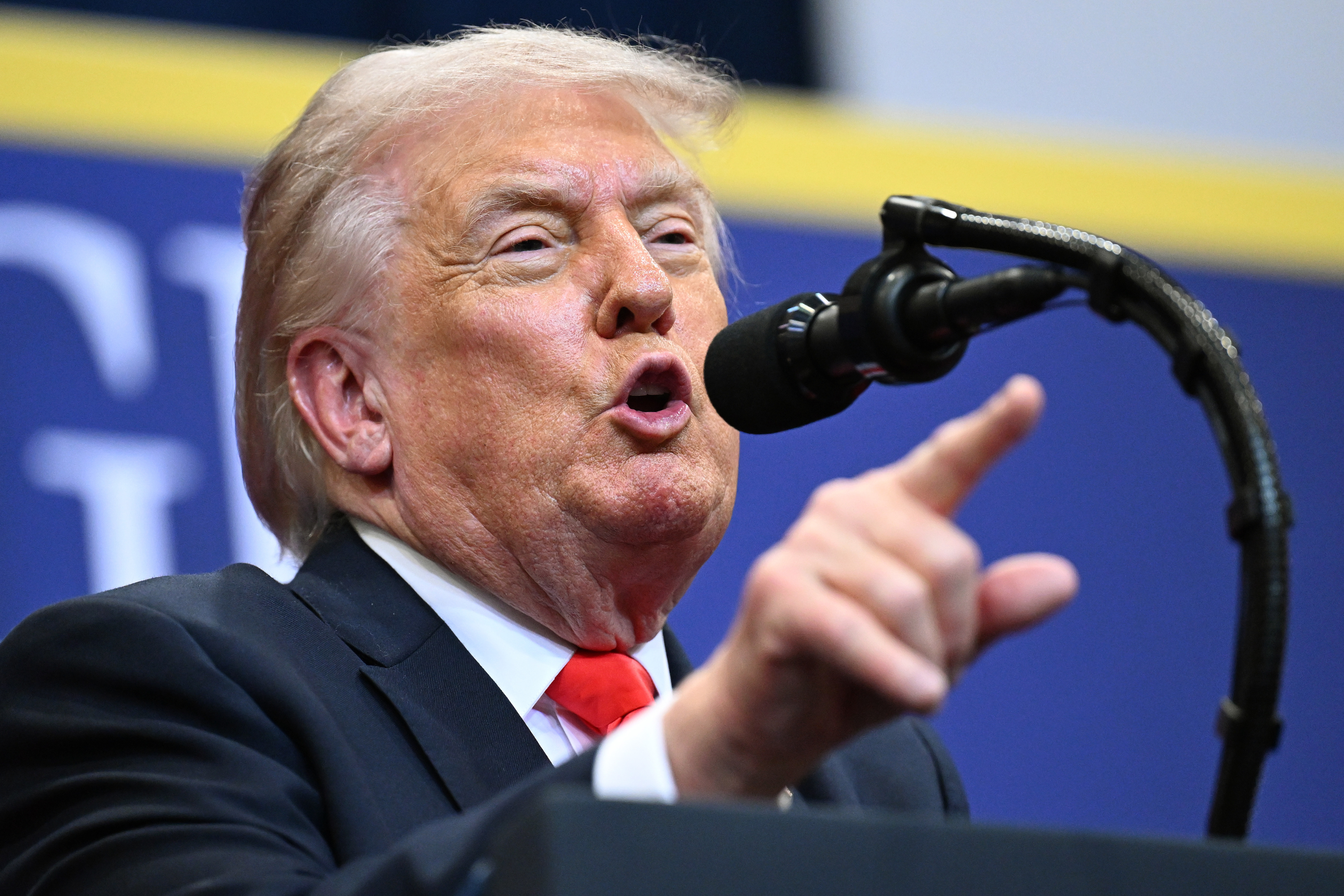
President Donald Trump’s approval rating fell to its lowest level of his second term across three national polls released within days of each other this week.
These late-April surveys—from Leger, Big Data Poll and Pew Research Center—were all collected between April 17 and April 28, 2026, among representative samples of American adults, pointing to a consistent shift rather than a polling outlier.
With the midterms approaching, the data provides a snapshot of how voters are processing Trump’s leadership amid foreign policy uncertainty and sustained economic strain.
Big Data Poll director Rich Baris summed up the mood shift, saying voters had “clearly run out of patience with the administration and his party” after months of warning signs and political grace.
Trump has, however, rejected negative interpretations of his polling numbers, telling NewsMax in a phone interview earlier this week, “It is a problem I’m not on the ballot. Everyone says if I was on a ballot we’d win in a landslide. I have some of the best poll numbers I’ve ever had.”
Newsweek has contacted the White House via email for further comment.
Why It Matters
Presidential approval typically changes gradually once an administration is established, making synchronized declines across multiple polling series notable.
Together, the surveys point to softening confidence not just in job performance, but in core leadership attributes and issue competence.
Leger: Gradual Erosion Culminates In Second-Term Low
A late‑April survey by Leger found Trump at his weakest level of the second term in the firm’s tracking series.
The online poll was conducted April 17–20, 2026, among 1,004 U.S. adults, with a margin of error of plus or minus 3.09 percentage points. Results were weighted by age, gender, region, education, ethnicity and household size to reflect the U.S. population.
Leger reported 36 percent approval and 53 percent disapproval, producing a net rating of -17.
That marks a new low for Trump in the series. One year earlier, in April 2025, approval stood at 38 percent with 48 percent disapproval, a net of -10, pointing to a steady deterioration rather than a sharp break.
The broader trend underscores that shift. Leger’s data shows approval largely holding in the high‑30s through much of 2025, while disapproval gradually increased.
Over the year, Trump’s net rating worsened from -10 in late April 2025 to -17 in April 2026, the weakest point of the series.
Pew Research: Long-Term Decline Extends Beyond Job Approval
Additional confirmation comes from Pew Research Center, which conducted a national survey of 5,103 U.S. adults from April 20 to April 26, 2026, with a margin of sampling error for the full sample of plus or minus 1.6 percentage points.
Pew found Trump’s approval rating at 34 percent, the lowest of his second term, continuing a slide that has been visible for more than a year.
Trend data shows approval falling from 47 percent in late January 2025 to the mid‑30s by late April 2026, while disapproval climbed from the low‑50s to 64 percent over that same period. Trump’s net rating deteriorated steadily, moving from -4 at the start of 2025 to -30 in the latest survey.
The erosion extends beyond top‑line approval.
Pew found that perceptions of Trump keeping his promises fell to 38 percent, down sharply from shortly after his 2024 reelection, while fewer Americans described him as mentally sharp.
Pew also shows weakening confidence across other leadership traits, with confidence in his handling of immigration falling from 46 percent in August 2025 to 41 percent today, and confidence in his use of military force dropping more sharply from 46 percent last summer to 38 percent in the latest April poll.
Big Data Poll: Disapproval Hardens Among Registered Voters
Similar findings emerged from a survey conducted by Big Data Poll, which interviewed 3,176 registered voters and 2,874 likely voters nationwide from April 25 to April 28, 2026.
Interviews combined online responses sourced via Lucid (CINT) with live‑agent phone methods, including peer‑to‑peer SMS and text‑to‑online outreach using the L2 National Voter File.
Results were weighted by sex, age, race and ethnicity, education and geography.
The margin of error was plus or minus 1.8 percentage points for registered voters and plus or minus 1.7 for likely voters at a 95 percent confidence level.
Earlier in his second term, the pollster ranked among Trump’s most favorable, giving him a net approval rating of +19—his best showing with any firm tracked by The New York Times’ polling average.
In its latest poll, among registered voters, 39.6 percent approved of Trump’s job performance, including just 21.7 percent who strongly approve.
Disapproval reached 56.9 percent, with 45.2 percent strongly disapproving. Both figures represent new second‑term highs and lows, respectively, placing Trump just 0.2 points above slipping into the 30s on approval.
Big Data Poll director Rich Baris said the results reflect mounting voter frustration.
“After nearly a year of clear warning signs in data collection and as many months of political grace, voters have clearly run out of patience with the administration and his party,” Baris said.
He added that “the one silver lining is that these percentage levels on trust to handle the most important voting issues indicate voters’ current preferences aren’t an affirmation of the Democratic Party.”
Taken together, the three polls use different samples, methodologies and weighting schemes, yet point in the same direction.
That convergence matters more than any single data point, suggesting opinion is settling into a less forgiving equilibrium rather than reacting to short‑term events.
When approached for comment on recent polling, White House spokesman Davis Ingle told Newsweek on Friday, “The ultimate poll was November 5th 2024 when nearly 80 million Americans overwhelmingly elected President Trump to deliver on his popular and commonsense agenda.
“No other President in history has accomplished more for the American people than President Trump, who is working tirelessly to create jobs, cool inflation, increase housing affordability, and more. The President has already made historic progress not only in America but around the world, and this is just the beginning as his agenda continues taking effect.”
Related Articles